By Paulina Hubli and Orit Naomi, RTN staff writers - 4.18.2026
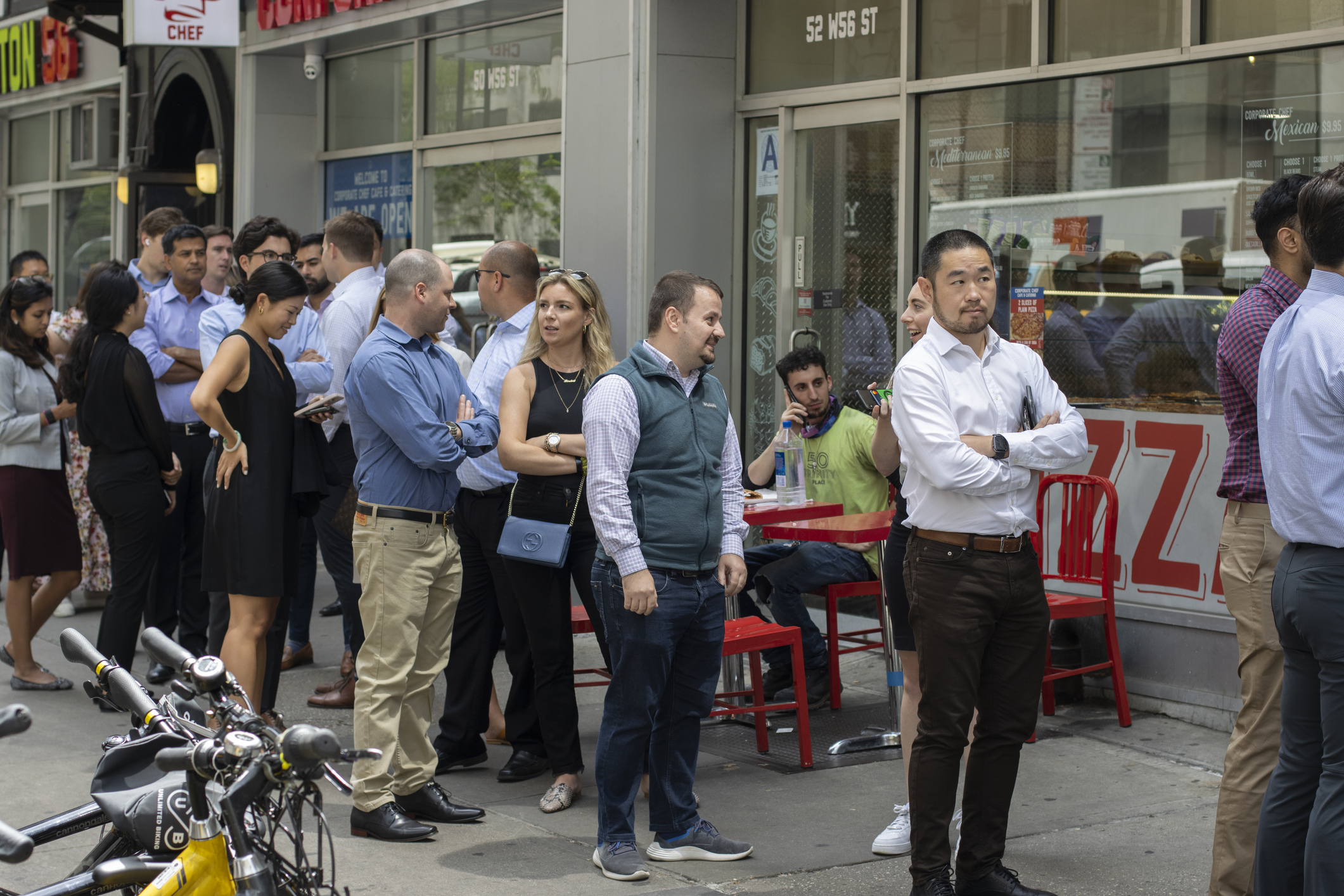
The line outside a popular restaurant used to be a local phenomenon. You saw it when you walked by. You reacted to it in the moment. Maybe you stayed, maybe you left. What you did not have was advance knowledge, context, or data. That is starting to change, and the implications for restaurant operators are more significant than they may first appear.
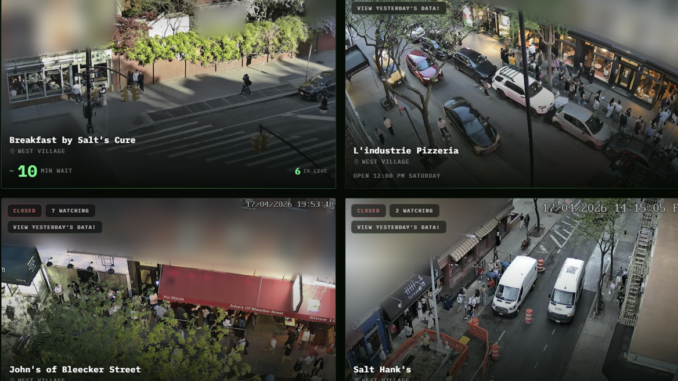
A New York Times article, published this week, describes a new platform, called Damn Lines, which streams real-time video of queues outside several high-profile restaurants in Manhattan’s West Village. The concept is straightforward. Cameras positioned across the street show the current line, while historical data helps users understand when waits are typically longest. In some cases, users can even sign up to be notified when lines shrink.
At one level, this feels like a clever consumer hack. At another, it looks like the early stages of something more consequential. The restaurant industry has spent the better part of a decade digitizing transactions, optimizing ordering flows, and reducing friction at the point of sale. What has remained largely untouched is the moment before the customer decides to show up. That moment is now becoming visible, measurable, and, potentially, influenceable.
The line itself has always been an awkward signal. It is both a problem and a form of marketing. It deters some customers while attracting others. It creates operational stress while simultaneously validating demand. Social media has only amplified this tension, turning long waits into a kind of proof point. A line is no longer just a byproduct of popularity. In many cases, it is part of the appeal.
Introducing real-time visibility does not resolve that tension. If anything, it intensifies it. Some customers will avoid a restaurant after seeing a long line. Others will be more inclined to join it. The result is not necessarily a reduction in congestion, but a shift in how demand expresses itself. Visibility changes behavior, but not always in predictable ways.
The more interesting question is what happens when this visibility becomes data. A live video feed is useful, but it is the combination of real-time observation and historical pattern recognition that begins to matter. When customers can see not only how long the line is right now, but how it tends to evolve over time, decision-making starts to move upstream. People are no longer reacting to conditions at the door. They are making choices in advance, often before leaving home.
For operators, this introduces a new dynamic. Demand is no longer just something that materializes at the entrance. It becomes something that is partially shaped before the visit even begins. That shift has implications for staffing, prep, and throughput, but it also raises a more fundamental issue. If customers can see demand in real time, who controls that narrative?
The Damn Lines model operates independently of the restaurants themselves. Cameras are hosted by nearby tenants, not by the operators whose businesses are being observed. Some restaurant owners were reportedly unaware they were being streamed. That detail is easy to overlook, but it points to a broader issue that the industry has encountered before. When critical aspects of the customer journey move onto third-party platforms, control becomes fragmented.
Restaurants have already dealt with this dynamic in online ordering and delivery. The response, in many cases, has been to invest in first-party channels to regain ownership of the customer relationship. It is not hard to imagine a similar pattern emerging here. If demand visibility becomes a meaningful factor in customer decision-making, operators may eventually feel compelled to manage it directly rather than leave it to external platforms.
There is also the question of whether visibility alone is enough to change outcomes. The Times article makes clear that many customers will wait regardless. For destination restaurants, demand is often relatively inelastic. A long line does not necessarily suppress demand; it can reinforce it. That limits the ability of transparency by itself to smooth traffic in a meaningful way.
If there is a longer-term opportunity, it likely lies not in showing the line, but in shaping it. Real-time visibility could be paired with mechanisms that actively influence when customers choose to visit. That might include notifications that encourage off-peak behavior, pricing or promotion strategies tied to real-time conditions, or tighter integration with waitlists and reservation systems. In that sense, visibility is not the solution. It is the starting point.
What is emerging is a new category of demand awareness that sits above the traditional stack of restaurant technology. Point-of-sale systems capture what has already happened. Reservation platforms manage what is about to happen. Real-time visibility tools begin to address what might happen, and when. That distinction matters because it shifts the industry’s focus from reacting to demand toward anticipating it.
The line, in this context, stops being just an operational headache. It becomes a data source. It reflects patterns of behavior, timing mismatches, and external influences that can be studied and, over time, predicted. The operators who benefit most will not necessarily be the ones who eliminate lines altogether. They will be the ones who learn how to interpret what those lines are telling them and adjust accordingly.
It is still early. A handful of cameras in one New York neighborhood does not constitute a transformation of the industry. But the underlying idea, that demand can be observed in real time and acted upon before it arrives, is likely to persist. As more data sources become available and analytics capabilities improve, the ability to connect customer behavior with operational decisions will only become more refined.
The restaurant industry has always been shaped by visibility, whether through foot traffic, word of mouth, or more recently, social media. What is changing now is the precision of that visibility. When customers and operators are looking at the same real-time signals, the relationship between demand and supply becomes more transparent, and potentially more manageable.
The line is not going away. If anything, in certain segments, it may become even more pronounced. But the way it is understood is evolving. It is no longer just something to endure or to avoid. It is something to watch, to measure and, increasingly, to learn from.
