
By Dustin Stone, Debbie Carson and Lea Mira, RTN staff writers, RTN staff writers - 6.24.2026
Over the past decade, restaurants have invested heavily in technologies designed to improve digital ordering, mobile commerce, guest engagement and delivery operations. Online ordering platforms, mobile apps, loyalty programs and third-party delivery marketplaces have fundamentally changed how guests interact with restaurant brands. Yet as digital ordering volumes continue to grow, many operators are discovering that one of the most important operational challenges begins only after the order is placed: getting food into the hands of customers quickly, accurately and efficiently.
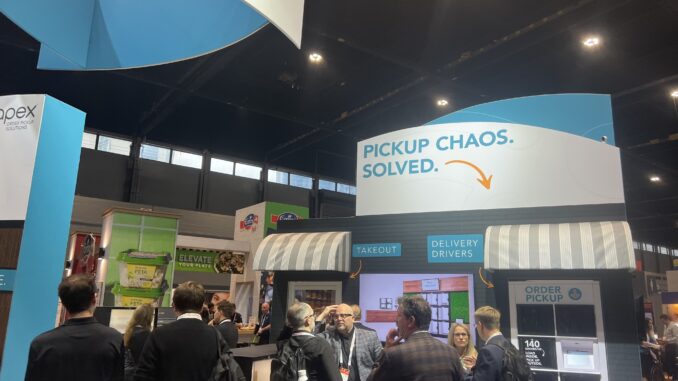
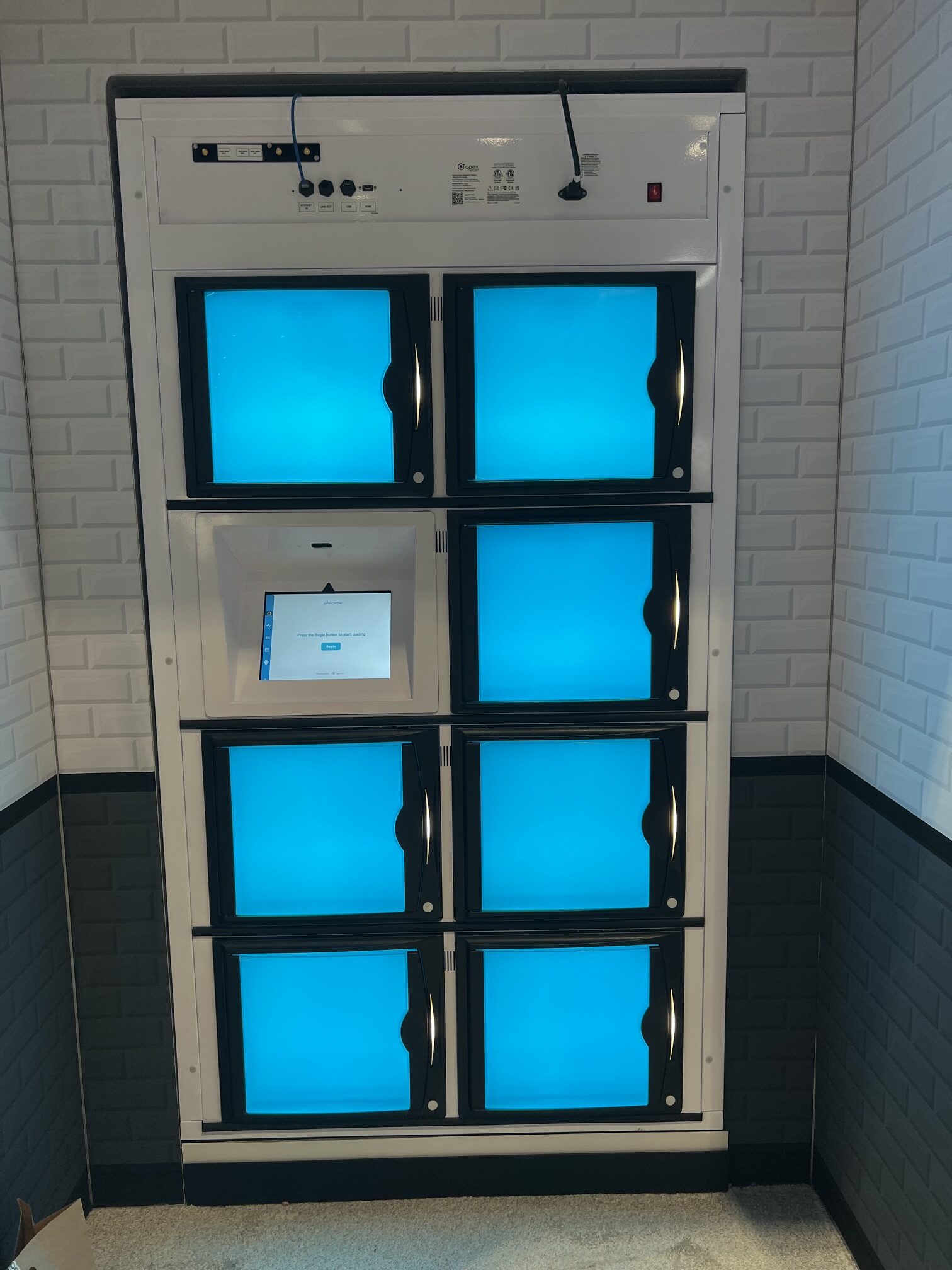
That challenge was evident throughout this year’s National Restaurant Association Show, where exhibitors showcased technologies designed to help restaurants improve operational efficiency and better manage growing off-premise demand. Among them was Apex Order Pickup Solutions, which highlighted its expanding portfolio of automated fulfillment technologies designed to simplify one of the restaurant industry’s most overlooked operational processes. While the company is often associated with smart food lockers, the larger story is about helping restaurants build the fulfillment infrastructure needed to support modern digital commerce.
The Apex story is not fundamentally about lockers. It is about solving a challenge that continues to grow alongside digital ordering. Restaurants have spent years optimizing ordering, payments and marketing, yet fulfillment remains a frequent source of friction. Front-counter congestion, labor constraints, order handoff errors and customer wait times can all undermine the guest experience, particularly during peak operating periods.
 As off-premise dining continues to expand, these challenges become increasingly important. Mobile ordering, curbside pickup, third-party delivery and grab-and-go service models have dramatically increased the volume of orders moving through restaurant operations. In many locations, the traditional pickup counter was never designed to support today’s order volumes or workflow requirements.
Apex addresses this challenge by creating dedicated fulfillment infrastructure that helps restaurants organize, secure and distribute orders more efficiently. Rather than relying on employees to manually coordinate every pickup interaction, automated systems can help streamline handoff processes while improving order visibility for both guests and staff.
At the National Restaurant Association Show, Apex demonstrated technologies designed specifically for this environment. The company’s solutions support automated order retrieval, customer authentication, pickup notifications and temperature-controlled storage, creating a more structured approach to fulfillment management. The goal is not simply automation for its own sake, but rather reducing operational friction while improving guest convenience.
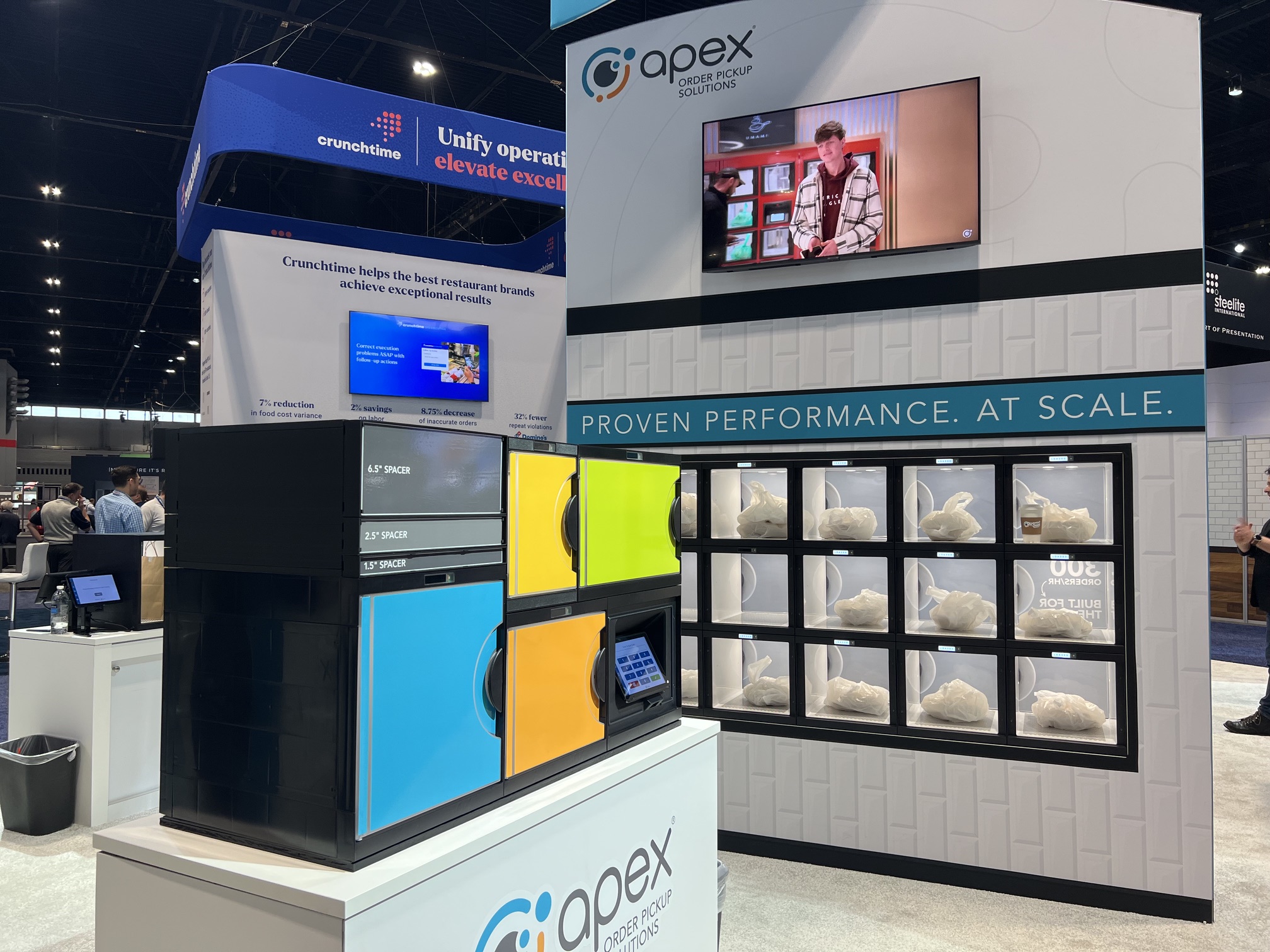
Recent product introductions such as the OrderHQ Array Series reflect the company’s broader evolution. Rather than offering a one-size-fits-all locker solution, Apex has developed modular pickup systems that can be configured to fit a restaurant’s physical footprint, order volume and operational workflow. The platform supports ambient, heated, refrigerated and exterior configurations, allowing operators to deploy fulfillment infrastructure that aligns with their specific service models. This flexibility helps restaurants scale pickup operations while adapting to changing customer demand and growing off-premise order volumes.
The company’s award-winning OrderHQ Exterior Smart Food Locker further extends these capabilities by providing secure, automated pickup access outside the restaurant. The solution was recognized through the National Restaurant Association Show’s Kitchen Innovations program for its ability to automate off-premise order management while helping reduce crowding, improve security and streamline guest retrieval. For restaurants seeking to support pickup after hours or reduce congestion inside the dining room, exterior fulfillment solutions create new opportunities to improve convenience while maintaining operational control.
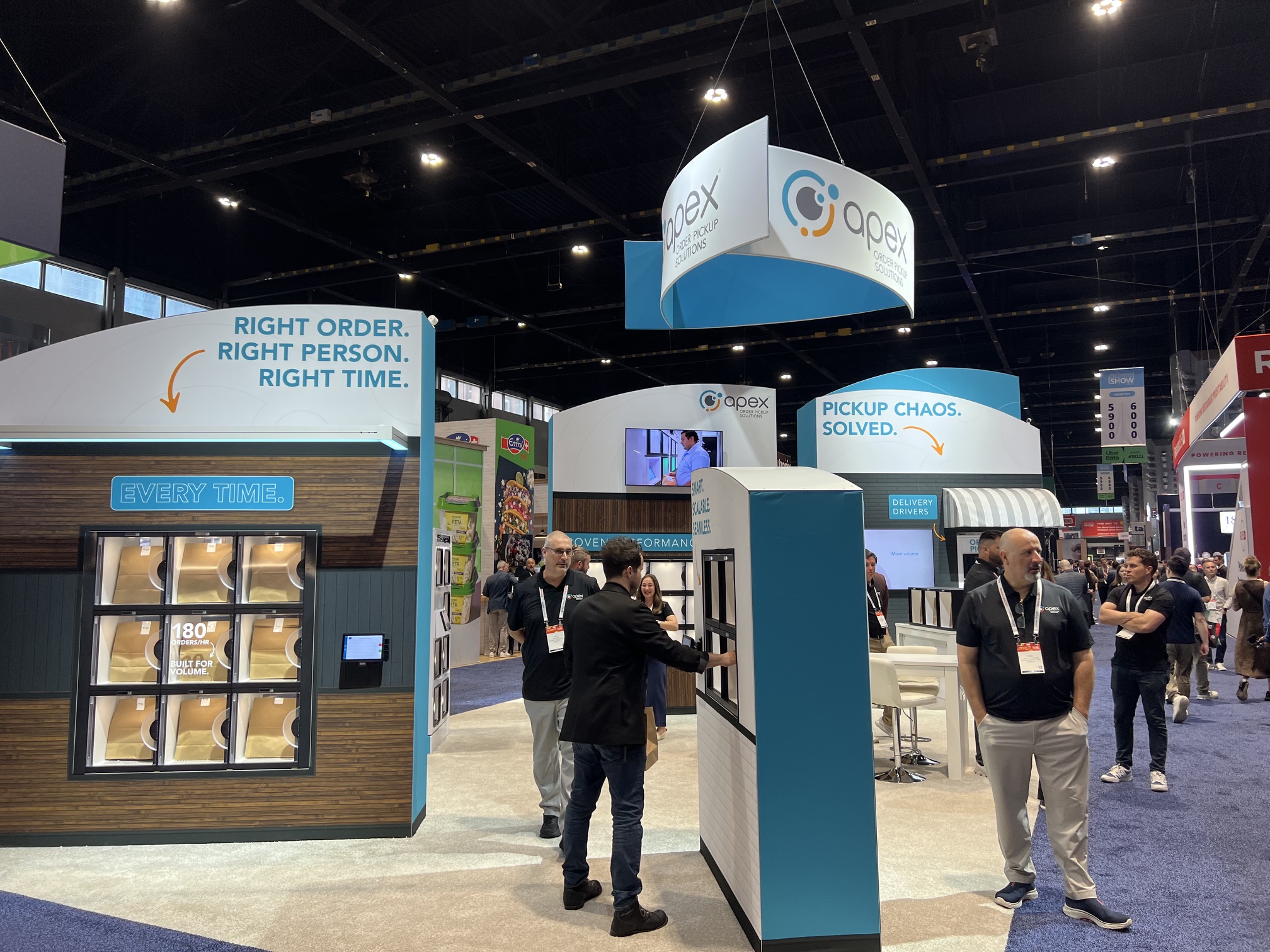 Labor optimization is one of the most compelling aspects of Apex’s value proposition. Restaurant operators continue facing labor shortages, wage pressures and increasing demands on front-line employees. Every minute spent locating, verifying and distributing orders is time that staff members cannot spend serving guests, preparing food or supporting other operational priorities.
By automating portions of the pickup process, restaurants can reduce the labor required to manage growing off-premise volumes while improving consistency and accuracy. Employees spend less time searching for orders and coordinating handoffs, allowing them to focus on higher-value activities. For operators managing large volumes of digital orders, these efficiencies can have a meaningful impact on productivity.
Guest experience is equally important. Consumers increasingly expect pickup experiences to be as seamless as the ordering process itself. Long waits, crowded pickup areas and misplaced orders can create frustration that undermines an otherwise positive transaction. Automated pickup systems help reduce those friction points by creating a more organized and predictable retrieval process.
This is particularly relevant as restaurants compete for convenience-oriented consumers. Digital ordering has fundamentally changed customer expectations. Guests increasingly want control over when and how they retrieve orders, often preferring minimal interaction and maximum speed. Automated fulfillment solutions align closely with those preferences.
Temperature management represents another important consideration. Maintaining food quality between preparation and pickup can be challenging, particularly during busy operating periods. Apex offers ambient, heated, refrigerated and outdoor storage configurations that help restaurants protect product quality while providing greater flexibility in fulfillment workflows. This capability is especially valuable for operators managing diverse menus that include hot meals, cold beverages and temperature-sensitive products.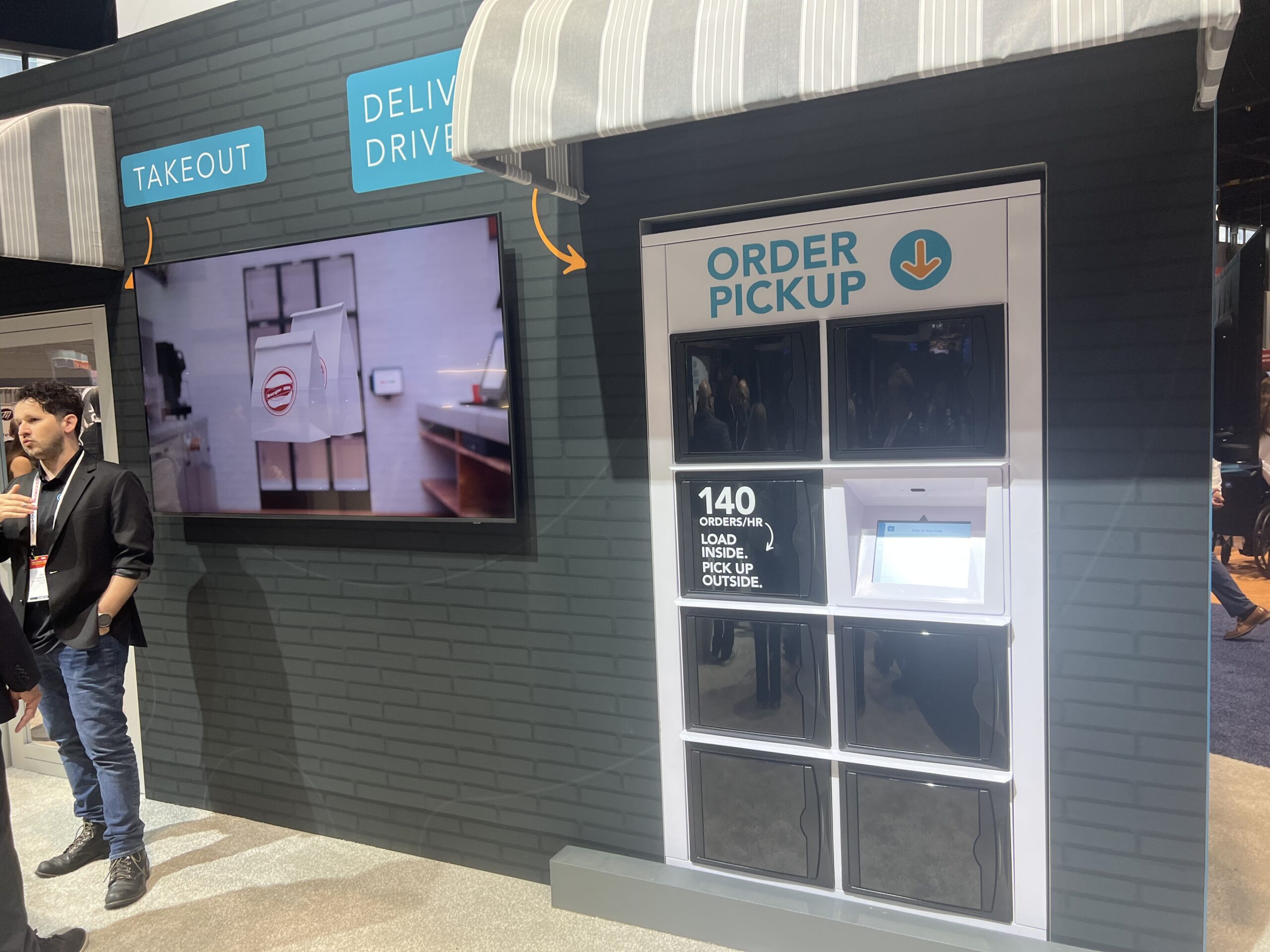
The company’s solutions also integrate into broader restaurant technology ecosystems. Rather than functioning as standalone hardware, Apex platforms can connect with ordering systems, point-of-sale platforms and customer notification tools. This integration allows restaurants to automate communications, improve order tracking and create more seamless pickup experiences. As restaurant technology environments become increasingly interconnected, the ability to integrate fulfillment operations into larger workflows becomes increasingly valuable.
Increasingly, Apex is also extending beyond hardware through its ApexIQ platform. The solution provides operators with visibility into fulfillment performance, pickup activity and operational trends, helping restaurants better understand how orders move through the handoff process. As operators seek more data-driven approaches to off-premise operations, these insights can help identify bottlenecks, improve workflows and support staffing decisions. The addition of analytics and operational intelligence reflects a broader trend across restaurant technology, where visibility and optimization are becoming just as important as automation.
Restaurant Technology News has covered several Apex innovations and deployments over the years. In 2025, the company introduced the OrderHQ Array Series, expanding its portfolio of modular smart pickup solutions designed for restaurants and foodservice operators. Earlier coverage highlighted the company’s Kitchen Innovations Award-winning OrderHQ Exterior Smart Food Locker, which was recognized for helping operators automate off-premise order management while reducing crowding, improving security and streamlining guest retrieval.
The technology has also found traction among organizations seeking to solve increasingly complex fulfillment challenges. Public deployments have included Applebee’s franchise operator Doherty Enterprises, which implemented Apex solutions to improve digital-order pickup workflows, as well as university dining programs and foodservice organizations looking to better manage high-volume pickup environments. These implementations illustrate how fulfillment infrastructure is becoming a more strategic component of restaurant and foodservice operations.
The implications extend beyond traditional restaurant environments. Universities, healthcare facilities, corporate dining operations, airports, entertainment venues and other foodservice organizations face many of the same fulfillment challenges. As digital ordering expands across foodservice segments, the need for efficient order pickup infrastructure continues to grow.
Business benefits extend beyond labor savings and convenience. Improved order organization can help reduce errors and misplaced orders. Faster pickup experiences can improve guest satisfaction. Better fulfillment workflows can help restaurants accommodate higher order volumes without proportionally increasing staffing requirements. Collectively, these advantages contribute to stronger operational performance and more scalable off-premise operations.
 The competitive landscape includes pickup shelving, curbside technologies, drive-thru innovations and various order-management solutions. Apex differentiates itself by focusing specifically on the fulfillment and handoff portion of the customer journey. While many restaurant technologies address ordering and payment, relatively few focus on what happens once food is prepared and ready for pickup.
Perhaps the most compelling aspect of the Apex story is what it reveals about the evolution of restaurant technology. The first wave of restaurant technology focused on helping guests place orders digitally. The next wave is increasingly focused on fulfilling those orders efficiently, accurately and profitably. Success depends not only on generating orders but also on executing the final stages of the guest journey with the same level of efficiency and convenience.
That shift is driving demand for technologies that address the operational realities of off-premise dining. Pickup, fulfillment and guest handoff may not receive the same attention as mobile apps, loyalty platforms or artificial intelligence, but they play a critical role in shaping customer experiences and operational performance.
As restaurants continue adapting to changing consumer behavior, the infrastructure supporting off-premise dining will become increasingly important. By helping operators streamline pickup, improve fulfillment workflows and create more efficient handoff experiences, Apex is addressing one of the restaurant industry’s most significant operational challenges.
In an era where convenience has become a competitive differentiator, the ability to move orders from kitchen to customer quickly, securely and accurately may be just as important as the ability to take the order in the first place. Apex is helping restaurants build the fulfillment infrastructure needed to support the continued growth of digital commerce and the next generation of off-premise dining.
