By Dustin Stone, Gavriel Shohet and Lea Mira, HTN staff writers - 6.23.2026
For decades, commercial ovens were evaluated primarily on their ability to cook food consistently and reliably. Today, restaurant operators expect far more. As labor shortages persist, food costs remain elevated and multi-unit brands continue seeking greater consistency across locations, cooking equipment is increasingly being asked to function as a source of operational intelligence. The result is a new generation of connected kitchen technologies that combine cooking performance, automation, data analytics and workflow optimization into a single platform.
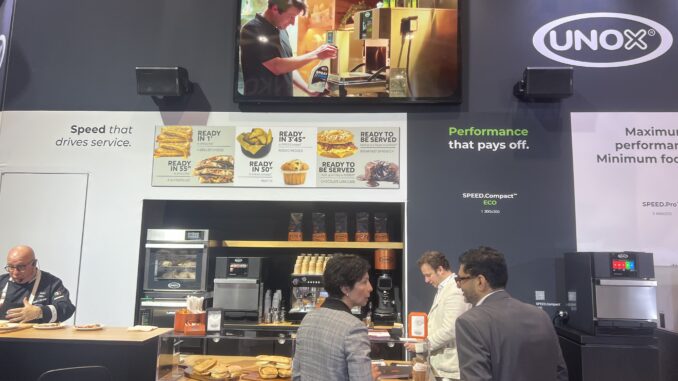
That evolution was on display at this year’s National Restaurant Association Show, where exhibitors showcased technologies designed to help operators improve productivity, consistency and profitability. Among them was Unox, which exhibited at Booth 4818 and highlighted solutions including SPEED-X, SPEED.Compact and EVEREO. Together, these platforms demonstrated how intelligent cooking, accelerated service and advanced food preservation can support a more connected and efficient kitchen operation.
Founded in Italy in 1990, Unox has grown into a global provider of advanced cooking and food-preservation technologies serving restaurants, bakeries, hospitality organizations and foodservice operators worldwide. While the company remains widely known for its cooking equipment, its current strategy extends well beyond ovens. Increasingly, Unox is positioning itself as a provider of connected kitchen systems that help operators standardize execution, improve visibility and make more informed operational decisions.
The Unox story is not fundamentally about cooking equipment. It is about helping restaurants capture knowledge, standardize execution and improve operational performance through intelligent cooking systems. As restaurants continue expanding across multiple locations and operating with varying staffing levels, maintaining consistency has become one of the industry’s most important challenges. The ability to replicate the standards established by a brand’s best chefs across every shift and every location can directly influence guest satisfaction, food quality and profitability.
This challenge is becoming increasingly complex. Restaurants are introducing new menu items, expanding into additional dayparts and managing greater operational complexity than ever before. At the same time, employee turnover and labor shortages make it difficult to rely solely on experience and training to maintain standards. Technology that embeds knowledge directly into kitchen workflows can help bridge that gap.
Unox has positioned itself squarely within this trend. Its cooking platforms are designed not only to prepare food but also to support repeatable execution. Recipes, cooking programs and operating procedures can be standardized, helping restaurants reduce variability and improve consistency regardless of who is working in the kitchen. For multi-unit brands, this capability can be particularly valuable because it allows organizations to scale quality standards more effectively.
One of the most distinctive aspects of the company’s strategy is its emphasis on connected operations. Through its Data Driven Cooking ecosystem, Unox has expanded beyond traditional equipment manufacturing into the realm of operational intelligence. The platform enables operators to monitor oven utilization, access and export HACCP documentation, track energy and water consumption, distribute cooking programs remotely, analyze performance metrics and gather insights that support broader operational decision-making.
These capabilities reflect a larger transformation occurring throughout foodservice. Equipment is increasingly becoming part of a connected technology ecosystem rather than functioning as a standalone asset. Operators want visibility into performance, usage patterns and maintenance requirements. They want tools that help them manage consistency across locations and identify opportunities for improvement. In this environment, cooking equipment becomes both a production tool and a source of operational data.
Complementing this strategy is Digital.ID, the company’s connected operating environment that enables remote management, real-time notifications, cooking alarms and centralized visibility across connected equipment. For restaurant operators managing multiple locations, the ability to remotely monitor performance and maintain operational oversight can create significant advantages.
For restaurant organizations managing multiple locations, the implications are substantial. Historically, maintaining consistency required extensive training, frequent oversight and a high degree of dependence on experienced staff members. Connected cooking systems provide an alternative approach by embedding standards directly into equipment and workflows. The expertise of a company’s best culinary leaders can be translated into repeatable programs and deployed throughout an organization, helping maintain consistency even as staffing changes occur.
Labor challenges further strengthen the value proposition. Restaurants continue facing recruitment difficulties, training burdens and employee turnover. Intelligent cooking systems help reduce complexity by automating certain processes and guiding employees through standardized procedures. The goal is not to replace culinary talent, but to make high-quality execution easier to achieve across a wider range of operating conditions.
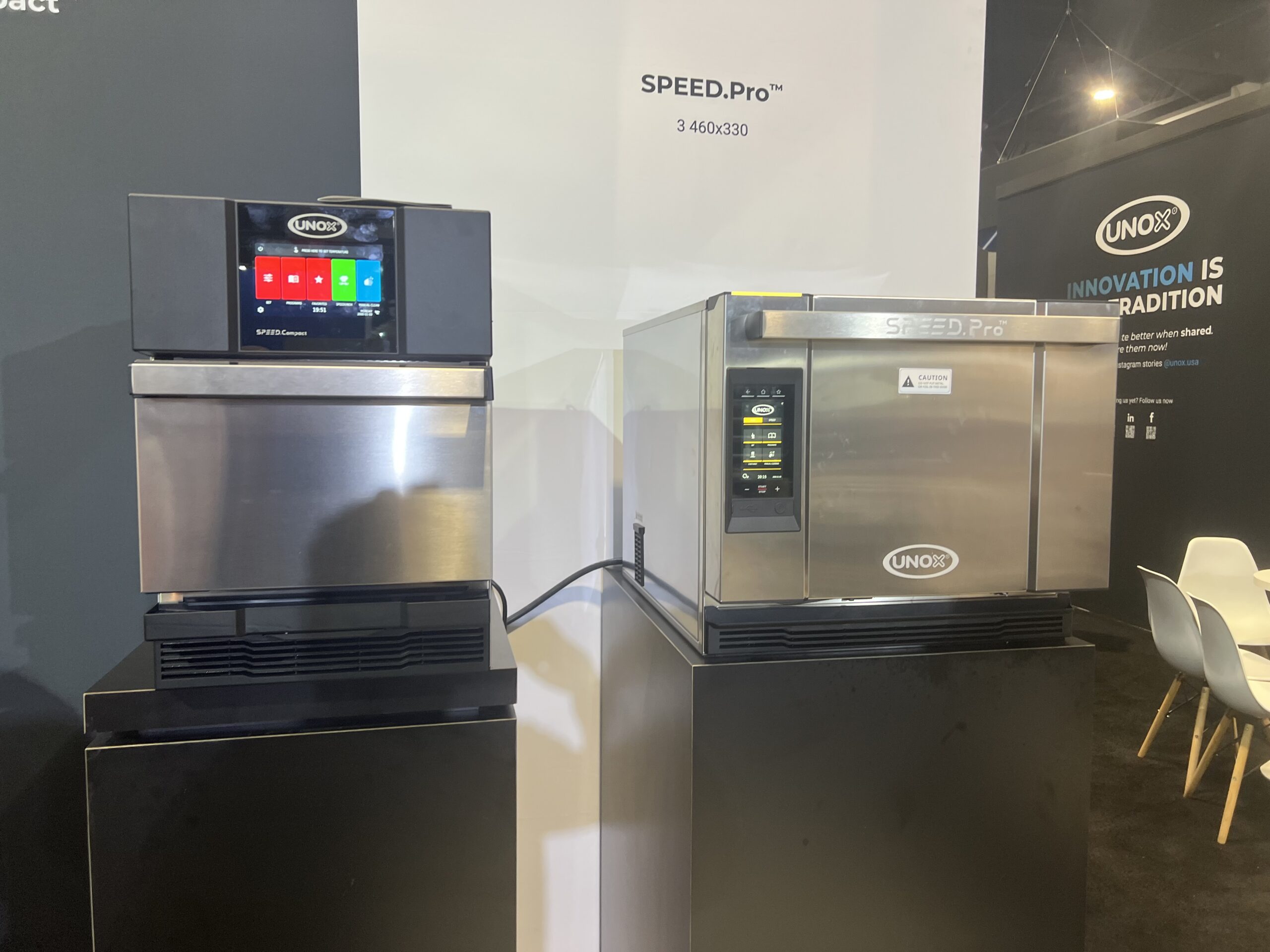
The company’s portfolio reflects the diverse needs of modern restaurant operations. CHEFTOP-X serves as a flagship intelligent combi-oven platform designed for precision cooking and operational flexibility. SPEED-X combines accelerated cooking and combi-oven capabilities within a single system, helping operators improve speed while maintaining food quality. SPEED.Compact addresses environments where space efficiency and throughput are critical, while EVEREO approaches a different challenge by focusing on food preservation and service readiness.
Together, these platforms illustrate a broader strategic vision. Rather than addressing isolated kitchen functions, Unox seeks to improve multiple aspects of food production, holding, preparation and service. This systems-oriented perspective aligns closely with how restaurant operators increasingly evaluate technology investments.
Sustainability and resource efficiency represent another important dimension of the company’s approach. Restaurant operators are paying greater attention to energy consumption, water usage and waste reduction as utility costs continue rising and sustainability initiatives become more prominent. Intelligent cooking systems can support these objectives by helping operators optimize resource utilization while maintaining performance standards.
Efficiency gains can extend beyond utilities. Improved consistency can reduce food waste. Standardized procedures can shorten training cycles. Enhanced visibility can support preventive maintenance and reduce downtime. While each improvement may appear incremental on its own, the cumulative impact across multiple locations can be substantial.
The growing importance of operational intelligence is one reason Unox increasingly occupies a space that extends beyond traditional foodservice equipment. The company sits at the intersection of cooking technology, automation, connectivity and data-driven operations. This positioning reflects broader industry trends in which restaurants are seeking integrated solutions that support both culinary execution and business performance.
The competitive landscape includes numerous manufacturers of combi ovens and commercial cooking equipment. Unox differentiates itself through its emphasis on connected operations, digital ecosystems and intelligent cooking technologies. Rather than focusing solely on cooking performance, the company has invested heavily in helping operators manage and optimize kitchen operations through data, connectivity and centralized control.
Perhaps the most compelling aspect of the Unox story is what it suggests about the future of restaurant operations. As kitchens become increasingly connected, equipment will play a larger role in capturing institutional knowledge, supporting consistency and generating operational insights. Success will depend not only on how well equipment cooks food, but also on how effectively it helps organizations manage complexity and scale performance.
Restaurants are increasingly discovering that the future of operational excellence lies at the intersection of culinary expertise and intelligent technology. By combining advanced cooking systems with connectivity, automation and data-driven management tools, Unox is helping operators move toward that future. In an industry where consistency, efficiency and adaptability have become critical competitive advantages, the connected kitchen is rapidly moving from concept to reality.
