
By Dustin Stone, Gavriel Shohet and Lea Mira, HTN staff writers - 6.23.2026
Restaurant innovation is often associated with artificial intelligence, automation, digital ordering platforms and emerging guest-facing technologies. Yet for many operators, success still depends on something far more fundamental: the ability to run a kitchen efficiently, consistently and reliably every day. As labor costs rise, margins remain under pressure and new-unit development becomes increasingly expensive, restaurant operators are paying closer attention to the equipment decisions that influence both operational performance and long-term profitability.
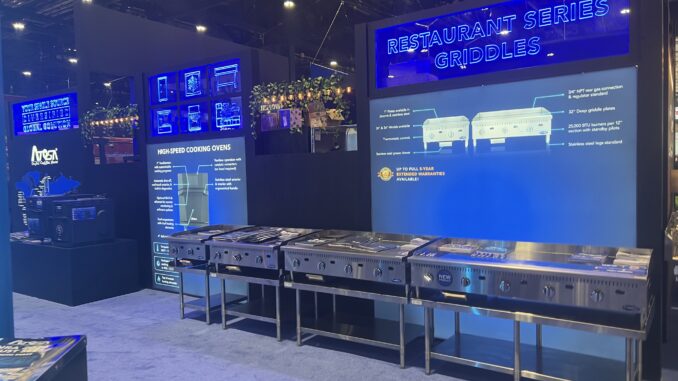
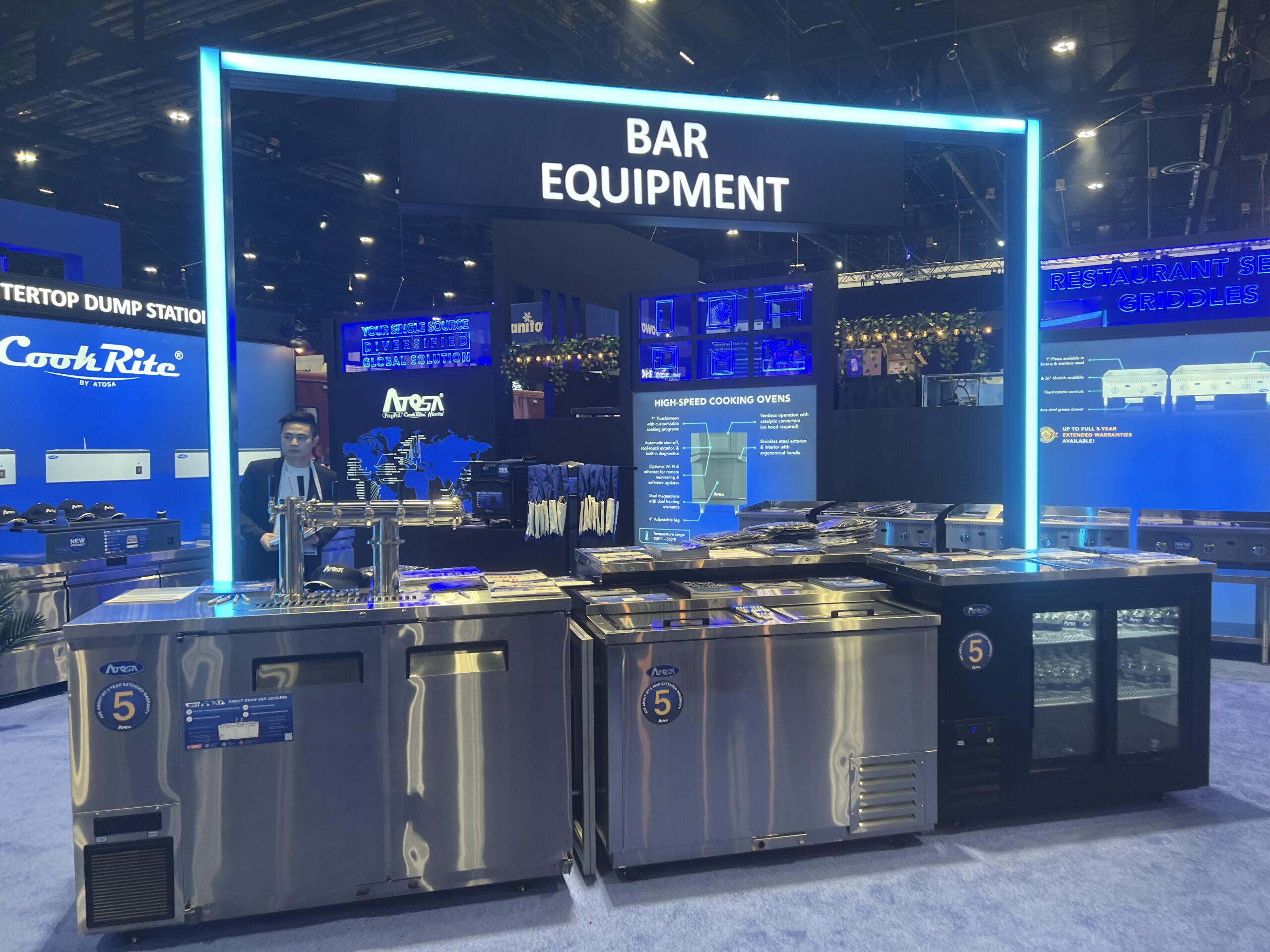
That reality was evident at this year’s National Restaurant Association Show, where exhibitors showcased a wide range of solutions designed to improve restaurant operations. Among them was Atosa USA, which welcomed attendees to its exhibit and showcased a broad portfolio of refrigeration, cooking, food-preparation and merchandising equipment designed for commercial foodservice environments. While the company’s products may not generate the same attention as robotics or artificial intelligence, they address some of the most important challenges facing restaurant operators today: reliability, efficiency, consistency and long-term value.
Those priorities have become increasingly important as operators navigate a more complex business environment. Restaurant owners and executives continue balancing rising food costs, labor shortages, utility expenses and capital-investment decisions. In that environment, equipment is no longer viewed simply as kitchen infrastructure. It is increasingly evaluated as a strategic asset that influences operating costs, productivity, food quality and the overall performance of the business.
Atosa’s position in the market reflects this shift. The company serves a broad spectrum of foodservice operators, from independent restaurants and emerging chains to multi-unit brands, catering operations, commissaries, institutional foodservice organizations and hospitality venues. Across these segments, operators share a common objective: building kitchens that can perform consistently while supporting growth and controlling costs.
One of the company’s greatest strengths is the breadth of its portfolio. Atosa offers an extensive lineup of commercial foodservice equipment, including refrigeration systems, freezers, prep tables, sandwich and salad stations, chef bases, glass-door merchandisers, display cases, ice makers, milk coolers, open-air merchandisers, cooking equipment and stainless-steel fabrication products. This broad product lineup allows operators to standardize equipment across multiple areas of the kitchen while simplifying purchasing, maintenance and operational management.
That standardization can become particularly valuable as restaurant organizations grow. Multi-unit operators often face challenges related to consistency, maintenance and training. Equipment platforms that can be deployed across multiple locations help simplify operations while supporting more predictable performance. For growing brands, those efficiencies can become increasingly important as expansion introduces additional complexity.
Reliability remains one of the most significant considerations in commercial kitchens. Equipment failures can create operational disruptions that affect food safety, labor productivity and guest satisfaction. A refrigeration issue can lead to product loss. A cooking-equipment failure can reduce service capacity during peak periods. In many cases, reliability is not simply a maintenance concern; it is a business-performance issue.
Atosa’s focus on dependable equipment resonates because operators increasingly recognize the cost of operational interruptions. While reliability may not attract the same attention as emerging technology deployments, it often has a greater impact on day-to-day performance. The ability to maintain consistent operations without unexpected downtime remains one of the most valuable attributes any equipment provider can deliver.
Refrigeration is a particularly important area of focus. Temperature control sits at the center of food safety, product quality, inventory management and operational efficiency. Atosa continues to expand and refine its refrigeration portfolio, including chef bases, reach-in refrigeration, undercounter units and merchandising solutions designed for demanding commercial environments. Features such as electronic temperature controls, durable stainless-steel construction and operator-friendly configurations reflect the industry’s growing emphasis on both performance and usability.
Energy efficiency is another area receiving increased attention. Utility costs continue to influence operating expenses across the foodservice industry, making energy-efficient refrigeration and cooking equipment increasingly attractive. Operators are looking beyond initial purchase prices and evaluating equipment based on total cost of ownership, including energy consumption, maintenance requirements and expected service life.
This broader financial perspective is changing how purchasing decisions are made. Historically, equipment evaluations often focused heavily on upfront cost. Today, operators are more likely to consider long-term operating economics. Equipment that delivers lower utility costs, reduced maintenance expenses and dependable performance can create meaningful financial benefits throughout its lifecycle.
Atosa’s emphasis on value aligns closely with these changing priorities. The company has built a reputation around providing commercial-grade equipment that balances performance, durability and affordability. For operators facing budget constraints while still needing reliable equipment, that combination can be particularly appealing.
Food-preparation and cooking equipment present similar opportunities. Labor challenges continue affecting restaurants across virtually every segment. Equipment that simplifies preparation processes, improves workflow efficiency and supports consistency can help operators accomplish more with existing teams. While such improvements may appear incremental, their cumulative impact can be significant over time.
Another factor shaping the market is the continued growth of alternative operating models. Ghost kitchens, commissaries, catering operations and hybrid restaurant concepts all require equipment that can support flexible production environments. Operators increasingly seek solutions capable of adapting to changing business needs without requiring extensive reinvestment.
Atosa’s broad portfolio positions the company well within this environment. Rather than serving a narrow niche, it supports multiple operational functions across the kitchen. This versatility allows operators to build integrated equipment strategies that support both current operations and future growth initiatives.
The competitive landscape includes numerous equipment manufacturers serving the commercial foodservice market. Atosa differentiates itself through its combination of product breadth, operational reliability and value-oriented positioning. While some providers focus on premium specialization and others compete primarily on price, Atosa has sought to balance performance, efficiency and affordability in a way that appeals to a wide range of operators.
Perhaps the most interesting aspect of the Atosa story is that it highlights a category of innovation that often receives less attention than emerging technologies. Restaurants cannot operate successfully without dependable refrigeration, food preparation and cooking equipment. These systems form the foundation upon which every menu item, every service period and every guest experience depends.
As restaurants continue adapting to economic pressures, labor challenges and changing consumer expectations, the importance of efficient and reliable kitchen operations is unlikely to diminish. Technologies and platforms that improve productivity often attract headlines, but operational fundamentals remain equally important.
Atosa’s role within the industry reflects that reality. By helping operators build kitchens that are reliable, efficient and cost-effective, the company is supporting the operational foundation that allows restaurants to grow, innovate and compete. In a business where consistency and execution matter every day, that contribution may be more valuable than ever.
