By Dustin Stone, Gavriel Shohet and Lea Mira, HTN staff writers - 6.23.2026
The restaurant industry’s digital transformation extends far beyond mobile apps, loyalty platforms and online ordering systems. Increasingly, operators are rethinking the physical environments where guests interact with their brands. From drive-thru lanes and digital menu boards to self-service kiosks and in-store displays, the technologies that shape customer communication and ordering experiences are becoming more sophisticated, more connected and more strategically important. As restaurants continue searching for ways to improve throughput, maintain brand consistency and enhance guest engagement, the physical layer of restaurant technology is evolving into a critical component of operational success.
Founded in 1950 and headquartered in Brookfield, Wisconsin, The Howard Company has evolved from a traditional signage manufacturer into an employee-owned provider of integrated restaurant communications, digital signage, drive-thru and guest-engagement solutions. Today, the company works with restaurant brands across North America to help create more consistent and connected customer experiences across both physical and digital touchpoints.
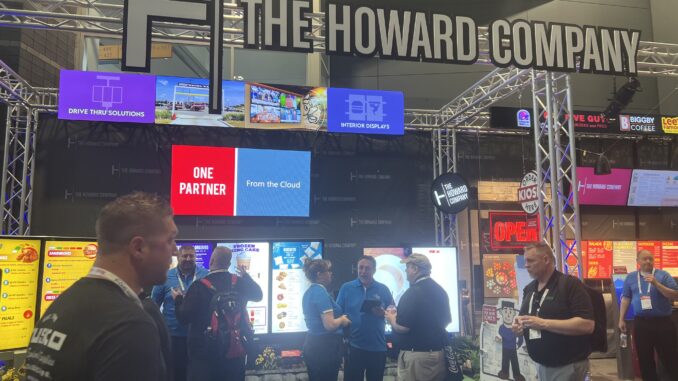
That evolution was on display at this year’s National Restaurant Association Show, where exhibitors showcased technologies designed to improve both restaurant operations and customer experiences. Among them was The Howard Company, which highlighted a portfolio that included DT-Flex Digital Drive-Thru solutions, indoor and outdoor digital menu boards, self-service kiosks, Voice AI integrations, Benchmark Flip menu systems and restaurant graphics programs. The company’s exhibit reflected a broader industry trend: restaurants increasingly want connected systems that unify guest communication across multiple touchpoints rather than isolated hardware solutions.
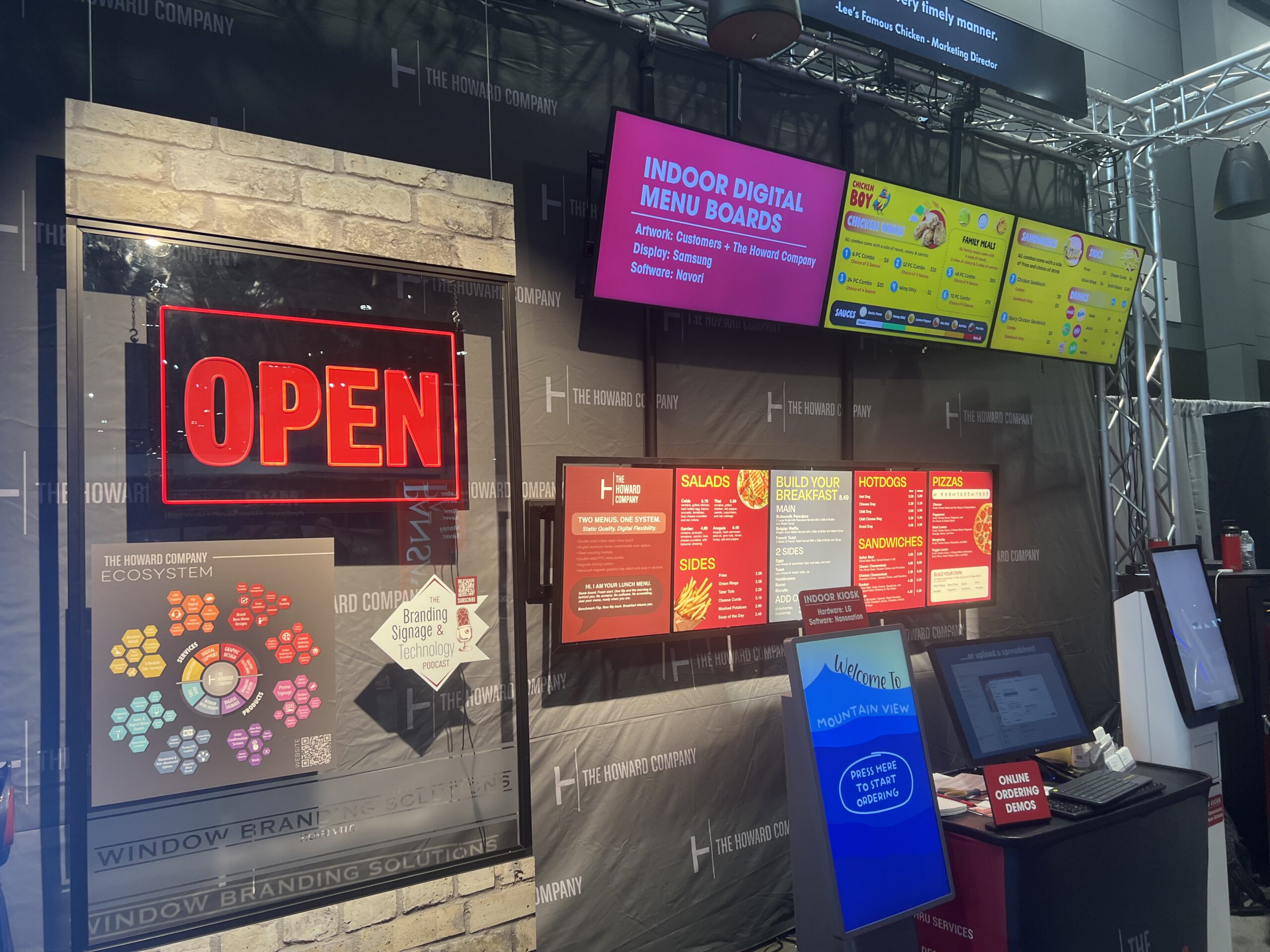 For decades, menu boards and signage were largely static operational assets. Their purpose was straightforward: display products, pricing and promotional messages. Today’s restaurant environment is dramatically different. Operators increasingly view customer-facing communication systems as dynamic platforms capable of influencing throughput, order accuracy, upselling opportunities, brand perception and overall guest satisfaction.
The Howard Company sits directly at the intersection of these trends. The company has expanded beyond traditional menu-board solutions to support a broader vision of restaurant communications that includes digital signage, drive-thru technologies, self-service ordering, content management, merchandising, installation services and branding support. This integrated approach reflects the growing complexity of modern restaurant operations, where consistency and communication are increasingly intertwined.
Perhaps nowhere is this transformation more visible than in the drive-thru. Once viewed primarily as a convenience channel, the drive-thru has evolved into one of the restaurant industry’s most important revenue engines. For many quick-service brands, drive-thru transactions account for a substantial portion of sales volume, making speed, accuracy and customer engagement critical business priorities.
As a result, drive-thru infrastructure has become a technology platform in its own right. Digital menu boards, dynamic promotional content, Voice AI solutions, integrated ordering systems and customer-communication tools all contribute to the experience. The Howard Company’s digital solutions portfolio reflects the industry’s movement toward more connected and intelligent guest interactions.
This shift is important because guest expectations continue changing. Consumers increasingly expect restaurant interactions to be fast, intuitive and personalized. They expect promotions to be current, menus to be easy to navigate and ordering experiences to be frictionless. Meeting those expectations requires more than attractive displays. It requires systems capable of delivering the right information to the right customer at the right time.
Digital signage plays an increasingly important role in that process. Modern restaurant displays are no longer limited to static content or periodic updates. Operators can adjust promotions, pricing and merchandising strategies dynamically while maintaining consistency across multiple locations. The ability to manage messaging centrally has become particularly valuable for franchise organizations and multi-unit operators.
This focus on consistency is one of the strongest aspects of The Howard Company’s value proposition. Restaurant brands invest heavily in creating cohesive guest experiences, yet maintaining that consistency across hundreds or thousands of locations can be difficult. Variations in signage, promotional execution and menu presentation can undermine brand standards and create operational inefficiencies.
The Howard Company addresses these challenges through a combination of technology, content-management capabilities, rollout services and branding expertise. By helping operators standardize customer-facing communications, the company supports broader efforts to maintain brand consistency while simplifying operational execution.
Kiosks represent another area of growing opportunity. Self-service ordering technologies continue gaining traction as restaurants seek to improve throughput, reduce wait times and accommodate changing consumer preferences. While kiosks are often discussed as labor-saving tools, they also serve as merchandising platforms capable of supporting upselling, promotional messaging and personalized ordering experiences.
The company’s portfolio also reflects the growing convergence of physical and digital restaurant technologies. Increasingly, operators are seeking integrated ecosystems rather than standalone products. A drive-thru menu board, indoor digital display, self-service kiosk and promotional signage strategy are no longer viewed as separate initiatives. Instead, they are components of a broader guest-engagement framework.
This convergence creates new opportunities for restaurant operators. Promotions can be coordinated across multiple channels. Brand messaging can remain consistent regardless of where a customer interacts with the business. Operational updates can be deployed more efficiently. These capabilities help restaurants manage increasingly complex customer journeys while maintaining a cohesive brand experience.
Another factor driving demand for integrated communication systems is the increasing pace of menu and promotional changes. Restaurants today update offerings more frequently, test new products more aggressively and rely heavily on limited-time offers to drive traffic. Traditional static communication methods often struggle to keep pace with this level of change. Digital systems provide greater flexibility while reducing the logistical challenges associated with updates and rollouts.
The Howard Company’s emphasis on installation and rollout services is also notable. For large restaurant organizations, technology success depends not only on the products themselves but also on execution. Deploying systems consistently across multiple locations can be challenging, particularly when franchisees, contractors and regional operating teams are involved. Support services help ensure that technology investments achieve their intended outcomes.
Another differentiator is the company’s extensive partner ecosystem. The Howard Company works with organizations across digital signage, displays, AI-powered ordering, kiosks and restaurant operations, including relationships with Samsung, LG, Panasonic Connect, PAR Technology, SoundHound AI, Hi Auto, Presto, GRUBBRR, Navori Labs and Square. These relationships help support integrated solutions that combine hardware, software, communications and guest-engagement technologies into a more cohesive operational platform.
The competitive landscape includes menu-board manufacturers, digital-signage providers, drive-thru technology companies and customer-engagement platforms. The Howard Company differentiates itself through the breadth of its offerings and its ability to support multiple aspects of restaurant communications within a single ecosystem. Rather than addressing isolated needs, the company focuses on helping operators create cohesive customer experiences across physical and digital environments.
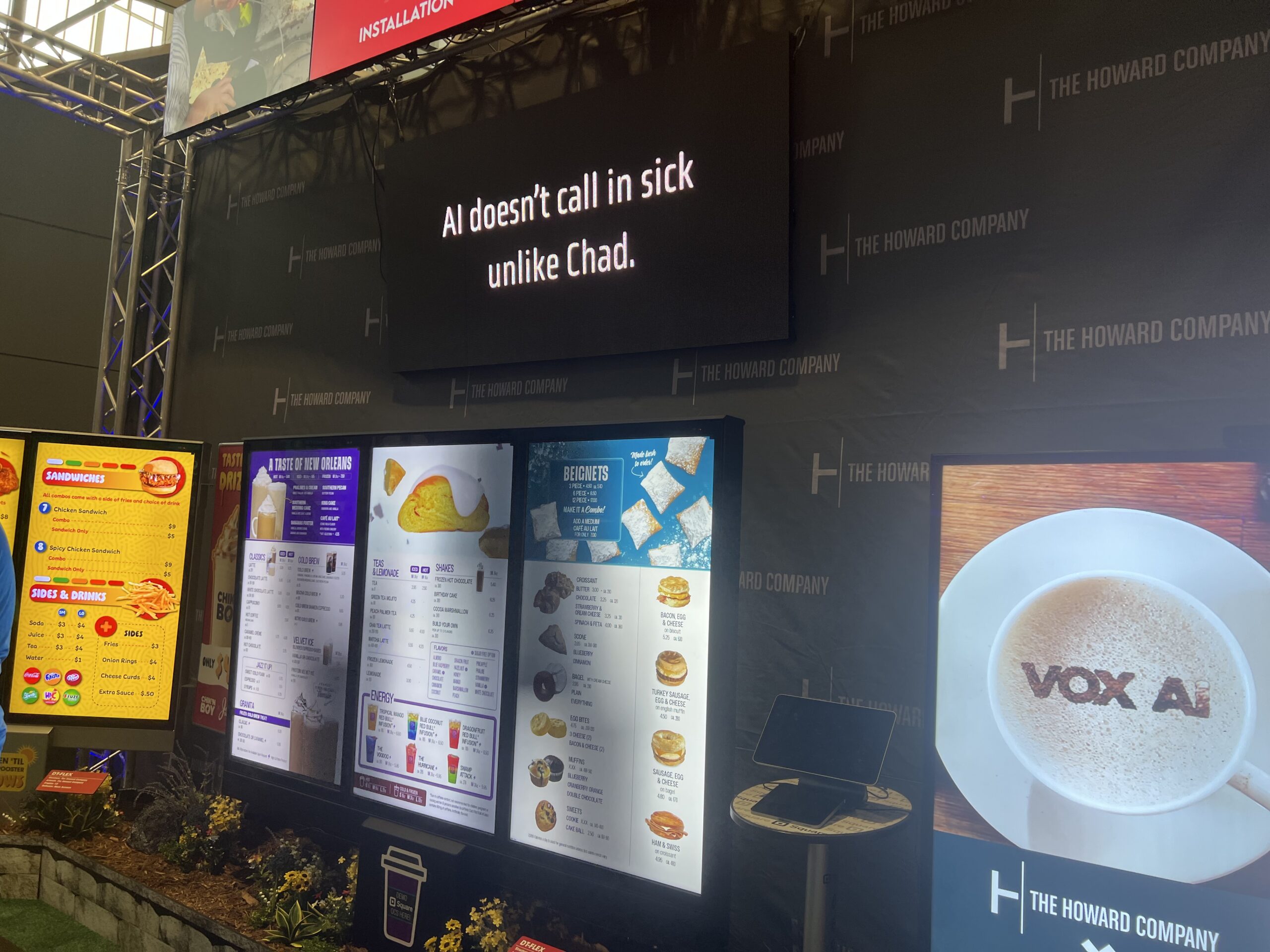 Perhaps the most interesting aspect of The Howard Company story is that it highlights a category of restaurant technology that often receives less attention than software platforms and artificial intelligence. Every guest interaction is influenced by what customers see, how information is presented and how ordering environments are designed. These physical touchpoints remain critically important, even as restaurants become increasingly digital.
As restaurant brands continue investing in modernization, the physical guest experience is becoming more connected, more dynamic and more data-driven. Drive-thru lanes, kiosks, digital displays and communication systems are evolving into strategic assets capable of influencing both customer satisfaction and business performance.
The Howard Company is helping operators navigate that transition. By connecting drive-thru technology, digital signage, kiosks and brand communications into a more unified ecosystem, the company is supporting a future in which restaurant technology extends far beyond software and into every customer-facing aspect of the dining experience. In an increasingly competitive marketplace, that ability to communicate consistently and effectively may prove to be one of the industry’s most valuable advantages.
