
By Dustin Stone and Lea Mira, RTN staff writers - 7.6.2026
Restaurant catering has moved from a useful add-on to a more strategic growth channel. For many operators, catering brings larger orders, higher average tickets, more predictable demand and exposure to guests who may not have discovered the restaurant otherwise. It can also create problems if the operation is not built for it. Menus need to work for groups. Orders need to be accurate. Delivery windows matter. Packaging has to hold up. Dietary preferences have to be clear. Business customers need receipts, approvals, reliability and support.
ezCater has built its business around those needs. The company connects workplaces with restaurants across the United States through a platform designed to make food easier to order, manage and scale. For restaurant partners, the appeal is access to larger workplace food orders, new high-value customers and a channel that can help grow catering without requiring every restaurant to build its own corporate sales operation.
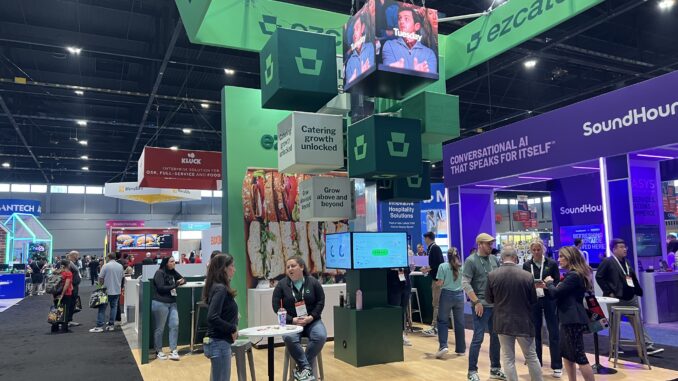
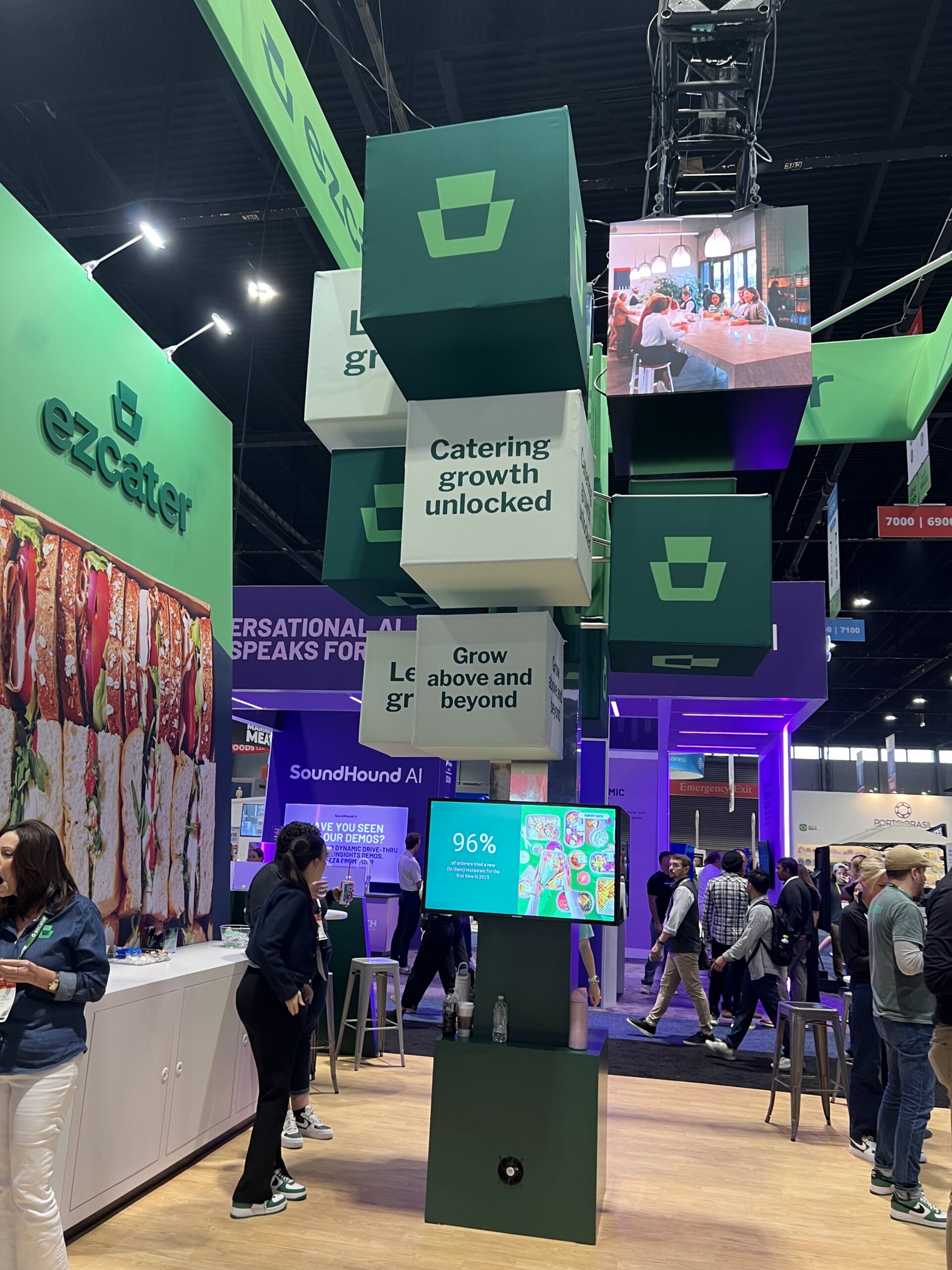
That message was front and center at the National Restaurant Association Show, where ezCater exhibited and connected with restaurants around workplace catering. The company’s show presence reflected a clear operator need: restaurants are looking for growth channels that can support profitability, not just visibility. Workplace food is becoming one of those channels as companies use meals to bring teams together, support office attendance and create a better employee experience.
ezCater has also sharpened that story through a broader brand evolution. In April 2026, the company unveiled a new identity that marked its move from a transactional catering marketplace to an enterprise-grade workplace food platform. The shift reflects years of product expansion beyond one-off catering orders and into recurring employee meals, corporate food programs, spend management, business-grade reliability and enterprise integrations.
The company was co-founded by Stefania Mallett and Briscoe Rodgers with a focus on making business catering easier, more reliable and more transparent. What began as a way to connect business orderers with catering options has grown into a national workplace food platform serving organizations, employees and restaurant partners. Today, ezCater gives organizations access to more than 125,000 restaurants nationwide and supports everything from meetings and events to recurring employee meal programs.
The leadership story has also evolved. Last year, Nihad Rahman was appointed CEO after serving as CFO and then interim CEO. Rahman previously held leadership roles at JPMorgan Chase and General Electric, experience that fits ezCater’s expansion into enterprise food spend, corporate purchasing workflows and scalable workplace programs. The company’s current growth strategy is less about adding more catering listings and more about becoming the technology layer for food at work.
 That strategy fits the way workplace food has changed. Office attendance is no longer as predictable as it once was. Hybrid work has made headcounts harder to forecast. Companies are looking for benefits that encourage employees to come together without overcommitting to fixed infrastructure. Traditional corporate cafeterias can be expensive and inflexible, especially when attendance varies by day, team and location. ezCater’s 2026 Workplace Cafeteria Report found that while office attendance is rising, cafeteria use is not, and many organizations are reducing cafeteria hours or considering alternatives.
For restaurants, that creates a practical opening. A workplace meal program can bring a restaurant into an office, hospital, university, warehouse, job site or corporate campus where dozens or hundreds of employees may try the brand at once. That exposure can create repeat business beyond the original order. ezCater’s 2026 workplace catering research found that 96% of workplaces tried a new restaurant in 2025, while 62% of employees who first tried a restaurant at work later ordered from that same restaurant in their personal lives. The company also reported that 67% recommended those restaurants to family and friends.
Those numbers help explain why catering has become more important for restaurant growth. A single workplace order can introduce a brand to many potential guests at the same time. If the food travels well, arrives on time and works for different dietary needs, the restaurant may gain not only the order itself but also future dine-in, takeout, delivery and catering customers. Workplace catering can function as customer acquisition, not just off-premises sales.
ezCater’s platform is built around both sides of that exchange. Workplaces get one place to order food for meetings, events and recurring programs, with tools to manage budgets, locations, users, receipts and spend. Restaurants get access to business customers placing larger, group-oriented orders. The model works best when menu design, order accuracy, delivery execution and corporate purchasing workflows come together.
The restaurant-facing opportunity starts with demand. ezCater gives restaurant partners access to workplace buyers who may not otherwise discover them through a standard consumer ordering channel. These buyers are often ordering for groups, which means the average order size can be meaningfully larger than an individual takeout or delivery order. Orders are also often planned in advance, giving restaurants more time to prepare, staff and package properly.
In January, Five Guys joined ezCater to bring its catering program to workplaces nationwide. The partnership made Five Guys available for corporate catering through ezCater across hundreds of locations, giving workplace customers access to burger bundles, build-your-own bars and other group-friendly formats. The move reflected the appeal of workplace catering for limited-service and fast-casual brands that already have strong consumer recognition but want to build larger group-order channels.
MISSION BBQ also joined the platform as its first third-party marketplace partner, bringing all of its locations onto ezCater and positioning workplace catering as a way to unlock a new revenue stream. Mendocino Farms joined as well, pointing to the demand for restaurant brands that can serve workplace lunches with variety, consistency and strong brand recognition. These examples show how workplace catering can be relevant to national brands, regional concepts and independent operators.
Menu design plays a major role in whether restaurants convert that demand. Workplace catering is different from individual ordering. Customers need to understand how much food is appropriate for a given headcount, whether items work for dietary needs, how the food will be packaged and whether the order will be easy to serve in an office or meeting room. ezCater’s 2026 research found that more robust, descriptive menus see twice as many bookings on the platform. Top-performing listings include photos, multiple dietary options, drinks and desserts, and both individually packaged and tray options.
That insight is useful because it turns catering growth into a more concrete set of operating choices. A restaurant may have strong food and a recognizable brand, but a weak catering menu can limit conversion. Clear descriptions, accurate serving guidance, strong photos, add-ons, packaging choices and dietary information can all influence whether a workplace buyer chooses one restaurant over another. ezCater functions not only as a demand channel but also as a guide for how restaurants can present catering to business customers.
The operational stakes are high because workplace catering depends on trust. A late lunch for a board meeting, training session or client presentation can damage the experience for the customer and the restaurant. Business customers need predictable delivery windows, reliable portions, accurate labeling and responsive support. ezCater emphasizes 24/7 service and business-grade reliability, which is a significant part of its value proposition for both workplaces and restaurant partners.
The company’s ordering tools are designed around search, filtering and repeat use. Customers can search by cuisine, dietary need, packaging type, budget per person and other requirements. For companies that order frequently, the platform supports saved favorites, order history, centralized receipts and repeat ordering. Those features may sound administrative, but they are central to making workplace food scalable. The easier it is for a company to manage ordering, the more likely food becomes a recurring workplace program rather than an occasional perk.
ezCater has been leaning into that enterprise use case. Its corporate solutions are designed to help organizations manage food across teams, departments and locations. Companies can set up meal programs, support meetings and events, manage food budgets, control users and maintain centralized oversight. This matters for larger organizations because food spend can become fragmented quickly. Different employees may order through different vendors, submit receipts manually, exceed informal budgets or create inconsistent experiences across locations.
The company’s food spend management tools address that administrative burden. Organizations can control budgets, manage users, set spend limits by team or location and centralize invoicing. For finance and operations teams, that creates a clearer view of food spend. For restaurants, more structured enterprise food programs can mean more repeatable demand, especially when companies shift from occasional catered meetings to recurring team meals.
One of ezCater’s more notable recent product moves is its enterprise integration with Concur Expense. The integration automatically sends food receipts from ezCater orders into Concur Expense, supports automatic receipt correction when orders are updated or refunded, allows organization-wide activation and gives finance teams centralized visibility into ezCater orders and expenses. For enterprises, that connection can reduce manual work, improve compliance and make workplace food easier to manage at scale.
The easier it is for companies to approve, order, expense and reconcile food, the less friction there is around workplace meal programs. Administrative friction can suppress demand. When ordering and expense management feel simple, companies may be more willing to use restaurant-powered meals regularly across more locations and occasions.
ezCater’s cafeteria research adds more context. The company reported that average operating costs for corporate cafeterias exceed $1 million annually, while many decision-makers say cafeteria use is declining or no longer justifies the overhead. It also found that employees prefer food from restaurants, with 76% saying restaurant food is tastier than cafeteria food, and 80% of decision-makers agreeing that meals from local restaurants encourage office attendance more effectively than cafeteria fare.
That data strengthens ezCater’s pitch to both sides of the market. Workplaces are looking for more flexible food solutions. Employees want better food and more variety. Restaurants want larger orders and new customers. ezCater connects those needs, giving companies a way to manage workplace food without running a cafeteria and giving restaurants a way to participate in corporate meal programs without building the entire infrastructure themselves.
The return-to-office conversation adds another layer. ezCater’s 2026 Future of Workplace Experience Report found that many workers expect recurring food benefits and view food as part of a better workplace experience. The report also tied shared meals to workplace connection and collaboration. For restaurants, that means workplace food is being linked not just to convenience, but to employee engagement and company culture.
That gives restaurant catering a more durable demand story. If companies view food as a strategic workplace tool rather than an occasional lunch expense, restaurants may see more consistent opportunities. Recurring employee meals, department lunches, training sessions, team celebrations, client meetings and large workplace events can all become part of the same demand pool. Restaurants best positioned for that demand will be the ones that deliver reliably, package effectively, handle volume and adapt menus for business ordering.
ezCater’s strengths begin with scale. A network of more than 125,000 restaurants gives workplace customers broad choice while giving restaurant partners access to national demand. The company also benefits from its category focus. Unlike general delivery marketplaces built mainly around individual consumer orders, ezCater is built around food for work. That focus shows up in order size, customer expectations, budget controls, delivery reliability, recurring programs and enterprise integrations.
Another strength is the platform’s ability to serve both independent restaurants and larger brands. Independent operators may use ezCater to reach workplace customers they would not have the sales resources to pursue on their own. Regional and national brands may use it to scale catering across markets, standardize access to workplace buyers and capture large-format orders without relying only on local store-level sales efforts. That flexibility helps make ezCater relevant to small operators and enterprise restaurant groups at the same time.
The platform also gives operators a way to think more strategically about off-premises growth. Delivery and takeout have become essential, but they are not always the most profitable channels. Workplace catering can be more planned, more operationally predictable and better suited to larger average checks. Orders are often placed in advance, giving restaurants more time to plan labor, prep and packaging. That predictability can make catering attractive in a market where many operators are trying to grow sales without adding more stress to the kitchen.
Restaurants that join a workplace catering platform need to make sure the channel is operationally ready. Catering menus should be clear, profitable and easy to produce at volume. Packaging should travel well. Delivery expectations should be realistic. Staff need processes for confirming, preparing and staging orders. A large catering order can be profitable, but it can also create pressure if it collides with a lunch rush or is not integrated into kitchen planning.
ezCater can help generate demand, but the restaurant still owns the guest experience once the food arrives. Portion accuracy, temperature, presentation, labeling and timeliness all affect whether a workplace buyer orders again. The strongest use cases will likely come from restaurants that treat catering as a dedicated growth channel rather than an occasional extension of their standard menu.
The same is true for enterprise customers. Workplaces may want food to support attendance, culture and collaboration, but programs need to be managed carefully. Budget controls, dietary needs, recurring schedules, location coverage, finance workflows and employee preferences all matter. ezCater’s value grows when those pieces are coordinated through one platform instead of managed manually across spreadsheets, receipts, emails and individual vendor relationships.
The market conditions are favorable. Employers are still trying to make office time more worthwhile. Employees want flexibility but also value in-person connection when it feels purposeful. Restaurants need profitable growth channels that can reach customers beyond the dining room. Corporate cafeterias are expensive to operate and often poorly matched to hybrid attendance patterns. Those forces create room for restaurant-powered workplace food programs to keep expanding.
ezCater is positioned around that opportunity. The company has moved beyond a marketplace-only identity into a platform that connects restaurants, workplaces, employees, finance teams and food program managers. Its recent rebrand, enterprise integrations, workplace research and National Restaurant Association Show presence all point in the same direction: workplace food is becoming more structured, more data-driven and more important to restaurant growth.
For restaurant operators, the opportunity is not simply to take more catering orders. It is to use workplace catering as a channel for discovery, repeat business and higher-value demand. For workplaces, the appeal is a more flexible way to feed teams without the fixed cost and limited variety of traditional cafeteria models. ezCater’s role is to make that exchange easier for both sides.
In a restaurant market defined by labor pressure, margin sensitivity and shifting guest behavior, that role has become more valuable. Catering can help restaurants reach guests at scale. Workplace food can help employers bring people together. A platform that connects those needs with ordering, spend management, support and business-grade reliability gives ezCater a strong position in one of the more practical growth areas in restaurant technology.
