
By Dustin Stone and Lea Mira, RTN staff writers - 7.21.2026
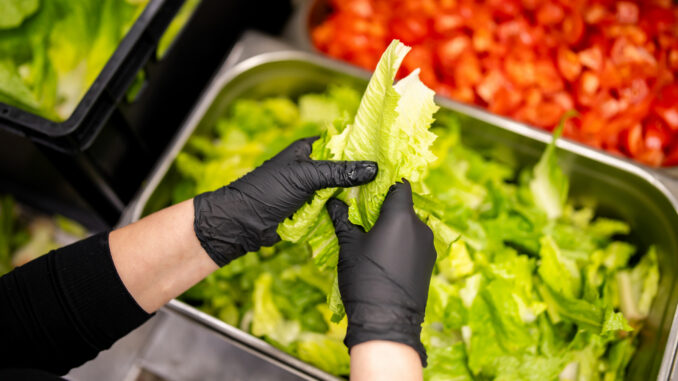
The cyclospora outbreak linked to shredded iceberg lettuce served at some Taco Bell restaurants is producing consequences well beyond the locations identified by federal health officials. Placer.ai estimated that visits to Taco Bell locations fell between 16.9% and 18.9% over three days compared with typical traffic for the same days earlier this year. Chopt, Chipotle, Panera Bread and Cava also experienced declines, even though those brands were not all connected to the outbreak. The traffic data suggests that many consumers are reacting not only to a particular restaurant but also to broader concerns about lettuce, salads and fresh produce.
As of July 19, the Food and Drug Administration and Centers for Disease Control and Prevention had identified more than 1,644 illnesses and 94 hospitalizations in a five-state outbreak linked through epidemiological and traceback evidence to shredded iceberg lettuce served at Taco Bell locations in Indiana, Kentucky, Michigan, Ohio and West Virginia. Taco Bell stopped using lettuce from the supplier identified in the investigation, Taylor Farms de Mexico, and Taylor Farms recalled iceberg lettuce sourced from central Mexico.
The investigation also illustrates how difficult foodborne illness response can be. The FDA initially reported that a lettuce sample had tested positive for Cyclospora, then withdrew that result after laboratory experts determined it was a false positive. As of July 19, the agency had no confirmed positive product samples, although its traceback work and the pattern of reported illnesses continued to converge on shredded iceberg lettuce from Taylor Farms’ operations in central Mexico.
A food safety response may need to begin before investigators have a definitive laboratory result. The operator still needs to determine which locations received the product, when it arrived, whether any remains in storage, which menu items contained it and whether surfaces or containers require additional cleaning. Corporate teams also need to communicate instructions to hundreds or thousands of locations and confirm that each restaurant completed them.
Technology cannot prevent every contaminated product from entering a restaurant. Much of the risk associated with fresh produce originates upstream, potentially during growing, harvesting, washing, processing or distribution. What restaurant technology can do is shorten the time between an alert and a verified response.
That begins with traceability. Platforms such as FoodLogiQ allow food companies to collect critical tracking events, trace products forward and backward at the batch or lot level and initiate withdrawals across affected locations. Its mobile tools allow restaurant and retail employees to capture traceability information and participate in recall workflows without returning to a desktop computer. In an incident involving a widely used ingredient such as lettuce, that can help an operator distinguish between locations that received an implicated shipment and those that did not.
TraceGains approaches the problem from the supplier and ingredient side. Its platform centralizes supplier documents, certifications, specifications and quality records, while automating portions of document collection and validation. Incoming certificates of analysis can be compared against product specifications, with discrepancies and out-of-specification lots flagged for review. That kind of supplier intelligence does not replace product traceability, but it gives restaurant companies, manufacturers and commissaries a stronger record of who supplied an ingredient and whether required documentation was current when the product was accepted.
CMX1 combines supplier and product-quality management with restaurant-level standards, audits, self-assessments and corrective-action workflows. A multi-brand operator can use the same environment to manage supplier approval records, distribute new operating procedures and verify that individual locations completed outbreak-related tasks. That closes a common gap between the corporate food safety team that issues an instruction and the restaurant manager responsible for carrying it out.
Smart Food Safe offers a configurable platform that brings HACCP management, supplier compliance, audits, corrective actions, digital recordkeeping and traceability into one system, with IoT integrations that automate data capture from connected monitoring devices.

The pressure to improve traceability is not coming only from high-profile outbreaks. The FDA’s Food Traceability Rule requires covered businesses handling foods on the Food Traceability List to maintain specified Key Data Elements associated with Critical Tracking Events such as receiving, shipping and transformation. Covered entities must be able to provide required information to the FDA within 24 hours or another agreed-upon period. Congress has directed the FDA not to enforce the rule before July 20, 2028, giving the industry additional implementation time but not eliminating the operational need for better records.
GS1 US is working with foodservice and retail organizations on common standards for sharing product and location data. Global Trade Item Numbers, Global Location Numbers, barcodes and RFID can help different supply-chain partners identify the same product, lot and location without translating between incompatible internal naming systems. Its foodservice initiatives and FSMA 204 workgroups are intended to make data exchange more consistent across growers, processors, distributors and restaurant operators.
The Taco Bell investigation shows why interoperability is as important as data collection. A restaurant may have receiving records, a distributor may have shipping records and a processor may have lot information, but a recall can still move slowly when those records cannot be connected. A chain that can match a supplier lot to a distributor shipment and then to a specific group of restaurants is in a better position to remove the product precisely. An operator without that visibility may have to pull lettuce from every location, discard unaffected inventory and leave guests uncertain about whether the response is complete.
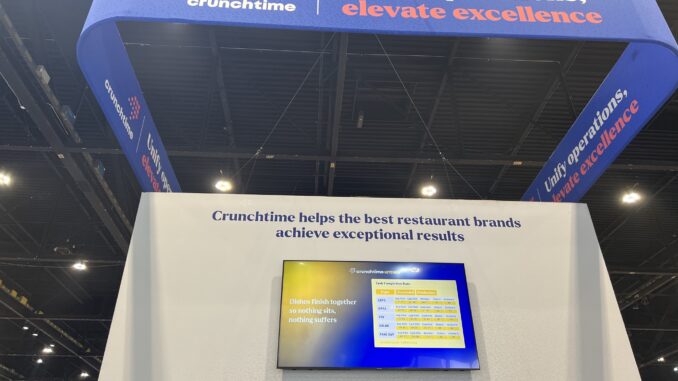
Traceability addresses the movement of food. A separate group of technologies focuses on what happens after an ingredient reaches the restaurant. Crunchtime, Jolt, SafetyCulture and CMX1 digitize procedures that historically lived on clipboards, including temperature checks, line checks, sanitation tasks, opening and closing procedures, manager verifications and corrective actions. Corporate teams can see which restaurants completed a task, which locations missed it and whether an out-of-range result was corrected. The value lies not only in eliminating paper but also in making exceptions visible while there is still time to act.
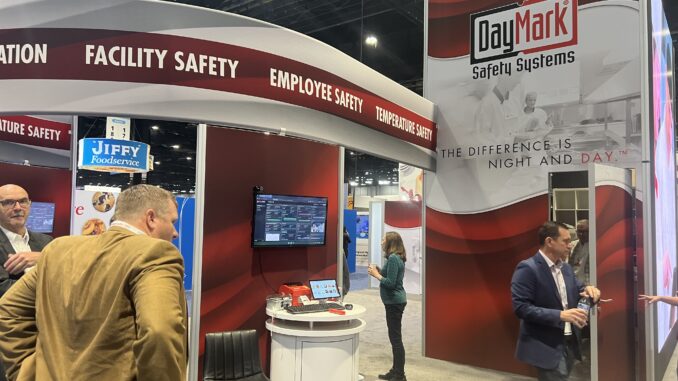
Long associated with food labeling, date coding and food safety identification, DayMark Safety Systems has expanded its focus to the workflows and documentation behind multi-unit food safety programs. Its cloud-based MenuCommand platform centralizes menu data, training materials, labeling rules and operational information, while the MenuPilot application brings those resources into the kitchen. MenuChex, the platform’s food safety and task-management component, digitizes HACCP checks, temperature monitoring, corrective actions and compliance records. It can also capture readings directly from DayMark’s REV716 Bluetooth thermometer, reducing manual entry and creating a real-time record that managers can review across locations. Combined with DayMark’s direct thermal printers, the platform connects shelf-life labeling and food rotation with the broader task management and verification processes required to run a consistent food safety program.
A similar evolution is underway at NCCO, where longstanding foodservice products are increasingly connected to a broader technology portfolio. DateCodeGenie automates prep, use-by, allergen, nutrition and barcode labeling, while Task Manager digitizes HACCP checklists, temperature records, corrective actions and remote refrigerator and freezer monitoring. RightBytes extends those capabilities into prep planning, inventory, traceability, forecasting and waste tracking, while Always Food Safe provides online food manager, food handler and allergen-awareness training. Together, the tools give multi-unit operators a more connected way to standardize labeling, compliance and daily kitchen execution across locations
These platforms are particularly useful during a recall. An operator can issue a product-removal checklist that requires the manager to confirm the item, document the quantity discarded, photograph the lot or case label, sanitize affected areas and acknowledge replacement-product instructions. The completed workflow gives the food safety team more than an email saying that the matter was handled. It creates a time-stamped record from every location.
Temperature monitoring addresses a different set of risks. It would not identify Cyclospora in a shipment of lettuce, but it can reduce exposure to hazards created by improper holding conditions and refrigeration failures. SmartSense by Digi uses wireless sensors, gateways, probes and cloud dashboards to collect temperature and equipment-performance data continuously. Operators can receive alerts when refrigeration moves outside established limits and compare performance across locations rather than relying exclusively on periodic manual readings.
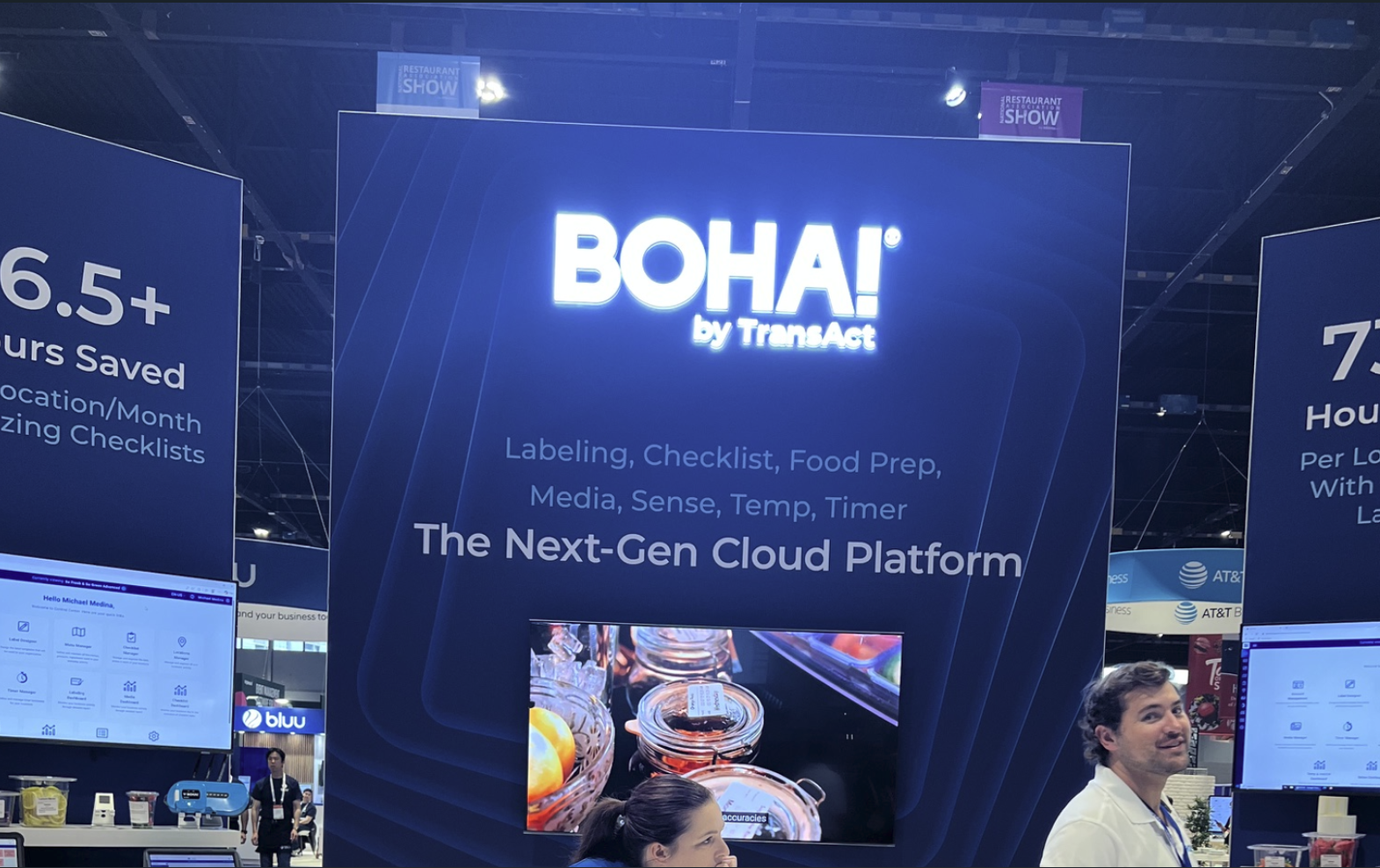
ComplianceMate combines automated HACCP workflows with wireless temperature monitoring and real-time alerts. The system can notify restaurant teams by app, text, email or phone when equipment moves outside a defined range. BOHA! from TransAct Technologies covers related workflows through digital temperature taking, equipment monitoring, corrective-action guidance and on-demand food labeling. BOHA! Sense uses wireless sensors for continuous monitoring of refrigerators, freezers and other cold-storage equipment, while BOHA! Temp guides employees through product-temperature checks.
Metafoodx is taking a different approach to temperature control by applying AI directly to food held during service. Its scanner captures an item’s surface temperature and three-dimensional profile to estimate internal temperature without inserting a probe. Kitchens can conduct scans before and after service or establish timed monitoring rules, while the system analyzes how temperatures change and issues alerts when food may be approaching unsafe conditions. Metafoodx says the technology learns from each kitchen’s menu, layout and equipment to provide location-specific recommendations, giving operators another way to address temperature-related safety failures and food waste without relying entirely on intermittent manual checks.
Labeling can appear mundane beside supplier traceability and connected sensors, but it remains one of the most practical food safety controls inside a restaurant. Jolt and BOHA! allow operators to standardize date coding, shelf-life calculations, preparation information and discard times. Automated labels reduce handwriting errors and make it less likely that employees will rely on memory when deciding whether a prepared ingredient is still usable.
Sanitation verification is another area where visual inspection alone has limitations. Hygiena and Neogen provide ATP-based hygiene monitoring systems that measure biological residue remaining on food-contact surfaces after cleaning. These tools do not specifically test a restaurant’s lettuce for Cyclospora, nor do they replace pathogen testing. They give operators a rapid, measurable way to determine whether a surface-cleaning process removed organic material effectively enough to meet the restaurant’s established standards.
PathSpot addresses employee hand hygiene with a scanner that uses light-based technology to detect contamination markers left on hands after washing and provide immediate feedback. Managers can track scan results and handwashing performance over time. As with temperature sensors and ATP testing, the system is not a defense against every upstream produce hazard, but it adds verification to a process that restaurants have traditionally monitored through observation and training alone.
Third-party assessment programs remain part of the technology stack as well. EcoSure, an Ecolab business, combines on-site food safety and brand-standard assessments with reporting, dashboards, coaching and corrective-action recommendations. The external audit does something an internal checklist may not: it gives the operator an independent view of whether written standards are being executed consistently in the restaurant.
The larger opportunity comes from connecting these systems. A refrigeration alarm, missed sanitation check or unresolved supplier-document request has limited value if it remains in a separate dashboard that few people review. When task completion, sensor readings, audit findings, supplier data and corrective actions are analyzed together, operators can identify locations and suppliers that repeatedly generate risk.
A restaurant with frequent refrigeration alerts may have an equipment-maintenance problem rather than an employee-compliance problem. A location that completes every checklist unusually quickly may need closer review. A supplier associated with repeated specification failures may warrant additional inspections or testing. Food safety analytics become more useful when they help the operator direct attention toward patterns instead of presenting another set of reports.
Training still determines whether any of this produces safer food. The National Restaurant Association and its ServSafe programs provide food safety training and certification used throughout the restaurant industry. The International Association for Food Protection brings together researchers, regulators and practitioners working on subjects that include sanitation verification, microbial-risk detection and the use of artificial intelligence in food safety programs. Technology can prompt an employee to complete a task and preserve the record, but employees and managers still need to understand why the task exists and what corrective action is required when something goes wrong.
The lettuce outbreak has also exposed the connection between food safety data and crisis communications. When consumers begin avoiding several restaurant brands because they share an ingredient category, a vague statement that a company is “monitoring the situation” may not be enough. Operators need verified answers about their suppliers, distribution network, affected locations and product-removal status before they can communicate with confidence. Chipotle told CNN that it did not believe its sourced ingredients were associated with the outbreak, yet the brand still experienced a traffic decline. Taco Bell removed the identified supplier’s lettuce, but visits fell more sharply after federal agencies publicly named the chain. In both cases, consumer behavior moved faster than the investigation.
Restaurants cannot promise that a contaminated ingredient will never enter their supply chain. They can decide how quickly they will know which product is involved, how precisely they can isolate it, how effectively they can direct thousands of employees and how convincingly they can document the response. The traffic declines surrounding the cyclospora outbreak put an immediate financial value on those capabilities. Food safety technology is still about protecting guests, but it is also becoming part of brand protection, supply-chain management and revenue preservation. When concern about one supplier can depress visits across an entire restaurant category, the ability to produce reliable answers quickly is no longer simply a compliance advantage. It is part of keeping customers willing to walk through the door.
