By Dustin Stone and Lea Mira, RTN staff writers - 7.16.2026
Restaurant service often depends on small signals. A guest closes a menu. A server scans the room. A hand goes up. A table waits for another round, dessert, the check or a refill. These moments shape the rhythm of hospitality. When staff see the need quickly, service feels attentive. When they do not, guests can feel ignored even when the restaurant is busy and the team is working hard.
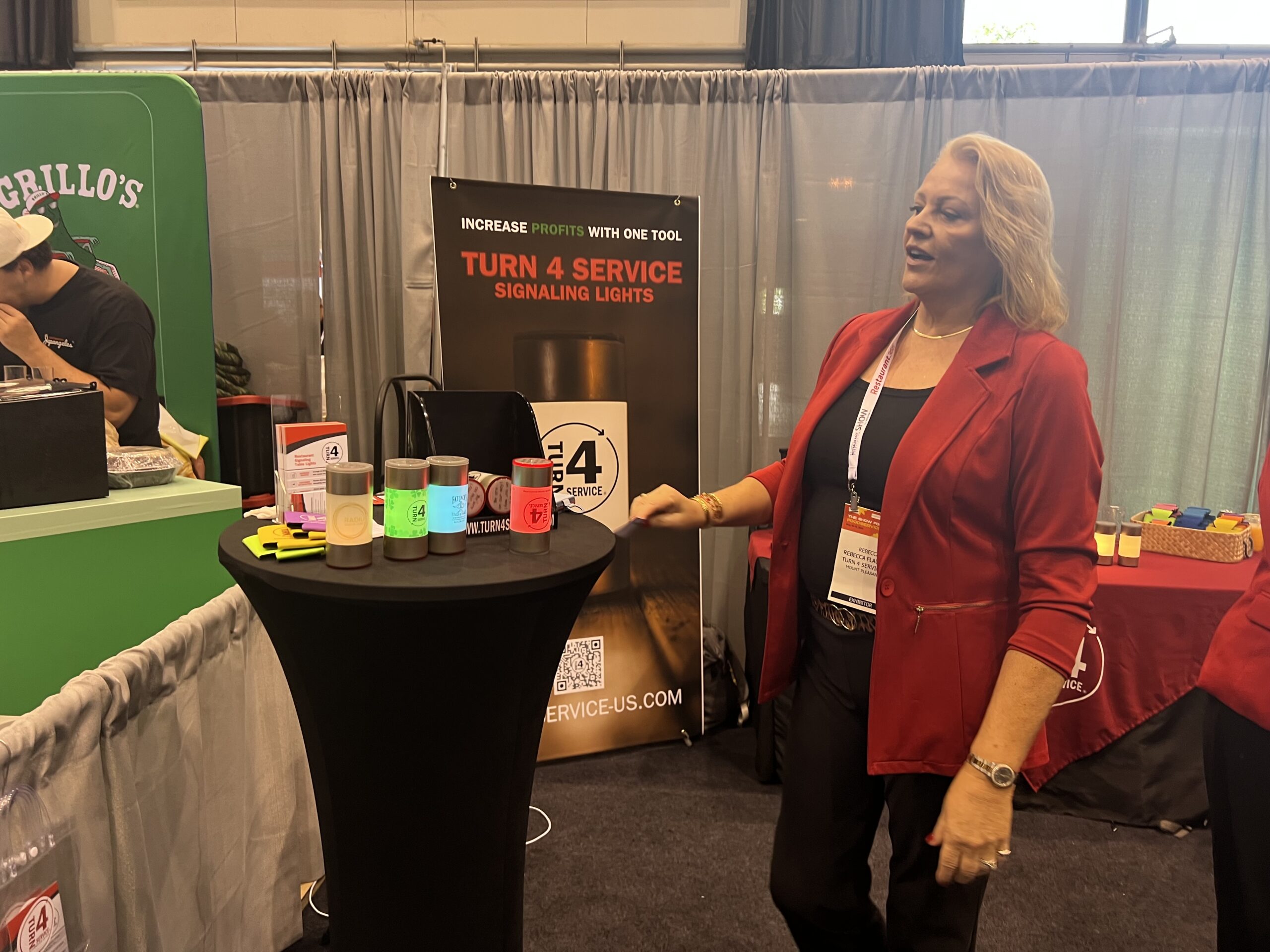
Turn4Service addresses that familiar challenge with a rechargeable cordless signaling light that lets guests indicate when they need service without waving, calling out or waiting for a server to notice them. The device functions as an atmospheric table lamp until a guest turns it over. Once turned, the light becomes a red visual signal that staff can see from across the dining room.
The concept is intentionally simple. Restaurants invest in POS systems, handheld ordering devices, kitchen displays, reservation platforms, loyalty tools and digital ordering channels, but the dining room still depends on timing and awareness. Turn4Service focuses on a more analog service problem: helping guests and staff communicate inside the restaurant without adding screens, apps or complicated workflows. Turn4Service brought that message to the National Restaurant Association Show, where the company introduced operators to a tabletop device designed to make service requests more visible. For restaurants walking the show floor, the appeal was easy to understand. A table light that turns red when service is needed gives managers and servers a clear cue they can act on during the normal flow of service.
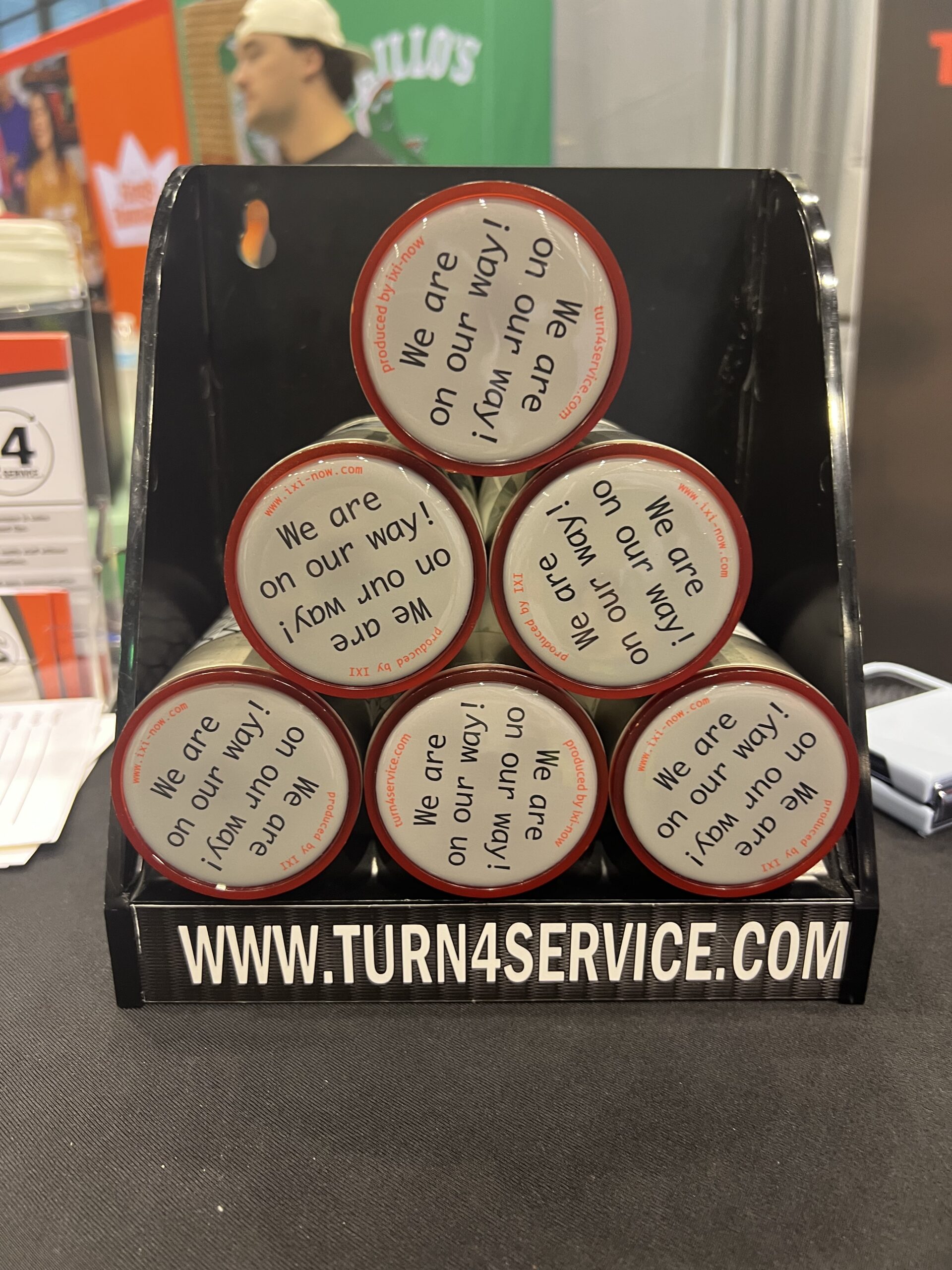
The core product is the Turn 4 Service rechargeable signaling cordless table lamp. The U.S. product page describes it as a communication tool designed to enhance the dining experience while providing a warm, atmospheric glow. When the light is turned over, it turns red, clearly indicating that a guest requires attention. The goal is to reduce the need for guests to search for a server while helping employees identify service needs at a glance.
The system is easy to understand. The light sits on the table in normal lamp mode. Guests use it as ambient lighting until they need something. Instead of waving, calling out or waiting for eye contact, they turn the lamp over. Staff can then prioritize the table without repeatedly scanning every seat for subtle cues. That simplicity can be useful in a busy dining room. Servers often balance several demands at once: greeting new tables, checking on food, taking orders, delivering drinks, handling payment, responding to kitchen timing and monitoring guests who may need something. A visible signal can make some of those needs easier to identify.
 Turn4Service positions the lights as a way to increase sales, improve customer experience and enhance employee efficiency. The sales connection is practical. A guest who can quickly ask for another drink, dessert or add-on may be more likely to order before the moment passes. A server who sees a clear signal can respond without walking the room unnecessarily. A manager can also spot where service pressure is building by seeing which lights are active.
The product addresses a guest-experience issue that can be difficult for restaurants to measure. Guests often dislike waving at staff or interrupting a conversation to ask for attention. Some wait quietly, then become frustrated. Others feel ignored even when the restaurant is simply busy. A discreet tabletop signal gives guests a way to communicate without changing the tone of the meal.
For hospitality-focused restaurants, the approach has appeal. Technology can feel intrusive when it pushes guests toward screens or self-service. Turn4Service takes a different path. The device sits in the physical dining environment and supports the interaction between guest and server. The restaurant still controls the service style, tone and pacing.
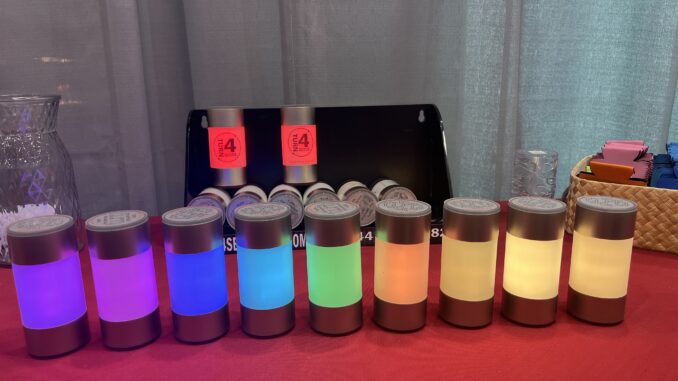
The light also functions as table décor. Turn4Service emphasizes mood lighting, ambiance and custom branding. The device supports nine color settings, allowing operators to adjust the table glow for different settings, holidays, special occasions or brand colors. A table lamp already has a place in many dining rooms, lounges, bars, patios and hospitality settings. By adding a service-signal function, the product turns an existing tabletop object into a communication tool.
Restaurants can also customize the lights. Turn4Service offers customizable logo labels, allowing operators to add their own branding to the device. For restaurants, hotels, bars and branded hospitality venues, that customization can help the light feel like part of the environment rather than an add-on.
The charging model is designed for daily service routines. The U.S. site says a Turn 4 Service charging station can charge up to 26 lights and can be mounted to the wall. The charging station page describes a 10-hour charge and 16 to 24 hours of operation once fully charged. For restaurants, that makes the system easier to fold into opening and closing procedures. Turn4Service also sells a bundle of 20 signaling lights with one charging station, aimed at restaurants, cafes and other service-based businesses that want an all-in-one starting point. The bundle format gives operators a way to pilot the system across a defined section of the dining room before expanding to more tables.
For many restaurants, the most natural starting point may be a specific service area rather than the entire floor. A lounge, patio, bar seating area, private dining room, rooftop, hotel lobby restaurant or high-volume section could provide a useful test. Operators can evaluate whether guests understand the signal, how quickly staff respond and whether the lights improve service flow during peak periods. Casual dining, polished casual, hotel restaurants, cafes, bars and experiential dining venues may be especially good fits. These are environments where guests often linger, order additional rounds and expect staff to be available without hovering. The signal can help servers give guests space while still responding quickly when needed.
The system may also be useful in venues with larger footprints. Patios, beer gardens, rooftops and entertainment venues often make it harder for staff to see subtle guest cues. A red table signal can stand out across a wider area, especially when a server is moving between zones. The light is not a replacement for proper staffing, but it can help staff move with more purpose. Bars and lounges create another use case. Guests seated at cocktail tables or lounge seating may not have the same server visibility as guests at a traditional table. A signaling light can help staff identify when a table wants another round, water, the check or food. In a loud, crowded or dimly lit venue, a visual cue can be more effective than trying to flag someone down.
The product can also support staff experience. Servers spend a significant part of a shift scanning for needs, reading body language and checking in to make sure guests are not waiting. Some of that will always be part of hospitality. A clear signal can reduce unnecessary scanning and allow staff to prioritize tables that have actively requested service. The dining room can feel calmer for employees as well as guests. The operational upside depends on staff training. The signal needs to have a clear meaning. Servers should know whether a red light means immediate attention, the next available pass or a specific service request. Managers need to decide how to handle multiple lights at once, whether bussers or runners can respond, and how the signal fits into the restaurant’s service standards.
Guest education should be simple. Staff can explain the device at seating or with a small table note: “If you need anything, turn the light over and we’ll come by.” That gives guests permission to use the system without making the experience feel mechanical. The device may also help restaurants balance attentiveness with guest privacy. Some guests like frequent check-ins. Others prefer to be left alone until they need something. The light gives guests more control over that interaction. A server can still check in naturally, while the guest has a clear way to ask for attention between visits.
 Revenue potential will vary by concept. A quick-service restaurant may not need a tabletop signal. A fine-dining restaurant may worry about disrupting a carefully choreographed service style. A casual dining restaurant, bar, cafe, hotel lounge or patio-heavy concept may see a more direct fit. The system works best where guests remain seated long enough for additional service moments to matter. For operators, the cost structure is part of the appeal. The U.S. product page lists individual lights at $100, a charging station at $150 and a 20-light bundle with charging station at $2,075. Actual economics will depend on the venue, number of tables, current lighting costs and service impact.
The design raises a few practical questions. The lights need to fit the table setting and concept. Staff have to keep them charged. Guests need to understand how to use them. Managers have to decide how to respond if guests use them too frequently or for requests that fall outside normal service flow. The device should support hospitality, not turn the dining room into an alert queue.
Implementation will shape the results. A restaurant that simply places the lights on tables without staff training may not get the full benefit. A restaurant that builds the signal into its service routine can make the system feel natural. The strongest use cases will likely be the ones where managers define the signal clearly and staff treat it as part of the service language.
Turn4Service stands out because it addresses a service problem that remains stubbornly human. Restaurants can digitize ordering, payments, reservations and kitchen communication, but much of the guest experience still depends on timing and awareness. A server needs to know when to approach and when to give space. A guest needs to feel seen without being interrupted. A manager needs the dining room to move smoothly even when the team is busy. The signaling light gives that need a visible form. It does not require a mobile app. It does not ask guests to scan a QR code. It does not send messages to a tablet or replace the server with a kiosk. It gives the table a simple way to say, “We need you,” while preserving the human interaction that follows.
For restaurants, bars, cafes and hospitality venues looking for practical ways to improve service flow, the appeal is easy to understand. Better communication at the table can support faster response times, more comfortable guests and a calmer staff experience. Turn4Service turns that communication into a simple light on the table, and in a busy dining room, that small signal can carry real operational value.
