
By Dustin Stone, HTN staff writer - 3.12.2026
On a typical Friday night, a modern pizza restaurant may rely on more software than staff to keep orders flowing. Artificial intelligence answers phones. Algorithms anticipate repeat orders. Automated ingredient systems assemble pizzas in seconds. Digital marketing platforms determine which customers receive promotions before they even think about dinner.
This transformation has unfolded gradually over the past decade, but its implications are significant. Pizza restaurants have become one of the restaurant industry’s most active environments for technology experimentation. Many of the tools now spreading across quick service and fast casual dining first gained traction in pizza operations, where high delivery volumes, standardized kitchens, and intense competition create strong incentives to improve efficiency.
The latest wave of innovation is accelerating that trend. Artificial intelligence, robotics, predictive analytics, and automated ordering systems are beginning to influence nearly every step of the pizza business, from how customers place orders to how restaurants prepare and deliver food. In many ways, the category offers a useful lens into how restaurant technology is evolving more broadly.
Several structural factors explain why pizza brands frequently lead innovation in foodservice. Pizza restaurants generate a large portion of their revenue through delivery and takeout. Improvements in ordering efficiency or delivery logistics therefore have an immediate impact on sales and operational performance. Pizza kitchens also follow relatively standardized workflows, making them well suited for automation and robotics. Finally, the category itself is intensely competitive, pushing operators to experiment with new technologies that can improve speed, convenience, and customer engagement.
One company illustrating this evolution particularly well is Jet’s Pizza. Founded in 1978 in Sterling Heights, Michigan, the Detroit-style pizza brand built its reputation around quality ingredients and strong neighborhood loyalty. For decades the company operated much like many regional pizza chains, relying primarily on phone orders and repeat customers.
As digital ordering began to dominate the restaurant landscape, Jet’s leadership recognized the need to modernize how customers interacted with the brand. Smartphones had become the primary interface between diners and restaurants, and third-party delivery marketplaces were beginning to reshape how consumers discovered food options.
Jet’s Pizza began experimenting with artificial intelligence tools designed to simplify ordering while strengthening direct communication with customers. One of the most significant initiatives focused on SMS ordering. Through a partnership with HungerRush, the company implemented an AI-driven text ordering system that allows customers to reorder their favorite items using simple commands sent by text message. Instead of navigating a mobile app or website, customers can repeat their previous order by sending a short message.
The system also analyzes historical ordering behavior to identify repeat purchasing patterns. If a customer regularly orders pizza on a certain evening each week, the technology can send a reminder message shortly before that typical ordering time. The goal is to anticipate demand and remove friction from the ordering process. The results have been substantial. Jet’s Pizza has reported more than ten million orders placed through AI-enabled ordering channels, representing hundreds of millions of dollars in sales across its more than 400 locations. Beyond the raw order volume, the initiative reflects a broader strategic shift toward strengthening direct digital relationships with customers rather than relying exclusively on third-party delivery platforms.
The company has also implemented voice artificial intelligence systems capable of handling incoming phone calls automatically. In busy pizza kitchens where phones can ring continuously during peak hours, removing that operational bottleneck can significantly improve workflow.
Automated phone ordering systems allow restaurant employees to concentrate on preparing food rather than juggling multiple responsibilities. These technologies illustrate how artificial intelligence is increasingly being used not to replace workers but to eliminate repetitive tasks that disrupt kitchen operations.
While Jet’s Pizza has focused heavily on AI-powered ordering and customer engagement, other pizza brands are exploring automation in different parts of their operations. Donatos Pizza provides one of the most visible examples. Founded in Columbus, Ohio in 1963, the company has grown into a national brand with more than 450 locations and a reputation for operational innovation.
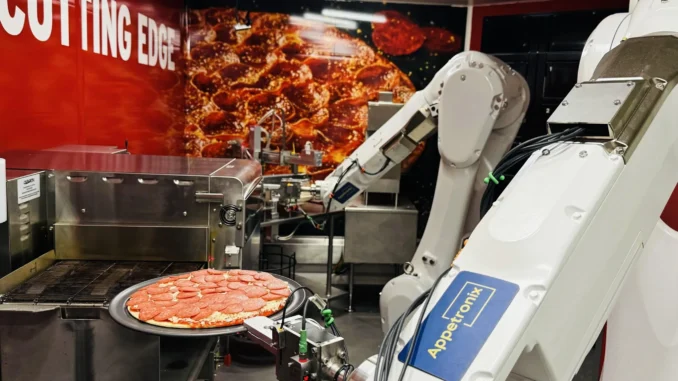
In recent years Donatos has begun experimenting with robotics, automated ordering systems, and alternative restaurant formats designed to expand the brand beyond traditional storefronts. One of the company’s most closely watched initiatives debuted at John Glenn Columbus International Airport, where Donatos partnered with robotics company Appetronix to open an autonomous pizza restaurant. The installation uses robotic systems to prepare made-to-order pizzas with minimal human involvement.
The airport location operates around the clock and serves as a real-world testing environment for the technology. Airports provide a steady flow of customers while allowing engineers and restaurant operators to monitor performance under demanding conditions.
 If the concept proves reliable, similar installations could appear in environments where round-the-clock food service is valuable but staffing is difficult. Potential locations include hospitals, university campuses, office complexes, and transportation hubs.
Automation is also advancing inside Donatos’ traditional restaurants. The company has implemented voice AI ordering technology capable of handling large volumes of phone calls with high accuracy. These systems allow employees to focus more directly on food preparation and customer service while reducing order errors.
Rolling out new technology across a franchise network presents its own challenges. Many restaurant technology initiatives fail when operators feel new systems are being imposed without input from the field. Donatos has attempted to address this challenge by involving franchisees early in the testing process, allowing operators to provide feedback before broader rollouts occur.
Large national pizza chains are investing heavily in similar technologies. Domino’s Pizza has spent more than a decade positioning itself as one of the most technologically advanced companies in the restaurant industry. The brand has developed a sophisticated digital ordering ecosystem that allows customers to place orders through mobile apps, voice assistants, smart televisions, and even connected vehicles.
The company’s AnyWare ordering platform allows customers to initiate orders through a wide variety of devices and interfaces, reflecting Domino’s long-standing strategy of meeting customers wherever they happen to be interacting with technology.
Domino’s has also invested heavily in delivery logistics software designed to optimize driver routing and reduce delivery times. Advanced analytics systems allow restaurants to forecast demand, manage staffing levels, and coordinate delivery operations more efficiently.
More recently, Domino’s expanded its technology strategy through a partnership with Microsoft focused on generative artificial intelligence. The initiative explores ways AI could simplify ordering experiences while helping restaurant managers automate routine operational tasks such as inventory management, ingredient ordering, and staff scheduling.
 The company has also tested automated pizza assembly systems developed by robotics startup Picnic Works. These systems dispense ingredients onto dough using automated mechanisms that improve speed and consistency during high-volume service periods.
Papa Johns is pursuing a similar strategy by expanding the use of artificial intelligence across its digital platforms. The company has partnered with Google Cloud to develop AI tools that personalize marketing campaigns and menu recommendations based on customer behavior. By analyzing ordering history and purchasing patterns, these systems can generate targeted promotions designed to encourage repeat visits. Artificial intelligence is also being applied to customer service interactions through automated chat interfaces and digital ordering assistants.
While large chains receive much of the attention, independent pizza operators represent a significant portion of the overall market. Technology platforms are increasingly targeting this segment as well. Slice, a technology company focused specifically on independent pizzerias, has built a large marketplace connecting local pizza shops with digital ordering tools, marketing services, and delivery logistics. Thousands of independent pizzerias now use the platform to compete with national chains that have historically dominated digital ordering technology.
Slice provides online ordering software, loyalty programs, and marketing tools that small operators would otherwise struggle to develop independently. The platform also helps restaurants manage delivery logistics while maintaining direct relationships with their customers.
Technology innovation is also occurring in the drive-through and quick service segments of the pizza market. Pizza Hut has been testing artificial intelligence systems designed to automate drive-through ordering. These systems use natural language processing to interpret spoken customer requests and convert them directly into POS orders.
Little Caesars has introduced similar AI-driven ordering tools through its digital platforms. The company has also expanded its Pizza Portal system, which allows customers to retrieve prepaid orders from heated pickup lockers without interacting with restaurant staff.
Another example of how pizza chains are rethinking the physical restaurant environment came in late 2024, when Pizza Hut introduced a technology-centric restaurant prototype in Plano, Texas. The design places digital ordering at the center of the guest journey, featuring self-service kiosks, contactless pickup cabinets for mobile orders, and a “Hut ’N Go” drive-through concept focused on ready-to-serve items for faster pickup. The format reflects a broader industry effort to combine digital convenience with traditional dine-in service while streamlining operations inside the restaurant.
These technologies reflect broader changes in consumer expectations. Speed, convenience, and digital accessibility have become central elements of the restaurant experience. Pizza brands that can reduce friction in ordering and pickup often gain a competitive advantage.
Another emerging frontier involves predictive ordering and demand forecasting. Several large pizza chains now use data science tools that analyze historical order data, local events, weather conditions, and seasonal trends to anticipate demand. These predictive systems help restaurants determine how much dough to prepare, how many drivers to schedule, and how much inventory to stock before peak periods begin.
Predictive analytics is also being applied to marketing. Artificial intelligence platforms can analyze customer behavior to determine which promotions are most likely to generate repeat orders. Instead of sending identical offers to every customer, restaurants can deliver personalized promotions based on purchase history and timing. For brands that rely heavily on repeat customers and frequent ordering behavior, these predictive systems can produce measurable improvements in both revenue and operational efficiency.
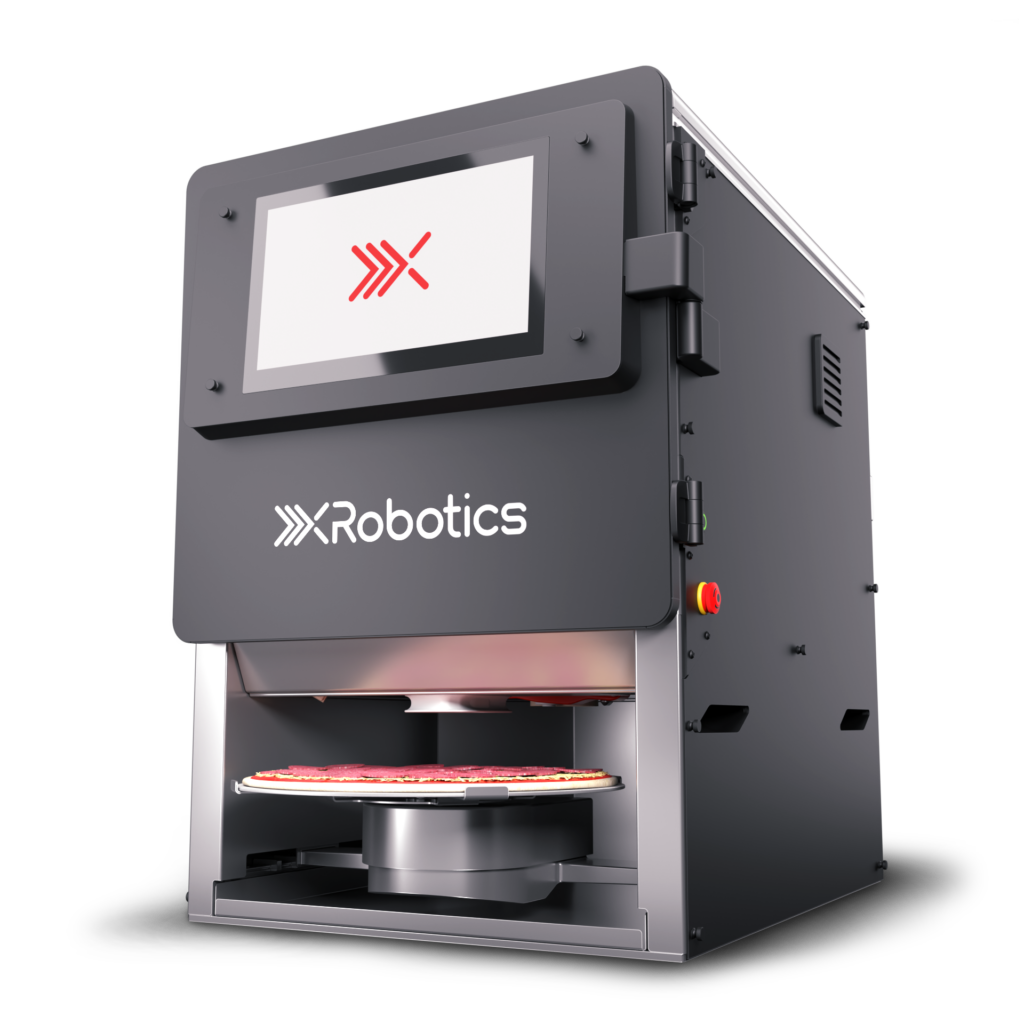
Robotics companies are also targeting pizza kitchens as ideal environments for automation. Startups such as Picnic Works, Appetronix, and XRobotics have developed robotic systems capable of dispensing ingredients, assembling pizzas, and managing oven workflows. The relatively standardized nature of pizza production makes it one of the easiest restaurant formats to automate.
Automation is also beginning to extend beyond the kitchen itself. As I noted previously in a Restaurant Technology News Viewpoints article, pizza vending machines, once dismissed as little more than a novelty, are increasingly being explored as a practical way for operators to extend hours and expand their footprint without adding staff. In Ontario, Italian restaurant chain Goodfellas has been piloting a machine stocked with wood-fired pizzas prepared in its Georgetown kitchen and dispensed around the clock.
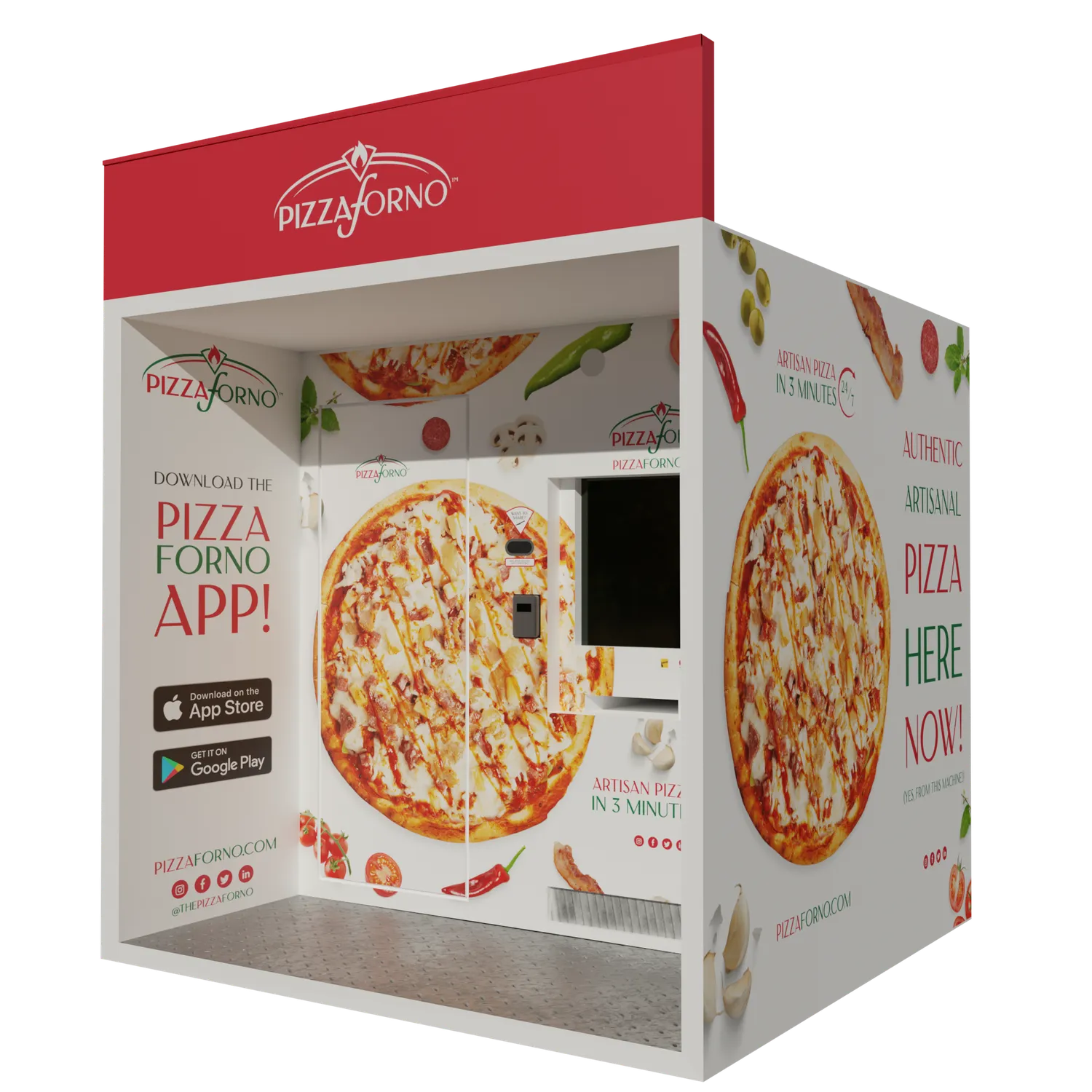
Technology providers such as PizzaForno, API Tech, Paline, and Piestro are pursuing similar concepts across North America, deploying automated pizza kiosks on college campuses, in shopping centers, and in other high-traffic environments. Advances in baking hardware, refrigeration systems, and cloud-based monitoring have made it possible for operators to track inventory, sales, and machine performance remotely while maintaining product quality. For restaurants facing persistent labor shortages and rising operating costs, these unattended formats are increasingly being viewed not as gimmicks but as an additional distribution channel capable of generating incremental revenue beyond the four walls of the restaurant.
Although most installations remain in pilot stages, robotics developers believe pizza restaurants could become one of the first large-scale applications of automated kitchen technology.
Another area of experimentation involves delivery automation. Domino’s has spent years testing various forms of autonomous delivery technology as part of its broader effort to streamline last-mile logistics. The company has conducted pilot programs involving self-driving delivery vehicles in partnership with robotics and automotive technology companies. In these pilots, customers receive a notification when the vehicle arrives and unlock a heated compartment using a code to retrieve their order.
Although fully autonomous delivery remains in the early stages of development, these tests illustrate the industry’s continued interest in reducing the cost and complexity of last-mile delivery. Labor expenses, driver availability, and fluctuating fuel costs make delivery one of the most challenging operational components of the pizza business.
Artificial intelligence is also transforming the way restaurants handle phone orders across the quick service industry. For decades, answering phones during peak periods has been one of the most disruptive tasks in restaurant kitchens. Employees preparing food must pause repeatedly to take orders, often in noisy environments where accuracy can suffer. AI call center systems are increasingly being deployed to address this challenge.
These platforms use natural language processing to interpret spoken orders and convert them directly into POS transactions. The technology can answer questions about menu items, process modifications, and confirm payment details while maintaining consistent accuracy. While pizza restaurants have been among the earliest adopters, AI-powered phone ordering is now spreading across a wide range of quick service concepts.
Taken together, these developments illustrate how the pizza segment continues to function as a practical testing ground for new restaurant technologies. Operators are experimenting with tools that can improve operational efficiency, support staff, and reduce friction for customers placing orders.
In many respects, the pizza industry offers a preview of where restaurant technology is heading. Innovations that prove successful in this environment often migrate to other segments of the industry. For restaurant operators watching the rapid evolution of digital ordering, automation, and data-driven marketing, the pizza business remains one of the most revealing places to observe how those technologies are being put to work in real restaurants.
