
By Dustin Stone, Gavriel Shohet and Lea Mira, RTN staff writers - 6.28.2026
Restaurant discovery has become more fragmented, visual and competitive than ever. Guests no longer find restaurants through a single channel. They search on Google, browse social media, read reviews, compare menus, ask AI tools for recommendations, place orders online, call with questions and expect seamless digital experiences before they ever walk through the door. For restaurant operators, the challenge is no longer simply having a website. It is converting every digital interaction into traffic, orders, guest data and repeat visits.
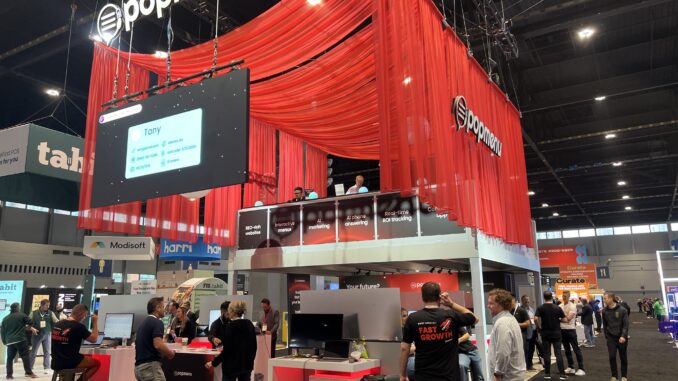
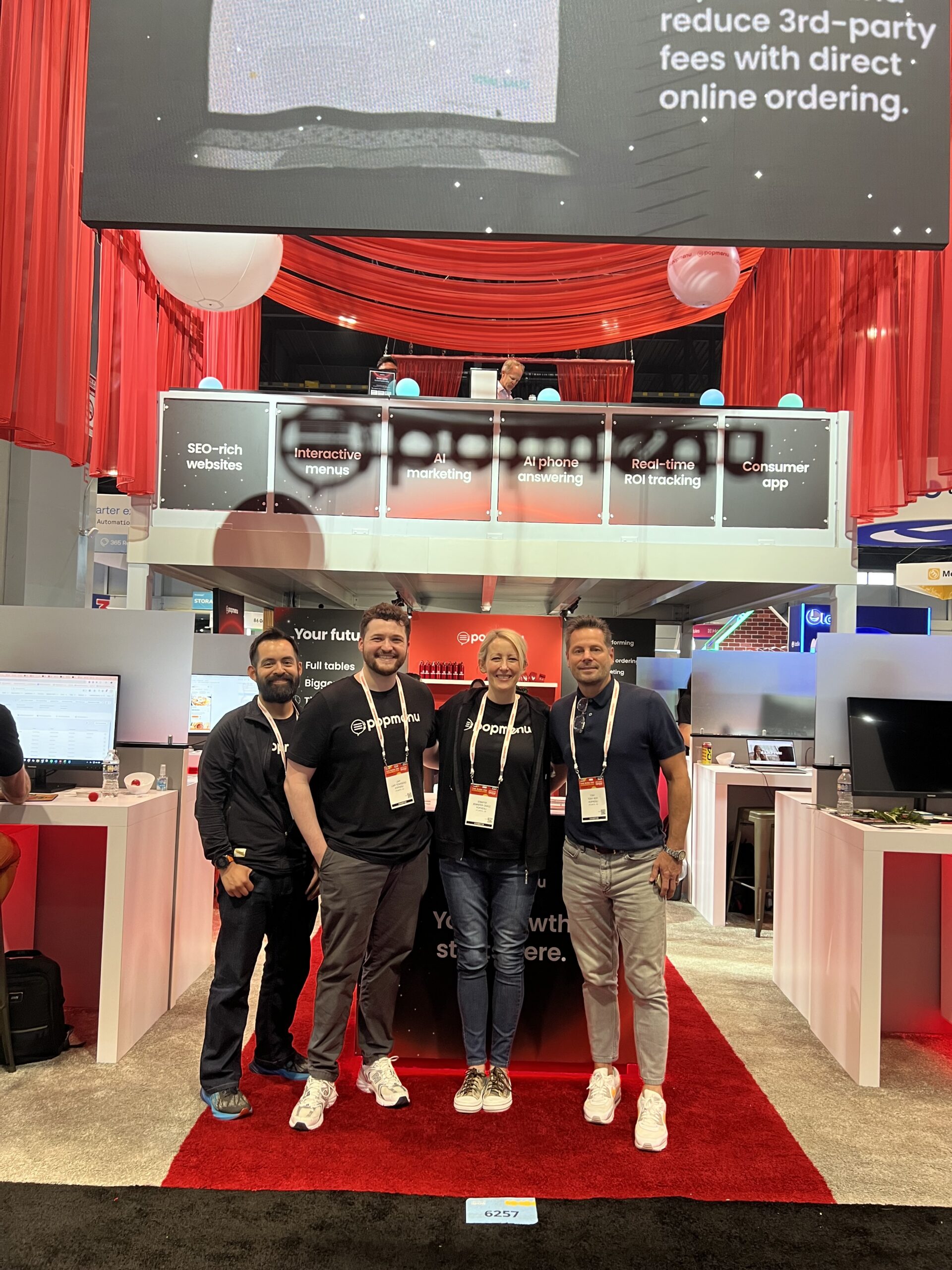
That challenge was evident at this year’s National Restaurant Association Show in Chicago, where technology providers highlighted solutions designed to help restaurants grow revenue, reduce manual work and compete more effectively in a digital marketplace. Among them was Popmenu, which exhibited at booth #6257 and previewed new menu technology set to release this summer. The company’s latest innovation builds on the menu experience it first brought to market nearly a decade ago, when Popmenu helped move restaurants away from static online menus and toward visually bold, interactive, mobile-first experiences designed to increase traffic and orders.
Now Popmenu is attempting to push that model forward again. Its new video-first menu experience is designed to bring dishes to life through richer visual content while reflecting how guests increasingly consume digital media today. The product pairs Popmenu’s signature SEO and AEO-driven menu technology, built to help restaurants rank prominently in Google and AI searches, with social reel-style visuals that make menu browsing feel more like the content experiences consumers already engage with on mobile platforms.
Popmenu’s video-first menu experience, previewed during the National Restaurant Association Show, gives operators new ways to build the digital vibe they want, showcase the personality of the restaurant and stand apart from both competitors and third-party marketplaces. The experience includes a highlights reel that can feature videos of signature dishes, loyalty rewards, the restaurant’s story, incentives to leave reviews and other promotional content. It can also give guests richer decision-making information directly inside the menu experience, including photos, videos, website and Google reviews, allergens and nutritional information. A menu ads reel gives restaurants another way to promote events, limited-time offers, specials and other timely messages, while an AI assistant can answer guest questions as they browse.
That combination reflects a broader shift in how restaurants need to present themselves online. A dish is no longer just an item name and a price. It can become an image, a video, a review prompt, a search result, a loyalty message, an ordering path and a reason to return. For operators competing against third-party marketplaces and larger restaurant brands with deeper marketing budgets, owned digital experiences are becoming increasingly important.
Popmenu CEO and co-founder Brendan Sweeney framed the opportunity around the emotional power of video, noting that the company is giving consumers “the sizzle, the texture, the experience.” For restaurants, the appeal is straightforward: a photo can influence a guest’s decision, but video can make the dish feel more immediate and appetizing. As restaurants compete for fewer discretionary dining dollars, richer menu content can help close the gap between browsing and ordering.
Popmenu’s consumer research underscores the relevance of that product direction. In a nationwide survey of 1,000 U.S. consumers ages 18 and older, 82 percent said they are more likely to choose restaurants with online menus that feature photos and reviews compared with restaurants that offer text-only menus. The same percentage said they are more likely to order a dish with a video compared with one that has only a photo.
The product arrives as consumers are spending less on restaurants than they were a year ago. Popmenu’s research found that consumers now spend an average of $90 per week on restaurants, down from $115 in June 2025, while 68 percent said they are reducing restaurant spending this year. In a tighter market, restaurants have to work harder to earn every order, and the digital menu is often where that competition begins.
 Popmenu’s positioning reflects a broader shift in restaurant technology. For years, restaurant websites were often treated as static online brochures. They displayed hours, addresses, phone numbers, menu PDFs and perhaps a few photos. That model is increasingly outdated. A restaurant’s digital presence now needs to function as an acquisition engine, ordering channel, marketing database and guest-engagement platform.
Popmenu addresses that shift through a connected platform designed specifically for restaurants. Its restaurant technology solutions bring together custom websites, interactive menus, direct online ordering, AI-powered marketing, AI phone answering, reputation management, loyalty, waitlisting and reservations, a consumer app, guest engagement tools and performance insights. The company’s larger story is not just about digital menus or restaurant websites. It is about helping restaurants win business at every stage of the guest journey, from discovery to ordering to return visits.
The foundation of the platform remains Popmenu’s interactive menu technology. Instead of relying on static PDF menus that are difficult to search, update and convert, Popmenu’s dynamic, interactive restaurant menus turn individual dishes into searchable, visual and engagement-driven digital assets. Menu items can include photos, descriptions, reviews and ordering prompts, giving guests more context while helping restaurants improve visibility in search.
A menu is often the first meaningful point of interaction between a guest and a restaurant online. If that menu is hard to find, slow to load, visually unappealing or disconnected from ordering, the restaurant may lose the guest before the decision to visit or order is ever made. By making menus interactive, searchable and connected to conversion pathways, Popmenu helps restaurants turn menu browsing into a more productive part of the customer journey.
Popmenu’s direct ordering capabilities extend the platform’s value beyond discovery. Through restaurant online ordering, operators can accept takeout, delivery, catering and other order types through their own digital channels. The platform supports POS-connected ordering, limited-time menus, catering options, rewards, delivery integrations and order-management reporting, giving restaurants more control over incoming demand while reducing reliance on disconnected systems.
Direct ordering also helps restaurants maintain ownership of the guest relationship. Third-party marketplaces can generate incremental demand, but they often limit restaurants’ access to guest data and compress margins through commissions and fees. Direct ordering gives restaurants more control over how they present their menus, communicate with guests and encourage repeat business.
That first-party data is one of the central pieces of the Popmenu story. When guests interact with menus, place orders, leave reviews, sign up for offers, respond to campaigns or engage with restaurant content, those touchpoints can become the foundation for future marketing. Rather than treating each transaction as isolated, restaurants can use digital engagement to build guest profiles, segment audiences and drive return visits.
Popmenu’s AI Marketing builds directly on that opportunity. The product is designed to generate marketing content such as emails, text messages and social posts tailored to individual restaurant locations. For operators, the value is not simply content creation. It is consistent marketing execution at a time when managers are already balancing staffing, service, inventory, guest satisfaction and daily operations.
Many restaurants know they need to market more consistently but struggle to do it well. Campaign planning, copywriting, offer creation, email segmentation and social posting all require time and attention. Popmenu’s AI-powered approach helps reduce that burden by giving operators a way to maintain guest communication without requiring a dedicated marketing department or constant manual effort.
AI is also changing another long-standing restaurant challenge: the phone. Despite the growth of online ordering and digital reservations, guests still call restaurants to ask about hours, menus, wait times, reservations, private events, catering, parking, dietary questions and order status. Every unanswered call can represent lost revenue, while every answered call can pull staff away from guests already in the restaurant.
Popmenu’s AI Phone Answering is designed to help restaurants manage that challenge. The product can respond to common guest questions, provide customized greetings, send links for orders or reservations and route more complex needs back to the restaurant team. For operators, this can help capture revenue opportunities that might otherwise be missed while reducing the strain on front-of-house staff.
The combination of AI Marketing and AI Phone Answering gives Popmenu a broader role in restaurant operations. The platform is not only helping restaurants attract guests online. It is helping them respond to guests, capture demand, nurture relationships and automate repetitive communication tasks. For operators looking to grow revenue while reducing labor pressure, that combination is increasingly relevant.
Popmenu also supports loyalty and repeat-visit generation, which is central to the platform’s value proposition. Digital discovery has limited value if restaurants cannot continue the relationship after the first visit or order. By connecting menus, ordering, marketing and guest engagement, the platform gives restaurants more ways to convert one-time interactions into ongoing relationships.
Performance measurement adds another important layer. Popmenu’s Performance Insights and ROI tracking tools help operators understand how their digital presence is performing across website traffic, marketing activity, ordering revenue, top-selling dishes, order volume, peak times and AI Answering activity. Restaurant operators increasingly need to know which digital investments are producing results, not just which tools are being used.
For many restaurants, digital marketing has historically been difficult to measure. A social post, email campaign, menu update or website redesign may feel valuable, but operators need clearer connections between activity and revenue. Performance insights help close that gap by showing how digital engagement translates into traffic, orders and guest interactions.
Reputation management adds another layer to the platform. Guests often make dining decisions based on reviews, search visibility and online listings before ever visiting a restaurant’s website. Popmenu’s reputation management tools are designed to help restaurants manage listings, reviews and menus across the web while supporting faster review monitoring and responses. In a marketplace where digital perception directly influences traffic, reputation management has become a core growth function rather than a secondary marketing task.
For multi-location operators, maintaining consistent menus, listings, reviews, hours, photos and ordering information across multiple platforms can be difficult even for well-staffed teams. A single outdated menu, incorrect location detail or unanswered negative review can affect guest trust. Centralizing these functions gives restaurants a better way to manage brand presentation across the many places where guests discover and evaluate dining options.
Popmenu also addresses the operational complexity created by third-party delivery marketplaces. Through OrderNerd powered by Popmenu, the company helps restaurants consolidate third-party delivery app orders into a more manageable workflow. For restaurants juggling multiple tablets, incoming orders and marketplace channels, aggregation can reduce clutter, streamline operations and help staff manage off-premise demand more efficiently.
OrderNerd fits naturally into Popmenu’s larger platform story. Restaurants are not simply looking for more digital tools. They are looking for ways to make digital demand easier to manage. Online ordering, delivery marketplaces, direct orders, phone calls, reviews and marketing campaigns all create opportunities, but they also add operational complexity. Popmenu’s value proposition lies in helping operators bring more of that activity into a connected system.
The company also emphasizes native integrations across online ordering, delivery and reputation management, a capability that can be valuable for restaurants working across multiple technology partners and consumer-facing channels. Integration depth has become an increasingly important factor as operators look to reduce manual work, eliminate redundant systems and maintain more accurate information across the digital guest journey.
The company’s approach is particularly relevant for independent restaurants and hospitality groups that need enterprise-level digital capabilities without building large internal technology teams. Larger brands often have dedicated marketing departments, analytics resources and technology staff. Independent operators are often expected to compete in the same digital environment with far fewer resources. Platforms like Popmenu help close that gap by automating and simplifying functions that would otherwise require multiple vendors or significant manual work.
Another part of the Popmenu story is how the platform helps restaurants retain control of the guest journey. A restaurant’s website, menu, ordering page, phone experience, reviews and marketing messages all influence whether a guest chooses to visit, order or return. When those functions are fragmented, opportunities are missed. When they are connected, each interaction can reinforce the next.
That control has become more valuable as competition for consumer attention intensifies. Restaurants must now think about how they appear in traditional search, answer-engine results, social feeds, review platforms, map listings and digital ordering environments. Popmenu’s platform is designed for that reality, giving restaurants tools to improve visibility, convert interest into action and continue communicating with guests after the initial interaction.
The competitive landscape includes website providers, online ordering companies, marketing platforms, review-management tools, phone automation vendors and third-party order aggregators. Popmenu differentiates itself by combining many of these capabilities in a platform purpose-built for restaurants. Rather than treating websites, menus, ordering, marketing, reviews and phone calls as separate functions, the company connects them around the guest journey.
That integration is the larger strategic point. Restaurant growth increasingly depends on what happens before, during and after the transaction. A guest discovers the restaurant, views the menu, places an order, receives follow-up communication, leaves a review and returns later. Each step creates an opportunity to capture data, improve service, strengthen the relationship and generate repeat revenue.
Popmenu’s continued product evolution also reflects where restaurant technology is headed. AI is becoming less of a standalone feature and more of an embedded layer across marketing, guest service and operations. Interactive menus are becoming search and conversion assets. Online ordering is becoming a data-capture channel. Reputation management is becoming part of revenue strategy. Performance insights are becoming essential to understanding return on investment.
As restaurants continue navigating rising costs, intense competition and changing consumer behavior, the ability to convert digital attention into measurable business outcomes will become even more important. Guests are already searching, scrolling, calling, ordering and reviewing across multiple channels. The question for restaurants is whether those interactions remain fragmented or become part of a coordinated growth strategy.
By combining interactive menus, video-first menu experiences, direct online ordering, AI-powered marketing, AI phone answering, reputation management, performance insights, integrations and order aggregation, Popmenu is helping restaurants modernize the digital front door. More importantly, it is helping operators turn that front door into a revenue engine that supports guest acquisition, first-party data, operational efficiency and repeat visits.
In an industry where every guest interaction matters, Popmenu’s platform points to a larger future for restaurant technology. The winners will not simply be the restaurants with the most digital tools. They will be the restaurants that can connect discovery, ordering, communication and loyalty into a more seamless and measurable guest journey.
