

By Dustin Stone and Lea Mira, RTN staff writers - 7.1.2026
A recent wave of restaurant app launches, app relaunches, loyalty upgrades and app-centered promotions shows how quickly the role of the branded restaurant app is changing. For years, the basic promise was convenience: order ahead, pay quickly, skip the line and earn points. That still matters. But the newest activity from Earthbar, TGI Fridays, Domino’s, Taco Bell, Wingstop, Chipotle, QDOBA, MOD Pizza, Salt & Straw, Smoothie King, Philly’s Best Cheesesteaks, Whataburger, Hardee’s and Carl’s Jr. points to a broader shift. Restaurant brands are using their apps as loyalty engines, gamified engagement platforms, marketing channels, first-party data sources and brand communities.
Today, restaurants are competing for attention on crowded consumer phones, while still trying to reduce dependence on third-party marketplaces, paid digital advertising and discount-heavy promotions. The branded app gives operators something those channels do not: a direct relationship with identifiable guests, tied to orders, preferences, visit patterns, rewards behavior and offer response.
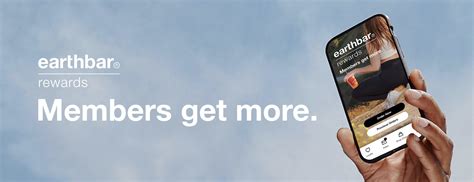 The strongest recent example of a true app launch comes from Earthbar. The wellness-focused brand introduced a new mobile app built on Veya by 3Owl and integrated with Olo Ordering, Engage and Loyalty. The app gives guests a branded digital experience for ordering, rewards access, faster checkout, passwordless login, Apple Pay, Google Pay and ongoing promotional content. It also gives Earthbar’s marketing team the ability to update content, imagery and promotions through a visual content management system without waiting for a new app build or app-store release.
That last capability says a lot about where the market is going. Restaurant apps are no longer static utilities. For brands like Earthbar, whose positioning is built around wellness, routine and lifestyle, the app can carry more than ordering functionality. It can support education, seasonal messaging, loyalty engagement and repeat behavior. Earthbar said the app was built in 60 days, a useful marker for smaller and midsize brands that want a more customized mobile experience without building every component from scratch.
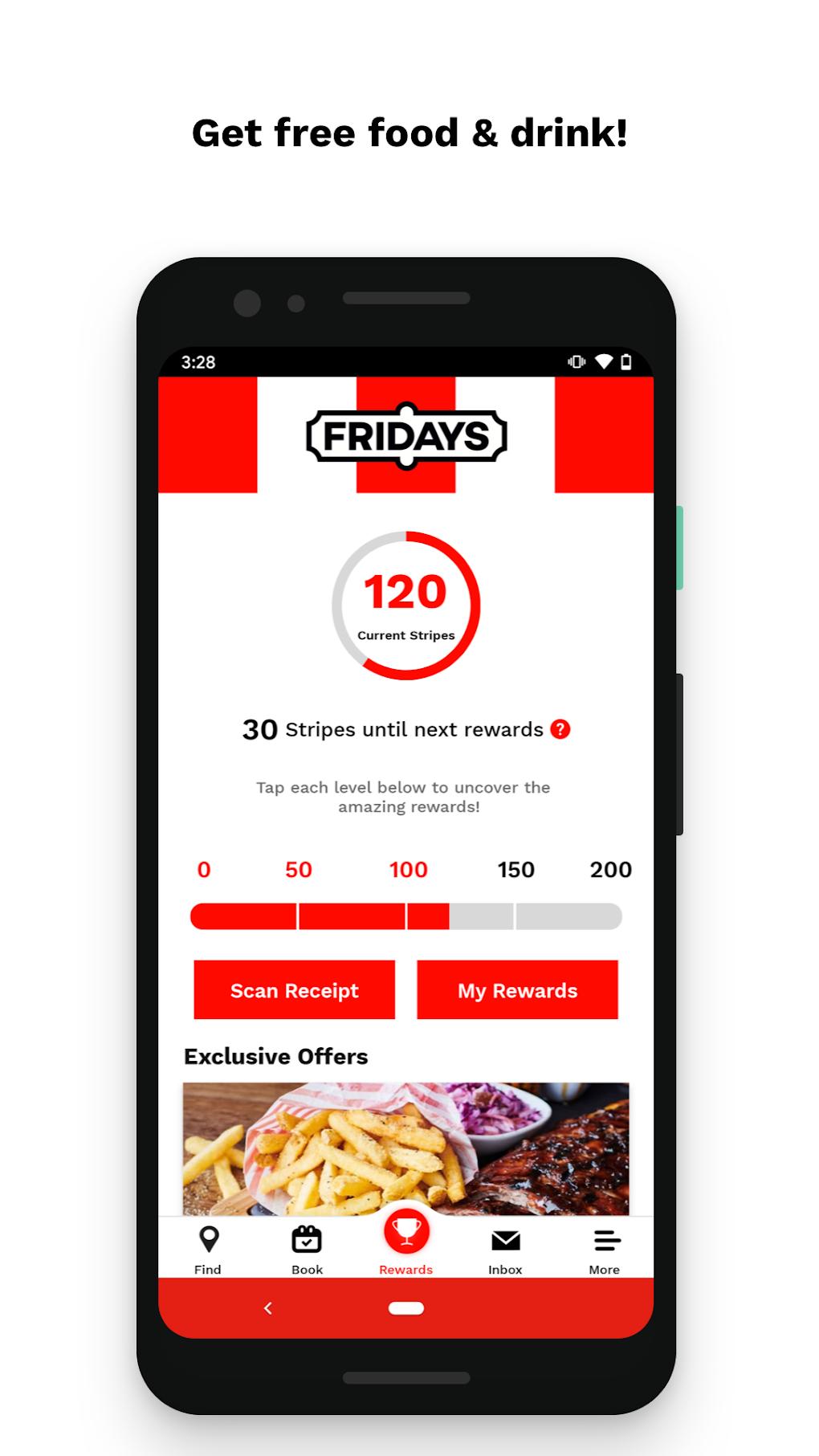 TGI Fridays is using a refreshed app as part of a broader digital transformation and brand-rebuilding effort. The casual-dining chain said its new app places loyalty rewards more prominently in the guest experience and gives guests a streamlined way to find a restaurant, place an order and manage rewards. The app supports pickup, curbside and delivery, along with app-only offers, personalized deals and a communications strategy that now includes email, push notifications and SMS.
For Fridays, the app is part of a larger strategic reset. The brand has been working to rebuild momentum, simplify the guest journey and reestablish relevance in a casual-dining market where traffic remains hard won. A refreshed app gives the company a more direct channel to guests who already know the brand, while making loyalty more visible and easier to use. In casual dining, where the visit may be less frequent than in QSR or fast casual, the app has to do more than process an order. It has to remind guests that the brand still belongs in the consideration set.
At the other end of the digital maturity curve, Domino’s is using its app as a platform for game-based loyalty engagement. The pizza chain introduced Soccer Shootout, its first in-app game, exclusively for Domino’s Rewards members. The game lets users launch toppings at a moving pizza target for a chance to earn bonus loyalty points and exclusive deals, including discounts on future orders. It is available in the Domino’s app under My Rewards through July 19.
Domino’s has long been one of the restaurant industry’s most advanced digital operators, with a large share of U.S. sales already flowing through digital channels. Soccer Shootout shows how mature brands are trying to create reasons for guests to open the app between orders. That is the next loyalty challenge. A rewards program can have millions of members and still feel passive if guests only interact with it during checkout. Games, challenges and limited-time digital experiences create more active participation.
Taco Bell is taking a similar approach with L.O.C.O.S., short for Loss Or Celebration Outcome Support. The brand describes it as an emotional-support taco platform built around sports fandom and cultural moments. From June 23 through July 13, Taco Bell Rewards members in the U.S. can access the L.O.C.O.S. Game in the Taco Bell app, choose a mode based on whether they are celebrating or recovering from a loss, unlock a taco with purchase on first play, earn rewards, return for weekly challenges and compete for exclusive merchandise.
The name is playful, but the underlying strategy is serious. Taco Bell has spent years turning digital engagement into a brand advantage, using its app, loyalty program, fan culture and limited-time experiences to create participation beyond the transaction. L.O.C.O.S. extends that model into sports and fandom. The app becomes a venue where the brand can respond to cultural moments, reward behavior and keep fans returning for new challenges.
Wingstop is pushing the community angle even further with Club Wingstop, a new loyalty rewards program built around the idea that “members eat first.” The program includes points-sharing, group ordering, early access to new flavors, limited-edition merchandise, members-only events and cultural experiences. The launch was supported by a limited-edition “Club in a Box” package curated with reality TV personality Maura Higgins, and the brand positioned Club Wingstop as more than a points-and-perks program.
That framing reflects a larger shift in loyalty design. Wingstop is not only trying to reward purchases. It is trying to turn loyalty into identity. For a brand with strong fan behavior, social currency and a digitally active customer base, the app and rewards program can become a membership environment. Early access, exclusive merchandise, events and group ordering all point toward a loyalty model built around shared experiences rather than simple discounts.
Chipotle is also gamifying loyalty through its Summer of Extras program. The new version includes monthly seven-visit streak challenges, local restaurant-level leaderboards, state and national rankings, side quests, badges, weekly Rewards Exchange promotions and shareable stats. The program runs from June 1 through August 31 and builds on Chipotle’s recent Rewards on Repeat relaunch.
 Chipotle said the program is designed to turn everyday visits into competition. That language is revealing. The brand is using frequency mechanics that look more like fitness apps, games and social platforms than traditional restaurant loyalty. Guests can track progress, compare themselves to other fans and earn rewards through repeated behavior. For a brand with nearly 23 million active rewards members, even small increases in engagement can have a meaningful impact.
QDOBA is using a more offer-driven but still behavior-based model with Summer Rewards on Q. The fast-casual Mexican chain launched the limited-time rewards experience on June 15, alongside new seasonal menu items. Rewards members can unlock weekly offers by spending at least $5 during the campaign period. Perks can include free double protein, dollars off entrées, bonus loyalty points, percentage-off offers and national reward drops.
The structure is designed to encourage repeat visits across several weeks rather than one-time redemption. Guests spend one week to unlock the next week’s reward, then check their Rewards Wallet for the offer. That creates a simple cadence: order, unlock, return. For restaurant marketers, that kind of sequencing is valuable because it ties a limited-time menu campaign to measurable loyalty behavior.
MOD Pizza is using its app and rewards program as the infrastructure for its Sweet Heat Summer campaign. Running from June 22 through August 23, the campaign includes the return of Mike’s Favorite Pizza in select markets, a Coca-Cola-backed sweepstakes for a trip to Italy, weekly offers and exclusive prizes for MOD Rewards members. Guests can participate by ordering through the MOD app and engaging with the loyalty program.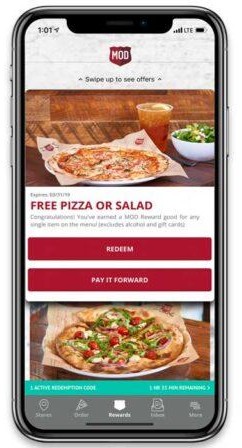
The campaign shows how apps have become seasonal marketing platforms. A promotion that once might have lived mostly in restaurants, email and social media can now be anchored in the app, where the brand can connect offers to individual guests, track participation and tie rewards to order behavior. MOD is not simply promoting a pizza. It is using the app to create a summer-long engagement loop.
Salt & Straw offers a different version of the same shift. The premium ice cream brand recently launched Salt & Straw Rewards nationwide through its mobile app and scoop shops. Members earn “Spoons” by scanning the app or entering a phone number at checkout, then redeem rewards and access perks such as birthday rewards, early access, exclusive events and Pint Club benefits.
For a specialty brand built around flavor drops, storytelling and community, loyalty cannot feel like a generic punch card. Salt & Straw’s program points toward a model built around access, recognition and brand participation. The app becomes a way to make that experience more consistent across shops and visits, while giving the brand a direct channel to its most enthusiastic guests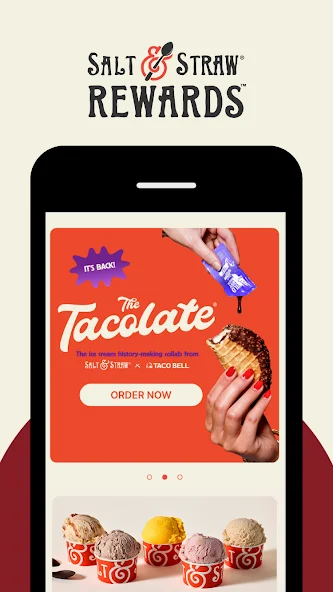
Smoothie King is showing how gamification can move from novelty to measurable loyalty tactic. The company has been using game-like features through PAR Games in its Healthy Rewards program, with early results showing more than 2 million game plays and loyalty program sign-ups increasing by more than 40 percent. The experience includes mechanics such as “spin to win” and “scratch to match,” designed to encourage repeat visits, higher spending and personalized engagement.
Smoothie King’s results matter because they give the broader app-and-loyalty trend a performance lens. Gamification is often easy to dismiss as marketing theater. But when the mechanics are tied to loyalty enrollment, reactivation, spend and visit frequency, they become part of the guest engagement toolkit. The app gives brands a place to test those mechanics and measure their effect.
Smaller regional brands are moving in the same direction. Philly’s Best Cheesesteaks revamped its Real Philly Rewards program with more flexible redemption options, including additional menu items, drinks, fries and cash rewards that can be applied toward upgrades. The Los Angeles-based fast-casual chain said the upgrade is designed to reflect changing guest expectations around personalization and flexibility.
The Philly’s Best example shows that the trend is not limited to national brands with large digital teams. Smaller operators are also recognizing that loyalty data can help them understand visit frequency, purchase activity, reward redemption patterns and response to brand communications. Flexibility is becoming a competitive feature. Guests do not all visit for the same reason, and rewards programs are beginning to reflect that.
Whataburger is using its app and rewards program as the center of a month-long July promotional calendar. The brand announced offers for Rewards members in North Carolina and South Carolina, including discounted menu items and giveaways available through the Whataburger app and online at participating locations. The lineup includes a $2 Signature Whatachick’n Sandwich for National Fried Chicken Day, $1 sweet or unsweet tea, free medium fries on National French Fry Day and a buy-one-get-one offer on WhataWings for National Chicken Wing Day.
The campaign shows how regional and expanding brands can use app-based offers to drive frequency, create urgency and introduce newer markets to the rewards ecosystem. The app becomes a direct-response channel for food holidays and limited-time moments, while also creating an incentive for new users to join the program and start earning points.
Hardee’s and Carl’s Jr. are using a similar approach for Independence Day promotions. Hardee’s is offering MyRewards members a free Star-Spangled Biscuit from July 3 through July 5 through the Hardee’s app. Carl’s Jr. is offering MyRewards members a $2.50 Double Cheeseburger during the same period, redeemable through the Carl’s Jr. app, at CarlsJr.com or by scanning a QR code at in-store checkout.
Those offers are straightforward, but they illustrate how the app is becoming the default delivery mechanism for limited-time value. Instead of running broad discounts through mass channels, brands can push offers through their own loyalty infrastructure, limit them to members, measure redemption and connect the promotion to future engagement.
Across these examples, the restaurant app is becoming less of a single-purpose tool and more of a brand-owned operating channel. Earthbar and TGI Fridays show the continued importance of app launches and relaunches. Domino’s, Taco Bell, Chipotle and Smoothie King show the growing role of gamification. Wingstop and Salt & Straw show how loyalty can be designed around community, access and identity. QDOBA, MOD Pizza, Whataburger, Hardee’s and Carl’s Jr. show how restaurants are using apps as campaign infrastructure for seasonal offers, product launches and food-holiday promotions. Philly’s Best shows how regional brands are making loyalty more flexible and data-driven.
The common thread is control. Restaurants want more control over the guest relationship, more control over digital engagement and more control over the data created by each interaction. Third-party marketplaces can bring orders, but they often sit between the brand and the guest. Social platforms can generate awareness, but they do not give restaurants the same direct customer record. Paid media can drive traffic, but costs can rise quickly. A branded app gives restaurants a place where ordering, loyalty, payments, offers, preferences and messaging can come together under the brand’s own roof.
That does not mean every restaurant needs a standalone app. For independent operators and smaller groups, a mobile-optimized ordering site, loyalty integration, SMS program, digital wallet pass or marketplace strategy may be more practical. The app only works if guests have enough reason to download it, keep it and open it. Frequency, brand affinity, geographic density and offer quality all matter.
For brands with enough scale, the app is becoming harder to ignore. It can be the digital front door, the rewards wallet, the ordering channel, the promotion engine, the game board and the data capture point. It also gives operators a way to make digital demand more profitable. Direct app orders can reduce reliance on intermediaries, while loyalty data can help brands personalize outreach and protect margins by moving away from blanket discounts.
The competitive pressure is rising because nearly every major restaurant brand is asking guests to join a loyalty program. Consumers may already have apps from McDonald’s, Starbucks, Chipotle, Domino’s, Taco Bell, Chick-fil-A, Panera, Dunkin’, Sweetgreen, Dutch Bros, Wingstop and several regional favorites. Smaller and midsize brands are not just competing with restaurants in their category. They are competing with every other app on the phone.
That makes the quality of the app experience more important. Guests will not keep an app simply because a restaurant wants them to. The app has to make ordering easier, rewards easier to understand and offers worth returning for. It also has to feel current. Slow checkout, confusing rewards, weak personalization, irrelevant offers or stale content can push users away quickly.
The recent activity suggests several priorities for operators. Speed matters, which is why platforms that can launch branded experiences quickly are gaining attention. Flexibility matters, because marketing teams need to update content and promotions without waiting on development cycles. Personalization matters, because guests expect rewards and offers that fit their habits. Gamification matters when it creates repeat engagement rather than gimmicks. Access matters, especially for brands with strong fandom. Data matters most of all, because every app interaction can help a restaurant understand the guest more clearly.
The next phase will likely bring more personalization and more dynamic loyalty mechanics. Offers will become more behavior-based. Rewards will become less static. Games and challenges will become more common. AI will be used to segment audiences, recommend items, tailor messages and identify guests at risk of lapsing. Brand partnerships will be routed through app ecosystems. More programs will connect online ordering, in-store visits, payment activity, QR scans, digital wallets and social sharing into a single guest record.
The restaurant app is not new. What is changing is its role. The newest launches and relaunches are not only about mobile ordering. They are about building a direct, measurable and repeatable relationship with the guest. To be sure, the battle for restaurant loyalty is increasingly being fought on the phone. The brands that win will not simply be the ones with the biggest discounts or the flashiest app features. They will be the ones that make the app useful enough, rewarding enough and engaging enough to become part of the guest’s routine.
