
By Lea Mira and Dustin Stone, RTN staff writers - 6.27.2026
Blink has raised $17 million from Enlightened Hospitality Investments and announced a new global partnership with Shake Shack, bringing one of the restaurant industry’s most recognizable hospitality investment groups into the fast-growing market for frontline employee experience technology. Blink did not disclose valuation or other financial terms.
The Boston-based company, which provides a mobile-first employee experience platform for deskless and frontline workforces, said the funding from Enlightened Hospitality Investments, the growth equity fund affiliated with Danny Meyer’s Union Square Hospitality Group, will support product and engineering investment, continued development of its AI-first platform and broader go-to-market expansion across hospitality and other frontline-driven industries. Blink also announced that Shake Shack has adopted the platform following a successful integration of its workforce management solutions.
For restaurants, the announcement lands at a time when employee communication, retention and engagement are moving closer to the center of the technology stack. Operators have spent years investing in guest-facing systems such as loyalty, mobile ordering, delivery integration, kiosks and digital marketing. Employee-facing technology has often lagged behind, especially for hourly workers who do not use corporate email, sit at desks or have regular access to the systems used by headquarters.
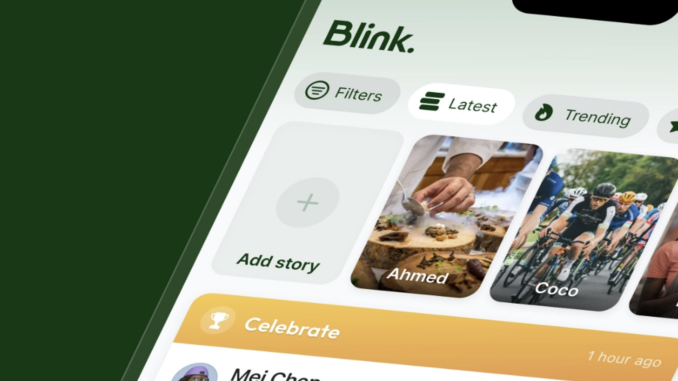
Blink is designed to close that gap. The platform gives frontline workers a mobile hub for company communication, shift-related tools, self-service functions, feedback, recognition and operational updates. Employees can access information, communicate across teams, swap shifts, view pay stubs and use other tools from a single app. In 2025, adoption of Blink’s self-service employee tools grew 300 percent year over year, and employees opened the app seven times a day on average.
Those usage figures are meaningful in restaurants because software adoption is often the hardest part of the problem. A platform can check every box in a corporate evaluation and still fail if team members do not open it, managers do not rely on it and the product never becomes part of the daily rhythm of the business. Restaurants already ask frontline teams and managers to work across scheduling, payroll, training, task management, POS, HR, messaging and compliance tools. Blink’s pitch is that a mobile employee experience layer can make those systems more accessible and useful to the workers who need them most.
The Shake Shack partnership gives Blink a high-profile restaurant customer with a direct cultural connection to EHI. Danny Meyer’s Union Square Hospitality Group founded Shake Shack before the company grew into a public fast-casual brand. Meyer’s long-standing philosophy of “Enlightened Hospitality” starts with employees, then extends to guests, communities, suppliers and investors. That framework gives the investment a sharper restaurant context. Blink is not simply selling an internal communications app. It is positioning its platform as infrastructure for the people-first operating model many restaurant brands want to execute more consistently across locations.
Sean Nolan, Blink’s founder and CEO, framed the investment and partnership around that alignment. “We are excited to partner with Danny and the EHI team and believe that their commitment to delivering Enlightened Hospitality is more relevant now than ever,” Nolan said. “We also are thrilled to launch with Shake Shack, an industry leader who shares our commitment to a strong corporate culture that begins on the restaurant floor.”
Danny Meyer, co-founder and managing partner of Enlightened Hospitality Investments and founder of Union Square Hospitality Group, connected the investment to the same employee-first operating philosophy. “I have always believed that Enlightened Hospitality, the ethos that when you take care of your people, your people take care of your customers, is how to create sustaining success in any business,” Meyer said. “Blink’s technology puts people first by making sure team members are equipped and supported so they can, in turn, deliver their very best.”
Shake Shack is adopting Blink at a moment when restaurant brands are trying to scale culture alongside operations. For growing multi-unit brands, the challenge is not only whether headquarters can create the right training, messaging and processes. It is whether those messages reach the people working different shifts, roles and locations in a way that is timely, usable and consistent.
“At Shake Shack, everything starts with our people,” said Luke DeRouen, chief communications officer at Shake Shack. “The energy in our Shacks and the Enlightened Hospitality our teams bring to life each day are what make us special. As we continue to grow, we are focused on giving our teams simple tools that keep them informed, connected, and engaged.”
That is the operating problem Blink is trying to solve. In a single restaurant, culture can be transmitted directly through owners, general managers and daily team interactions. In a multi-unit system, culture has to move through systems. Without a reliable digital layer, restaurant teams often fall back on printed notices, manager huddles, group texts, bulletin boards, emails hourly employees may never see and information passed unevenly from one level of the organization to another.
The result can be a gap between what corporate teams believe has been communicated and what frontline employees actually know. That gap matters during menu launches, limited-time offers, policy changes, training updates, safety procedures, scheduling changes and guest-service initiatives. It also affects retention. Employees who feel disconnected from the organization, or who cannot easily get answers, are harder to keep.
Blink’s customer base extends beyond restaurants. The company works with hospitality, hotel, retail, transportation, healthcare, manufacturing and logistics organizations, and lists customers including McDonald’s, Domino’s, Booking.com, Dollar Tree, Nokia, easyJet, JD Sports, Carrefour and Stagecoach. The company said it added more than 700,000 users in the hospitality sector in 2025 alone.
That cross-industry position gives Blink a broader frontline workforce lens, but restaurants have become a particularly important use case. Restaurant teams are large, distributed, shift-based and highly sensitive to turnover, training quality and manager effectiveness. A system that improves communication and access for frontline employees can have a direct effect on execution, especially in brands where consistency across locations is central to the guest experience.
Blink IQ, the company’s AI workforce insights platform, adds an analytical layer to the employee experience product. The platform is designed to give management real-time visibility into workforce feedback, productivity, sentiment and turnover signals. In practice, that moves Blink from communication into operational intelligence. The goal is not only to send messages more efficiently, but to help leadership identify where teams are struggling, where sentiment is shifting and where action may be needed before problems show up in turnover, service scores or execution gaps.
That use of AI is different from the restaurant AI applications that have attracted the most attention over the past two years. Much of the industry conversation has focused on voice ordering, drive-thru automation, demand forecasting, menu optimization, robotics and marketing personalization. Blink IQ points to another area where AI may become useful: reading the workforce signals that are hard for operators to see across a distributed restaurant system.
The competitive landscape is becoming more active. Blink competes in a category that overlaps employee communications, workforce management, employee engagement, HR self-service, frontline analytics, task execution and training. Dedicated frontline employee platforms include WorkJam, Beekeeper, Flip and YOOBIC. Restaurant-focused workforce platforms such as 7shifts, Fourth, Harri, Homebase, Workstream and HotSchedules approach parts of the same problem from scheduling, hiring, payroll, labor optimization or compliance.
The differences matter. WorkJam positions itself around frontline workforce orchestration, combining communication, task management, scheduling, learning, flexible shift management and AI workflows. Beekeeper, now part of LumApps, has focused on mobile-first communication, workflows and frontline access. Flip is building an AI employee experience platform for deskless workers that combines communications, HR self-service, workflows and identity management. YOOBIC brings together task management, communications and learning, with a strong presence in retail and hospitality operations.
Restaurant-specific workforce platforms begin from a more operational base. 7shifts has deep restaurant scheduling and labor management roots. Fourth and HotSchedules are closely associated with workforce management, scheduling and back-office labor tools. Harri combines talent acquisition, workforce management and employee experience for hospitality brands. Homebase serves small businesses with scheduling, time clocks, payroll and team communication. Workstream focuses on hiring and onboarding for hourly workforces.
Blink sits between these groups. It is not a restaurant-only scheduling or payroll product. It is also not just an internal communications channel. Its opportunity is to become the daily mobile layer that connects employees to the systems, information and culture around them. Its challenge is that many operators already have parts of the stack in place. To win, Blink has to prove that it increases adoption, reduces friction and creates value that existing systems do not provide on their own.
The Shake Shack partnership helps answer part of that question. Large restaurant brands do not usually add frontline systems casually. They need technology that can support corporate and restaurant teams, work across locations, fit into manager workflows and avoid becoming another app employees ignore. Shake Shack’s adoption gives Blink a restaurant proof point with a brand known for growth, culture and operational discipline.
EHI’s involvement also strengthens Blink’s restaurant credibility. Enlightened Hospitality Investments was formed to back scalable companies with category leadership and a culture focused on employees, customers and communities. The firm brings capital, but also a hospitality network, brand perspective and operating lens shaped by Union Square Hospitality Group. For a technology company selling into restaurants, that can matter as much as the check.
The investment also reflects a broader shift in how restaurant operators think about labor technology. The old view treated employee communication as an HR function. The new view treats it as an operating function. When a frontline team misses an update, misunderstands a policy, cannot find a training resource or feels disconnected from leadership, the effect can show up in speed, accuracy, hospitality, retention and guest satisfaction. Employee experience is not separate from restaurant performance. It is one of the conditions that makes performance possible.
That connection is becoming harder to ignore as restaurants deal with wage pressure, turnover, tighter margins and more complicated operations. A limited-time offer now involves marketing, supply chain, digital ordering, POS setup, training, kitchen execution, guest communication and frontline upselling. A policy change may need to reach hundreds or thousands of employees across different markets. A staffing issue at one location may reveal a broader training or management problem. Operators need faster ways to communicate and better ways to detect what is happening inside the workforce.
Blink’s funding round gives the company more resources to pursue that role. The product opportunity is clear: unify communication, employee access, self-service, feedback and workforce insight in a mobile experience employees actually use. The market opportunity is also clear: restaurants have digitized the guest journey faster than the employee journey, and that imbalance is becoming a constraint.
The harder work is integration and adoption. Employee experience platforms have to fit around existing systems without creating more complexity. They have to work for hourly employees, shift managers, general managers, HR teams, operations leaders and corporate communications. They have to make daily work easier, not simply give headquarters another place to post updates. And they have to produce data leaders can trust and act on.
Blink’s latest announcement puts the company in a stronger position to make that case. With EHI as an investor and Shake Shack as a global restaurant partner, Blink now has a more visible hospitality platform and a clearer route into restaurant technology conversations.
The larger signal is that restaurant technology is moving deeper into the employee side of the business. Guest engagement will remain critical, but the brands best positioned to deliver consistent hospitality are also investing in how employees receive information, access tools, give feedback and stay connected to the organization. Blink is betting that the frontline employee experience will become a core layer of restaurant operations. Its new funding and Shake Shack partnership suggest more operators and investors are beginning to agree.
