
By Dustin Stone, Debbie Carson and Lea Mira, RTN staff writers - 6.29.2026
Restaurant operators are managing more complexity than ever across the guest journey. Orders now come from dining rooms, drive-thru lanes, mobile apps, websites, kiosks, catering channels, delivery platforms and servers carrying handheld devices. Every transaction touches multiple parts of the business, from payments and kitchen production to labor, inventory, marketing, reporting and guest engagement. The point-of-sale system remains central, but the role it plays has expanded far beyond ringing up checks.
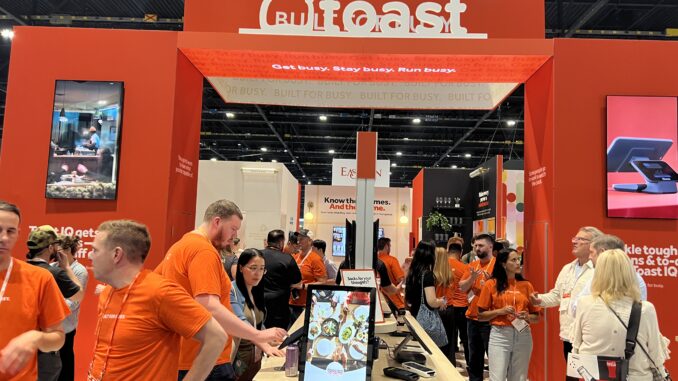
That evolution was visible throughout this year’s National Restaurant Association Show in Chicago, where restaurant technology companies showcased solutions focused on labor efficiency, AI, digital ordering, drive-thru innovation, guest engagement and operational visibility. Among them was Toast, which highlighted a platform built around the daily workflows of restaurant teams. Toast is still closely associated with restaurant POS, but its current story is broader: a connected operating ecosystem designed to help restaurants run more efficiently, generate demand and make better decisions across the business.
Toast’s competitive strength starts with its restaurant-specific foundation. The company built its reputation around Toast POS, a cloud-based point-of-sale system purpose-built for restaurants. Over time, that core system has expanded into a broader platform that connects ordering, payments, kitchen execution, guest data, marketing, labor, inventory, accounting, hardware and financial tools. The result is a technology environment that treats the transaction as the starting point for a larger operating workflow.
The breadth of the platform reflects how restaurants actually operate. A full-service restaurant may need table management, handheld ordering, kitchen routing, payment flexibility and guest CRM tools. A quick-service restaurant may need kiosks, digital ordering, loyalty, drive-thru support and speed-of-service reporting. A multi-location operator may need centralized reporting, menu controls, labor visibility and consistent operating data across locations. Toast’s platform is designed to support that range of needs through a connected system rather than a series of disconnected point solutions.
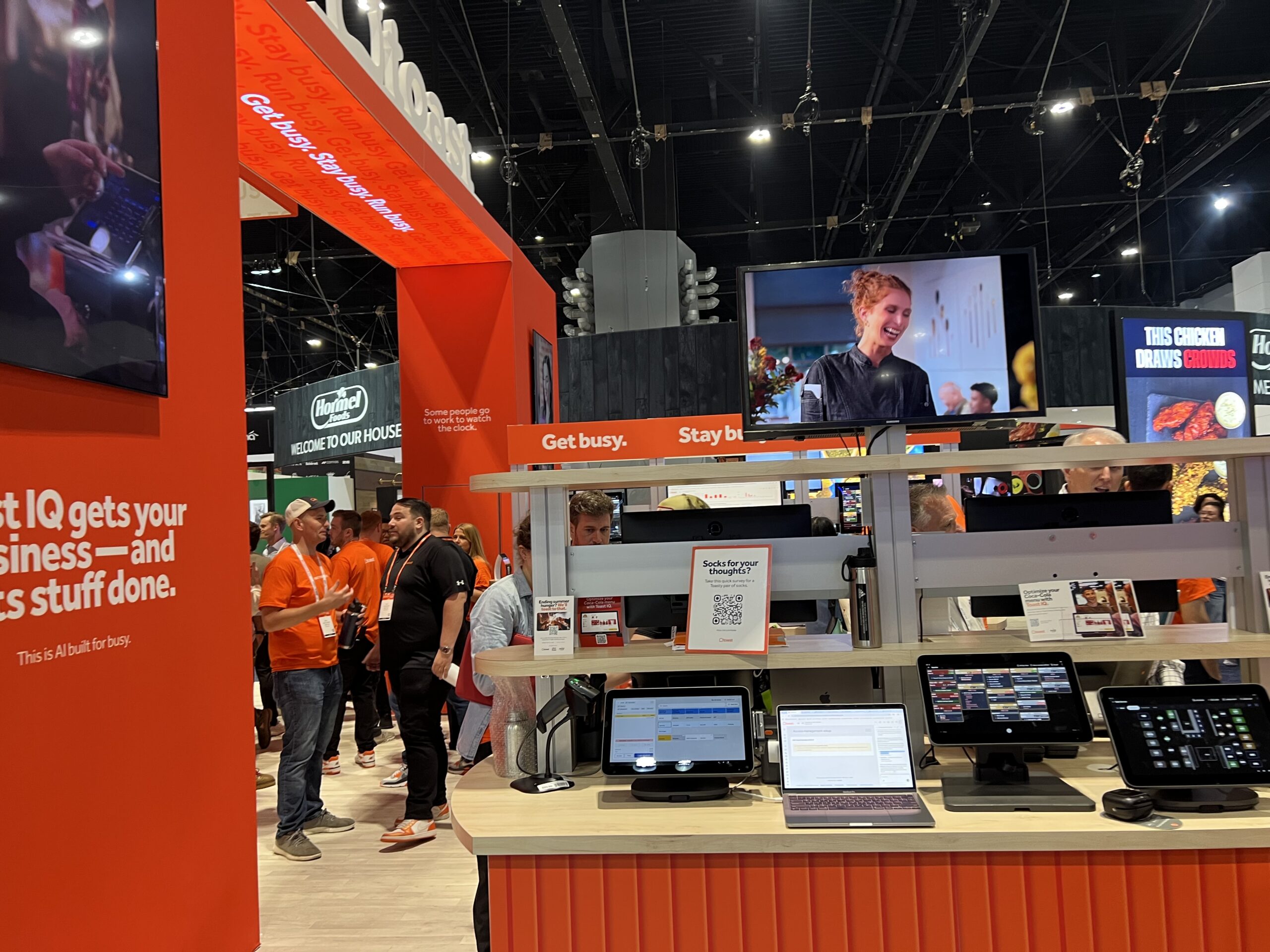
The current platform story is increasingly shaped by AI. Toast now positions Toast IQ as an AI assistant for restaurants and food-and-beverage retailers, with the goal of helping operators ask questions, surface insights and take actions based on their own sales, labor, menu, guest and operational data. In June, the company highlighted how operators were using Toast IQ to find time, protect margins and grow, underscoring a larger industry shift from dashboards that display data to systems that can help interpret and act on it.
That direction became more visible with the launch of Toast IQ Grow, a marketing-focused solution introduced as part of Toast’s Spring 2026 product release. Toast described the release as more than 20 updates across marketing, payroll, inventory and operations, with Toast IQ Grow designed to take on the day-to-day work of marketing a business. At the center of the launch is an AI-powered Marketing Agent that can build audiences and automate campaigns across channels, supported by a reimagined Toast Local app.
 For operators, the appeal is practical. Marketing often falls to owners and managers who are already responsible for staffing, service, inventory, vendor relationships and guest satisfaction. Campaign planning, audience building, offer creation and follow-up can be difficult to execute consistently, especially for independent restaurants and emerging groups. Toast IQ Grow gives Toast a stronger position in guest acquisition and demand generation by tying marketing activity more closely to restaurant data and operating workflows.
Guest engagement is a major part of that platform strategy. Toast’s tools include Online Ordering, Delivery Services, Mobile Order & Pay, Loyalty, Email Marketing and guest relationship tools that help restaurants stay connected with customers after the first transaction. When those functions sit inside the same ecosystem as POS and payments, restaurants can use ordering behavior, guest history and transaction data to make follow-up more relevant.
Digital ordering has become especially important as restaurants work to balance guest convenience with margin control. Online ordering and delivery can generate incremental demand, but they also add complexity to kitchen timing, order accuracy, staffing and customer service. Toast’s digital storefront products give restaurants ways to capture orders through owned channels while keeping those orders connected to the POS, kitchen display system and reporting environment. That reduces the operational friction that often comes from treating online ordering as a separate system.
Toast’s self-ordering kiosk technology extends that same logic into the restaurant. Kiosks can give guests more time to browse, customize orders and pay, while reducing pressure on counter staff during peak periods. In quick-service and fast-casual environments, kiosk ordering can support labor efficiency and order accuracy, particularly when connected directly to the kitchen and payment flow.
Kitchen execution remains one of the most critical parts of the platform. Orders from servers, kiosks, online ordering, mobile devices and drive-thru lanes all need to reach the kitchen in a way that supports accuracy and timing. Toast’s Kitchen Display System helps restaurants route, organize and manage orders across preparation stations. In high-volume operations, the connection between ordering and kitchen execution can determine whether technology improves throughput or simply adds more channels for staff to manage.
Toast’s move into drive-thru technology is one of the clearest signs of how the platform is expanding beyond traditional POS. The company launched Toast Drive-Thru in 2026 as a unified solution for enterprise quick-service operations, bringing together hardware, POS-native software, AI voice ordering integrations and services. The product includes POS Drive-Thru Mode, vehicle ID and lane tagging, Advanced Order Confirmation Screen software, Speed of Service reporting, Drive-Thru KDS enhancements and Delphi by Toast hardware.
Drive-thru operations require a different level of speed, sequencing and accuracy than many other service models. Orders move quickly, guests expect confirmation, kitchens need accurate routing and managers need visibility into lane performance. By bringing drive-thru workflows into the Toast ecosystem, the company is moving deeper into high-throughput restaurant environments where operational execution has direct revenue implications.
The drive-thru launch also positions Toast more clearly for enterprise and chain restaurant opportunities. Toast has long been associated with independent restaurants, but the company’s product roadmap increasingly addresses the needs of larger operators, including quick-service brands, sports and entertainment venues, hotel restaurants, foodservice management environments and multi-location restaurant groups. Those customers often need more sophisticated reporting, tighter operational controls and technology that can support standardized workflows across many sites.
Back-office functionality gives Toast another layer of platform depth. The company offers tools for Scheduling, Payroll, tips management, Inventory Management and xtraCHEF by Toast, which supports invoice processing, food-cost visibility, inventory and cost analytics. These tools connect the front-of-house transaction to the decisions that shape profitability behind the scenes.
Food costs, labor costs and cash flow remain some of the most difficult areas for operators to manage. A POS system can show what was sold, but operators also need to understand what those sales cost, how labor aligned with demand, where margins are shifting and whether inventory decisions are affecting profitability. Toast’s back-office products are designed to help restaurants move from transaction capture to operational control.
Financial visibility is another part of the ecosystem. Toast’s finance-related tools, including products such as Toast Capital, reflect the company’s effort to connect operating data with access to financial services. For restaurants, the ability to see performance, manage cash flow and access capital from within a restaurant-focused platform can be valuable, particularly in an environment where costs remain elevated and working capital needs can change quickly.
Toast’s service-model coverage also gives the platform strategic breadth. The company supports full-service restaurants, quick-service restaurants, fast casual concepts, cafés, bars, pizzerias, food trucks, fine dining restaurants, hotel restaurants, catering and events, drive-thru operations, enterprise brands and sports and entertainment venues. Each of these environments has different workflows, but they share a need for connected ordering, payments, kitchen coordination, staff tools and reporting.
Toast hardware reinforces that restaurant-specific approach. The company’s commercial-grade terminals, handhelds, kiosks, kitchen display screens and drive-thru hardware are designed for the physical realities of restaurant work. Hardware reliability matters in environments where spills, heat, long shifts and peak service pressure are part of the daily operating environment. The value of software depends heavily on whether the devices supporting it can perform during service.
The competitive landscape around Toast includes restaurant POS providers, payment companies, online ordering platforms, kiosk vendors, labor-management tools, inventory systems, marketing platforms, guest CRM providers and financial technology companies. Toast differentiates itself by bringing many of those capabilities into a connected restaurant-specific ecosystem. Rather than treating POS, payments, marketing, labor, inventory and guest engagement as separate decisions, the company is building a platform around the operating rhythm of restaurants.
That integration becomes more valuable as restaurant technology stacks grow more complicated. Many operators have added tools over time to solve immediate problems: an online ordering provider, a delivery platform, a loyalty tool, a scheduling system, a marketing vendor, a kitchen display product and a reporting dashboard. Each can solve a problem, but fragmentation can create duplicate work, inconsistent data and operational blind spots. Toast’s platform strategy is built around reducing that fragmentation.
AI gives that strategy another layer. Restaurants have no shortage of data, but many operators have limited time to analyze it. Sales trends, menu performance, guest behavior, labor patterns and inventory costs can point to opportunities, but only if someone has the time and expertise to identify them. Toast IQ and Toast IQ Grow show how the company is trying to move from reporting toward action, with AI helping operators interpret signals and execute tasks such as marketing campaigns.
The reimagined Toast Local app adds another growth dimension. Toast Local gives guests a consumer-facing way to discover and order from restaurants using Toast. With Toast IQ Grow and the broader Spring 2026 release, Toast is connecting operator-facing tools with consumer demand generation, giving restaurants another path to bring guests into owned or Toast-enabled ordering experiences.
Toast’s platform evolution reflects a broader shift in restaurant technology. Operators are not simply buying software to process payments or take orders. They are looking for systems that can support growth, improve margins, reduce manual work, strengthen guest relationships and provide better visibility across the business. The restaurant technology providers that are most valuable will be the ones that connect those workflows rather than adding more isolated tools.
By combining POS, payments, online ordering, delivery, kiosks, drive-thru technology, kitchen display systems, AI, guest engagement, marketing, payroll, scheduling, inventory, cost analytics, finance tools and commercial-grade hardware, Toast is building a broad operating platform for restaurants. Its continued product expansion shows how the role of restaurant POS has changed: the system is no longer just where the transaction happens. It is increasingly where operations, guest relationships and business decisions come together.
In a restaurant industry defined by rising costs, labor pressure, digital demand and changing guest expectations, Toast is positioning its platform as infrastructure for operators that need to run efficiently while continuing to grow. The company’s challenge and opportunity are the same: to keep connecting more parts of the restaurant business without losing the simplicity and reliability operators need during service.
