
By Dustin Stone, Debbie Carson and Lea Mira, RTN staff writers - 6.29.2026
Restaurant operators are entering another year defined by high costs, unpredictable traffic, labor pressure and value-sensitive guests. Technology decisions are increasingly being judged by whether they help improve profitability, simplify daily work and give operators more control over their guest relationships. A point-of-sale system still needs to process orders and payments reliably, but operators now expect more from the platforms running their businesses.
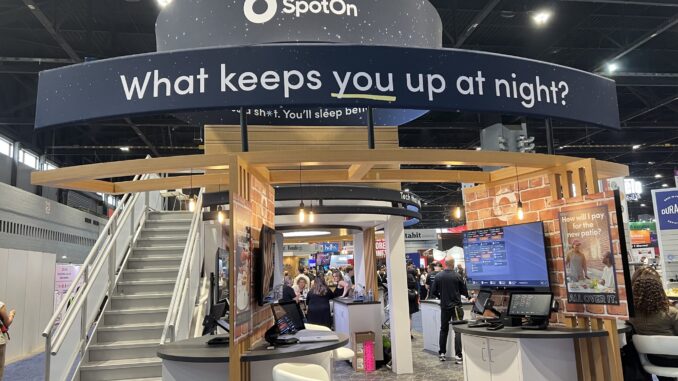
That profit-focused reality was visible throughout this year’s National Restaurant Association Show in Chicago, where technology providers emphasized AI, labor efficiency, digital ordering, guest engagement and better operational visibility. Among them was SpotOn, which presented a restaurant technology story built around practical tools rather than technology for its own sake. SpotOn describes itself as a restaurant technology and financial services company, but its current platform direction is best understood through a narrower operator lens: helping restaurants run smarter, more profitable businesses.
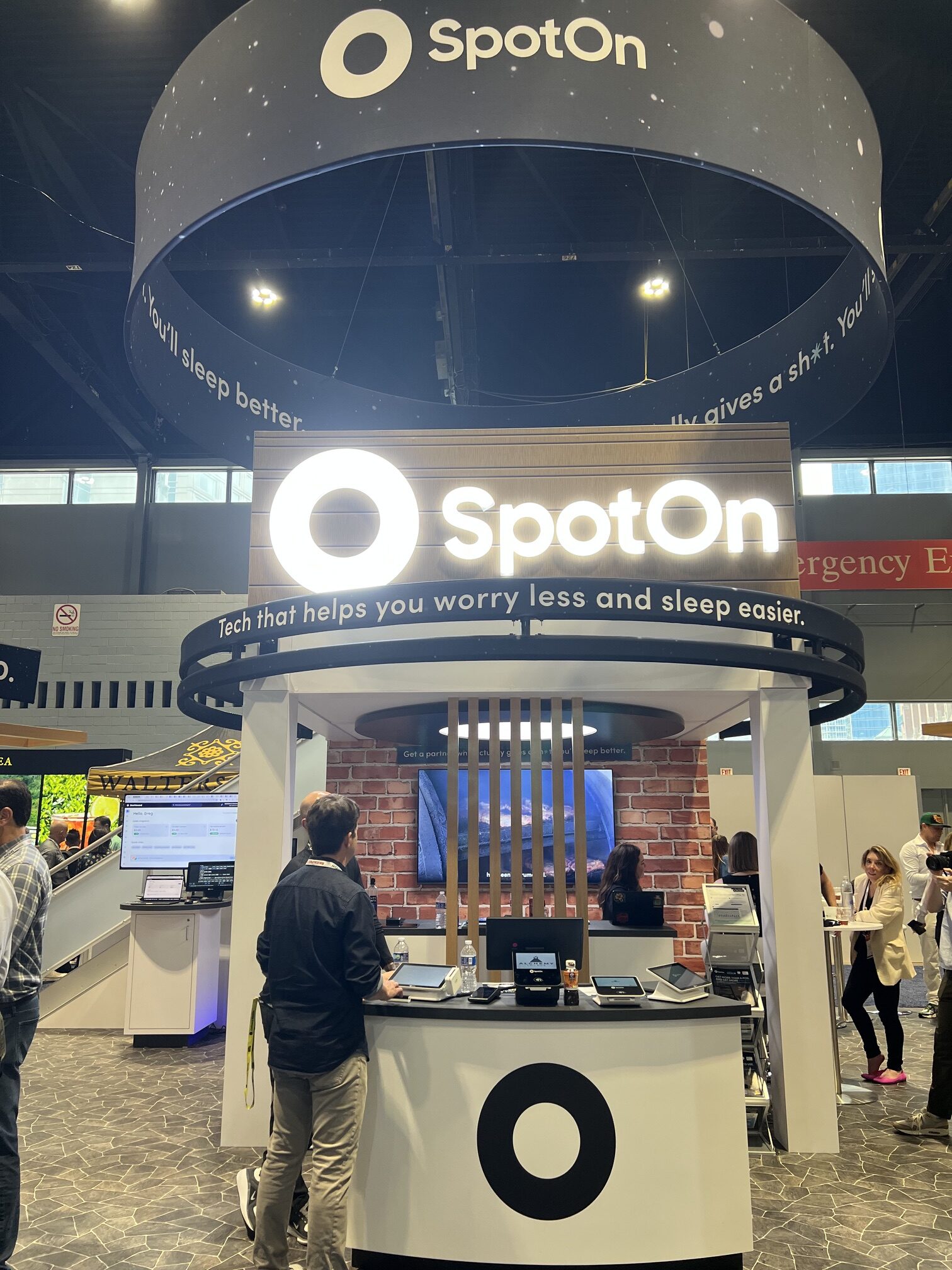 SpotOn’s positioning is especially relevant for independent restaurants and growing operators that need more sophisticated tools without adding unnecessary complexity. These businesses are often expected to manage the same challenges as larger brands, including online ordering, reservations, waitlists, labor management, marketing, loyalty, delivery, rising costs and real-time reporting. The difference is that many independent operators must do all of this with smaller teams, fewer back-office resources and less room for operational error.
The company’s 2026 restaurant outlook captures that point of view clearly. SpotOn framed the year ahead around “profit, not hype,” emphasizing value-driven menus, first-party guest data, practical AI, labor efficiency and payment models designed to protect margins. That message gives SpotOn a distinct editorial position in a crowded restaurant technology market. The company is not simply adding more features to a POS system. It is building tools around the financial and operational pressures restaurants feel every day.
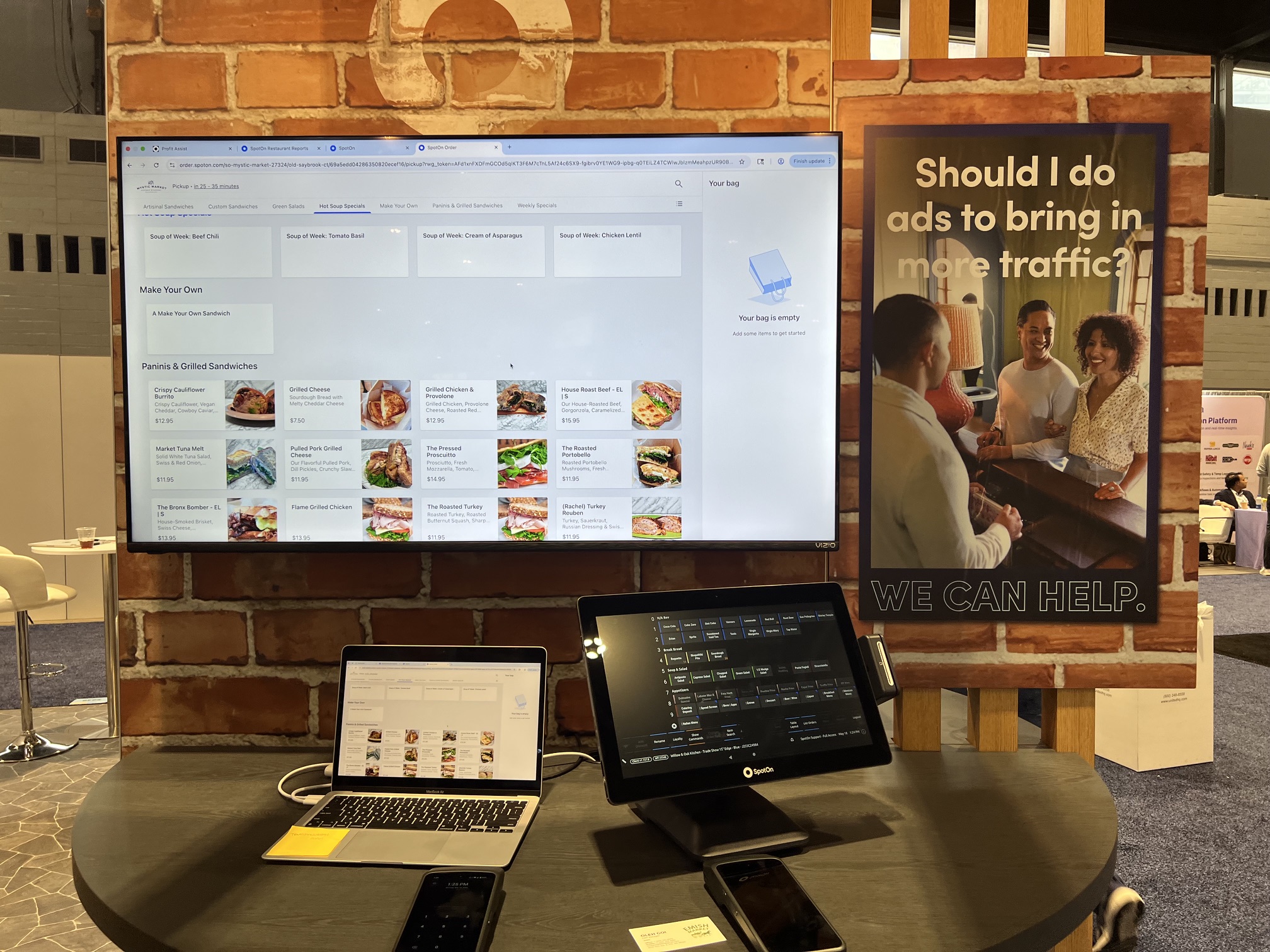
The platform foundation is SpotOn Restaurant POS, a cloud-based restaurant management system that connects orders, payments, staff, data and guest-facing workflows. The POS supports core restaurant functions such as menu management, table service, online ordering, payments, reporting, employee tools, handheld ordering, kitchen communication and offline mode. For operators, the value comes from having more of the restaurant’s activity move through one connected system rather than relying on disconnected point solutions.
SpotOn POS is designed around the reality that restaurant work happens quickly and often under pressure. Orders need to move cleanly from servers, handhelds, online channels and delivery integrations to the kitchen. Payments need to work reliably at the counter, at the table and through digital ordering flows. Managers need access to sales, labor and menu performance without waiting for end-of-day reports. When those functions are connected, operators gain more visibility into the business while staff have fewer systems to manage during service.
Artificial intelligence has become one of SpotOn’s most important product themes, but the company is positioning AI in practical restaurant terms. Rather than treating AI as a novelty, SpotOn is applying it to areas where operators already spend time and money: profit analysis, menu updates, marketing, reporting and operational decision-making. That approach fits the company’s broader emphasis on restaurant profitability and ease of use.
The most current example is SpotOn Profit AI, which opened in beta this month. SpotOn describes Profit AI as a capability that surfaces proactive profit recommendations inside the SpotOn dashboard while keeping each decision with the operator. The product builds on the company’s earlier profitability tools by analyzing supported restaurant data, identifying changes, explaining likely causes and presenting recommendations operators can consider. The editorial significance is that SpotOn is moving AI closer to the daily financial decisions that determine whether a restaurant protects margin or loses it quietly over time.
SpotOn’s Profit Assist provides another layer of financial visibility. The product connects with accounting systems such as QuickBooks Online, Restaurant365 and Xero to analyze profit-and-loss data, surface cost spikes, identify errors and suggest areas worth reviewing. For restaurant operators, P&L analysis can be time-consuming and easy to postpone, especially when managers are focused on service. AI-powered profitability analysis gives operators a way to spot problems sooner and make better-informed decisions around food costs, labor, discounts and other expense categories.
Menu management is another area where SpotOn is applying AI to reduce manual work. The SpotOn AI Menu Assistant allows operators to make bulk menu changes using simple prompts. Restaurants can adjust prices, update item details, change descriptions, modify categories, edit modifier groups, manage discounts and make other menu changes without going item by item. In a market where ingredient costs shift quickly and menu strategy directly affects margin, faster menu management can be more than a convenience feature.
 That AI direction fits naturally with SpotOn’s broader restaurant management platform. Operators are not struggling because they lack data. They are struggling because data is often fragmented, time is limited and decisions need to be made quickly. SpotOn’s AI tools are designed to turn information into clearer next steps, whether the issue is a cost spike, an outdated menu item, a pricing change or a profitability opportunity.
First-party ordering is another major part of the platform. Through SpotOn Order, restaurants can accept commission-free online orders connected directly to SpotOn POS. The product gives guests a way to order directly from the restaurant while helping operators protect online profit, retain guest relationships and keep reporting tied to the core POS environment. For restaurants trying to reduce dependence on high-commission marketplaces, direct ordering has become both a margin strategy and a customer-data strategy.
SpotOn’s delivery capabilities extend that first-party ordering model. SpotOn Delivery, powered through DoorDash Drive, gives restaurants a flat-rate fulfillment option for orders placed through their own channels, including their website, GoTo Place and Google. Orders flow directly to the POS and kitchen display system, reducing manual entry and eliminating the need to manage a separate marketplace tablet. That structure allows restaurants to offer delivery while keeping more control over the transaction, guest relationship and economics.
The GoTo Place app adds another guest-facing layer. SpotOn launched GoTo Place as a restaurant-first mobile ordering channel that brings together online ordering, loyalty, deals, waitlist, reservations and push notifications. For independent restaurants, the app is designed to provide some of the convenience guests expect from larger consumer platforms while keeping the restaurant brand and guest relationship closer to the operator.
Guest engagement extends beyond online ordering. SpotOn’s restaurant marketing software works with loyalty and other guest tools to help restaurants turn customer activity into repeat visits. Operators can tie promotions to online ordering, reservations, events and other actions, using guest data to support more targeted communication. In a market where guests are more selective about where they spend, bringing people back is often as important as attracting them the first time.
Loyalty, gift cards and guest communication also support that repeat-visit strategy. Restaurants increasingly need ways to recognize frequent guests, reward behavior, encourage direct ordering and maintain communication outside of third-party platforms. SpotOn’s connected approach gives operators more ways to turn transactions into ongoing relationships rather than isolated visits.
Reservations and guest flow give SpotOn another operational layer. SpotOn Reserve supports reservations, table management, automated guest communication and POS-connected service flow. The company’s waitlist software can also be used as a standalone waitlist solution, giving high-volume restaurants tools to manage walk-ins, quote wait times, notify guests and keep host teams aligned during busy periods.
 These guest-flow tools are especially valuable for full-service restaurants, casual dining concepts and high-traffic venues where table turns and front-door management affect revenue. A reservation or waitlist system that sits apart from the rest of the restaurant can create gaps between host teams, servers and managers. When it connects back to POS and table management, restaurants gain a more complete picture of service flow.
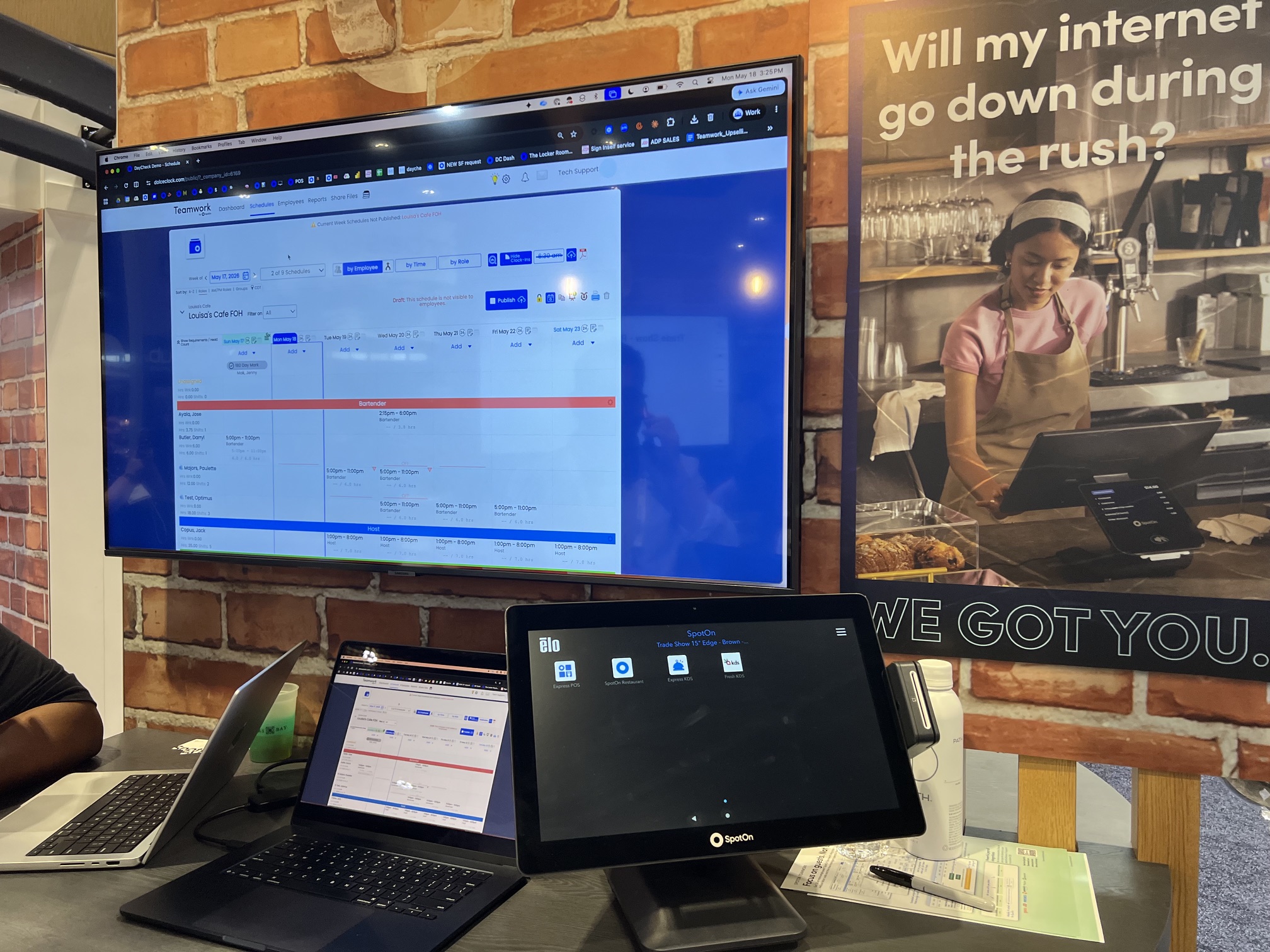
Labor management is another part of the profitability equation. SpotOn’s scheduling and team tools help restaurants manage shifts, employee communication and staffing decisions. The SpotOn Teamwork employee app gives staff mobile access to schedules and related work information, reducing last-minute questions and improving communication between managers and employees. Labor remains one of the largest restaurant cost categories, and better scheduling visibility can help operators align staffing with demand.
Tableside service is supported through SpotOn Handheld, which allows servers to take orders and payments directly at the table. The handheld is designed for restaurant conditions, with a large touchscreen, long battery life, lightweight construction and offline capabilities. By reducing trips back to a terminal, handheld ordering can improve speed, reduce errors and give servers more time in front of guests.
Kitchen execution is supported through SpotOn KDS. The kitchen display system connects orders from SpotOn Restaurant POS, SpotOn Order and delivery integrations into one kitchen workflow, helping front-of-house and back-of-house teams stay aligned whether an order came from a server, a delivery app or the restaurant’s own website. In restaurants with multiple ordering channels, kitchen visibility is essential to maintaining accuracy and timing.
Self-service and hardware also play a role in SpotOn’s platform strategy. The company’s restaurant kiosks and menu boards support self-ordering and POS-synced menu displays, while its broader restaurant POS hardware portfolio includes terminals, handhelds and other devices designed for restaurant environments. Hardware reliability and usability are central to restaurant technology adoption because software value depends on whether the devices can perform during peak service.
Reporting ties these pieces together. SpotOn’s restaurant reporting software gives operators real-time visibility into sales, menu performance, labor costs, online ordering and other key metrics. The company positions reporting around profit improvement, helping restaurants identify what is selling, what is not, where waste may be appearing and where operational decisions can improve performance.
Payments remain a central part of SpotOn’s value proposition. Its restaurant payment processing capabilities support in-person and online payments, including cards, Apple Pay and Google Pay, as well as virtual terminal use for online payments and invoicing. For restaurants, payments are no longer isolated from operations. They connect to ordering, reporting, reconciliation, guest experience and cash flow.
SpotOn’s financial-services layer reinforces that broader operating role. The company has positioned financial tools around helping restaurants access funding, manage payments and improve business stability. For operators navigating unpredictable traffic and elevated costs, financial visibility and access to capital can be part of the same technology conversation as POS, reporting and labor management.
The competitive landscape includes restaurant POS providers, payment processors, reservation platforms, online ordering vendors, marketing tools, scheduling systems, kitchen display providers and AI analytics companies. SpotOn competes by combining many of those capabilities into a restaurant-focused platform while emphasizing profitability, hands-on support and practical workflows for independent operators.
That positioning gives SpotOn a different tone from companies that lead with broad automation claims. The company’s strongest story is grounded in operator realities: food costs, labor scheduling, online ordering profitability, table management, guest retention, menu updates and financial visibility. These are not abstract innovation themes. They are the everyday issues that determine whether a restaurant protects margin.
SpotOn’s presentation of the Innovation Theater at the National Restaurant Association Show also aligned with that positioning. The show floor emphasized technology, education and operational improvement, and SpotOn’s presence connected its product story to a broader conversation about how restaurant leaders can make smarter business decisions. That visibility reinforced the company’s role as both a technology provider and an advocate for practical restaurant innovation.
As restaurants continue managing higher costs and more complex guest expectations, the value of technology will depend less on feature count and more on operational fit. Operators need tools that help them work faster, make better decisions, communicate with guests, control costs and protect profit without overwhelming the team during service.
By combining cloud-based POS, integrated payments, commission-free online ordering, delivery, reservations, waitlist, labor tools, handhelds, KDS, marketing, loyalty, reporting, Profit Assist, Profit AI and AI menu management, SpotOn is building a platform around the practical mechanics of restaurant profitability. The company’s competitive strength lies in connecting those tools around the daily work of restaurant teams.
In a restaurant technology market often shaped by buzzwords, SpotOn’s platform story is strongest when viewed through the operator’s financial lens. Restaurants do not need technology that simply looks advanced. They need systems that help them make more money, waste less time and serve guests more consistently. SpotOn is positioning its platform around that more grounded definition of innovation.
