
By Dustin Stone, Debbie Carson and Lea Mira, RTN staff writers - 6.29.2026
Restaurants and foodservice brands are increasingly competing beyond the plate. A successful restaurant concept may expand into branded sauces, frozen meals, packaged snacks, beverages, meal kits, retail products, grab-and-go items or private-label foodservice lines. Convenience retailers, grocers, hospitality groups and emerging food brands are also moving faster to launch new products that connect with changing consumer tastes. The challenge is that product development and manufacturing remain complicated, fragmented and difficult to navigate.
That challenge gives Keychain a distinct role in the restaurant and foodservice technology ecosystem. The company is not a point-of-sale provider, online ordering platform or guest-engagement system. It is an AI-powered platform for consumer packaged goods manufacturing, built to help brands, retailers and manufacturers create products, connect with suppliers and manage supply chains more efficiently. For foodservice operators exploring packaged products, private-label extensions or supplier partnerships, Keychain sits closer to the infrastructure behind product innovation.
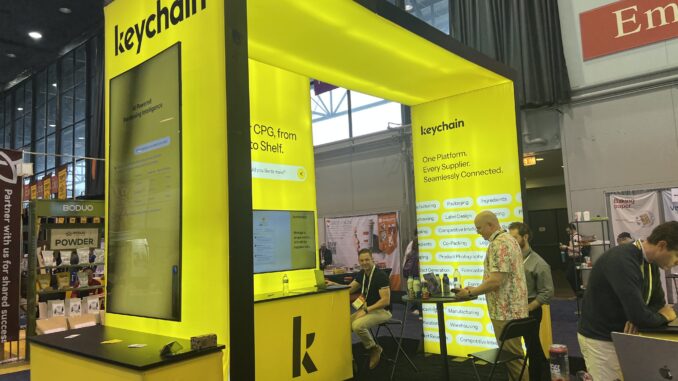
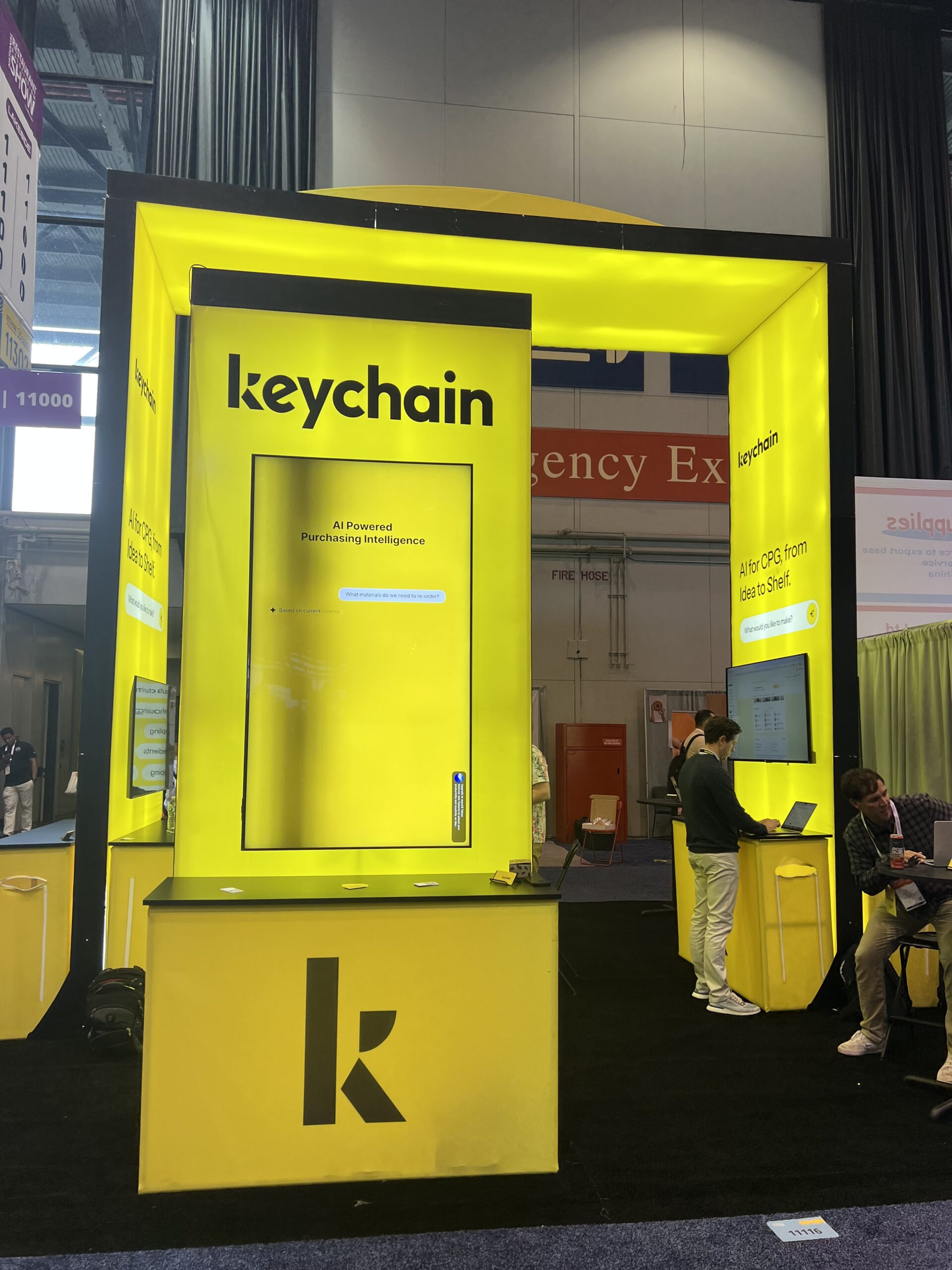 Keychain brought that manufacturing platform story into the foodservice conversation at this year’s National Restaurant Association Show in Chicago, where its team described a broader push into foodservice and used the show to connect with restaurant operators, suppliers, food brands and manufacturers. At a show where product innovation, supply-chain resilience and commercialization speed were central themes, Keychain’s AI-powered manufacturing model fit into a broader conversation about how food ideas become scalable products.
The company’s larger story is about modernizing one of the least visible but most important parts of food and beverage innovation. Product development has traditionally relied on trade-show meetings, personal networks, manual supplier searches, spreadsheets, emails, specification documents and long back-and-forth cycles with prospective manufacturing partners. That process can be especially difficult for restaurants and emerging foodservice brands that may know what they want to create but lack deep internal manufacturing expertise.
Keychain’s platform is designed to reduce that friction. Its Search & Discovery tools allow brands and retailers to browse a database of more than 50,000 global CPG manufacturers and filter by product type, packaging material, certifications, capabilities and allergen requirements. The platform also provides AI-powered recommendations, project posting and supplier matching, helping users identify manufacturing partners that fit the product, production requirements and commercial goals.
Manufacturing fit is rarely obvious from a surface-level search. A brand developing a new protein bar, frozen entrée, ready-to-drink beverage, sauce, snack, bakery item or private-label product needs to evaluate capabilities, minimum order quantities, certifications, allergens, packaging formats, capacity, lead times, geographic considerations and quality standards. Keychain’s matching model is designed to make those variables easier to search, compare and act on.
Foodservice operators face many of the same challenges. A restaurant group launching a bottled sauce line may need a manufacturer with condiment expertise, shelf-stability experience, packaging flexibility and food-safety certifications. A hospitality brand developing a private-label snack may need a co-manufacturer with packaging capabilities and retail experience. A convenience retailer expanding grab-and-go products may need suppliers that can meet volume, freshness and distribution requirements. Keychain gives those teams a more structured way to identify manufacturing options and develop products with fewer blind spots.
The platform’s AI product-generation capabilities add another layer to the story. Keychain says users can describe needs in plain language and have Keychain AI translate those ideas into manufacturing and packaging requirements. For teams that have a product idea but need help turning it into structured specifications, that can shorten the distance between inspiration and commercialization. In foodservice, product concepts often start as menu items, chef-developed recipes, consumer insights or brand extensions before they become production-ready requirements.
Keychain’s current platform also goes beyond supplier search. Keychain 360 is positioned as an AI-powered, enterprise-grade supply chain management platform for brands and retailers. It centralizes supplier discovery, relationship management and product development workflows, creating a source of truth for supplier networks and product roadmaps. The product is designed to support sourcing pipelines, supplier qualification, compliance controls, document repositories and AI-driven supplier comparison.
For enterprise foodservice, retail and CPG teams, that type of system can make product development more repeatable. Supplier discovery often depends heavily on individual relationships and institutional knowledge. When that information is scattered across inboxes, spreadsheets and personal networks, organizations can struggle to compare options, reuse knowledge and maintain visibility into supplier performance. Keychain 360 gives product and sourcing teams a way to capture that work inside a more searchable and structured environment.
The supplier-analysis capabilities are particularly relevant for larger organizations that manage many categories, locations or brand concepts. A company developing multiple private-label items or foodservice products may need to compare suppliers across capabilities, certifications, pricing, capacity, speed and risk. Keychain 360’s AI-powered comparison and query tools are designed to help teams evaluate suppliers faster and make award decisions with more confidence.
Keychain’s manufacturer-facing technology creates a second side to the platform. The company’s manufacturer platform gives suppliers a way to connect with brands and retailers actively looking for production partners. Keychain describes its network around 50,000 manufacturers, more than 1.5 million products added to the database and tens of thousands of brands. For manufacturers, the value proposition is not only being discoverable. It is gaining better access to qualified demand, relevant customer opportunities and more efficient business development.
That two-sided model matters because food product innovation depends on both buyer visibility and supplier capacity. Brands need to find the right manufacturing partners, and manufacturers need to identify demand that matches their capabilities, equipment, certifications and available capacity. By organizing both sides of that relationship, Keychain is positioning itself as more than a search tool. It is building a networked infrastructure layer for CPG manufacturing.
The company’s most current product expansion is KeychainOS, which Keychain describes as an AI-powered operating system for modern manufacturing. The platform includes modules for intelligent purchasing, inventory management, production automation and end-to-end traceability. Instead of focusing only on how brands find suppliers, KeychainOS moves deeper into how manufacturers manage production, materials, planning and compliance once business is awarded.
Keychain’s 2025 Series B announcement underscored that shift. The company raised $30 million and launched KeychainOS, bringing total funding to $68 million and describing the product as an AI-based operating system designed to help manufacturers manage production cycles with greater speed, visibility and intelligence. The announcement also positioned Keychain’s evolution as a move from sourcing platform to operating system for CPG manufacturing.
That expansion gives Keychain a broader platform narrative. Search and discovery help brands find the right partners. Keychain 360 helps sourcing and product-development teams manage supplier relationships and development workflows. KeychainOS helps manufacturers run production with more intelligence around purchasing, inventory, planning and traceability. Taken together, those capabilities create a platform that touches product development from idea and sourcing through production execution.
Intelligent purchasing is one of the clearest examples of how KeychainOS can support manufacturers. The platform is designed to predict demand and generate purchasing recommendations based on real-time inventory, production plans and supplier performance. In food manufacturing, purchasing mistakes can create both waste and disruption. Buying too much can tie up capital and increase spoilage risk, while buying too little can delay production. AI-driven purchasing recommendations can help manufacturers balance those pressures more effectively.
Inventory management is another critical workflow. Ingredients, packaging materials and finished goods often move across multiple locations, production lines and customer commitments. KeychainOS is designed to track inventory levels, movement and usage while surfacing shortages, overages and discrepancies earlier. For manufacturers serving restaurants, foodservice distributors, retailers and CPG brands, better inventory visibility can help protect service levels while reducing reactive firefighting.
Production automation extends the value further. By connecting purchasing, inventory and production planning, KeychainOS is designed to adjust plans as inputs change and reduce manual handoffs between teams. Food manufacturing often involves changing forecasts, ingredient availability, customer requirements and production constraints. A more coordinated planning system can help manufacturers respond with greater speed and fewer breakdowns between departments.
Traceability is another area where food manufacturing technology is becoming more important. KeychainOS includes end-to-end traceability designed to capture and link data from raw materials through finished goods. For foodservice and CPG manufacturers, traceability supports quality control, compliance, issue investigation and customer trust. As supply chains become more complex and buyers demand greater transparency, traceability is moving from a compliance requirement to a competitive capability.
Keychain’s relevance to restaurants may not be immediately obvious because the company does not sit inside the dining room or kitchen. Its value is upstream, in the product and supply-chain work that increasingly shapes foodservice growth. Restaurants and hospitality brands that move into packaged products need reliable manufacturing partners. Retailers and distributors that develop foodservice or private-label programs need stronger sourcing workflows. Manufacturers that serve foodservice customers need better tools to manage demand, capacity and production.
That upstream role is becoming more important as the boundaries between restaurants, retail and packaged food continue to blur. Restaurant brands are increasingly appearing on grocery shelves. Grocers and convenience stores are expanding fresh food and prepared meal programs. Foodservice operators are creating branded products for digital channels, retail partnerships and catering formats. The companies that can move faster from concept to manufacturable product will have an advantage.
Keychain’s platform gives those companies a way to reduce the manual work behind that expansion. Instead of starting with a broad web search or a trade-show contact list, teams can search a structured manufacturer database, generate product and packaging requirements, evaluate suppliers, manage sourcing pipelines and support production execution. That makes the platform especially relevant for product-development teams trying to move quickly without sacrificing supplier fit or operational discipline.
The competitive landscape includes supplier directories, manufacturing marketplaces, sourcing consultants, ERP systems, PLM tools, procurement software and traditional relationship-based co-manufacturing networks. Keychain differentiates itself by combining a large CPG manufacturing database, AI-powered supplier matching, enterprise sourcing workflows and manufacturer operating tools. The company’s strongest story is the integration of those functions across the product-development and manufacturing lifecycle.
For foodservice operators, the broader significance is clear. Product innovation is no longer limited to menu development. It increasingly includes branded retail products, packaged goods, sauces, beverages, snacks, prepared meals and private-label programs. Those opportunities can expand revenue and brand reach, but they require manufacturing infrastructure that many restaurant companies do not already have. Keychain is building technology for that gap.
The company’s momentum also reflects a larger industry shift. CPG and foodservice manufacturing have long relied on fragmented workflows, manual searches and legacy systems. AI is now being applied not only to consumer-facing marketing or restaurant operations, but to the industrial processes behind product creation and production. Keychain’s approach shows how AI can support supplier discovery, specification development, sourcing decisions, purchasing, inventory, production planning and traceability in a single connected environment.
By bringing AI-powered supplier discovery, Keychain 360, manufacturer access, KeychainOS and production intelligence into one platform, Keychain is helping foodservice brands, retailers and manufacturers shorten the path from idea to production. Its role in the restaurant technology ecosystem is different from companies focused on POS, ordering or guest engagement, but no less relevant to how foodservice businesses grow.
In a market where menu innovation, private-label growth and branded product extensions are becoming more strategic, the ability to find the right manufacturing partner and manage production intelligently can determine how quickly an idea becomes a real product. Keychain is positioning itself as the infrastructure layer for that next phase of foodservice and CPG manufacturing innovation.
