By Lea Mira, RTN staff writer - 11.2.2026
Solink has raised more than $100 million to expand technology that uses security camera footage and operating data to help restaurants and other businesses identify service delays, investigate transactions and monitor day-to-day operations. The October 29 funding announcement named Vertu Capital as the lead investor, with participation from existing backer Growth Equity at Goldman Sachs Alternatives and new investors Golub Growth and Comcast Ventures. Solink said the investment will support product development, its AI roadmap and strategic growth opportunities.
The company reports that its platform serves more than 35,000 customer locations in 65 countries, with over 500,000 cameras under management. Those figures cover its customer base across industries, including restaurants, retail and warehouses.
“Our vision is a world where businesses no longer need to see what’s taking place in order to understand what’s happening,” said Mike Matta, Solink’s co-founder and CEO, in the announcement.
For restaurants, the technology combines camera footage with point-of-sale records and other operating data. Managers can review what happened around a refund or void and investigate conditions behind changes in sales or service.
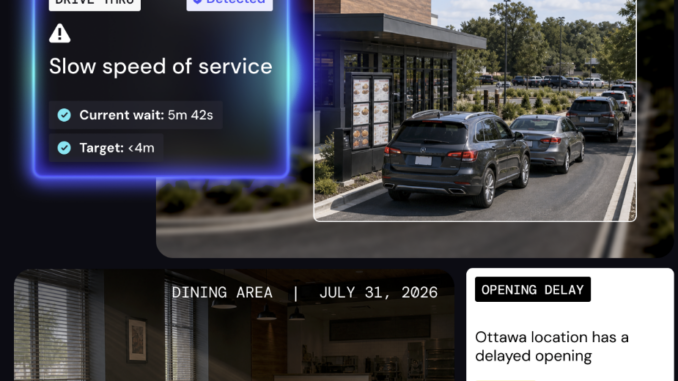
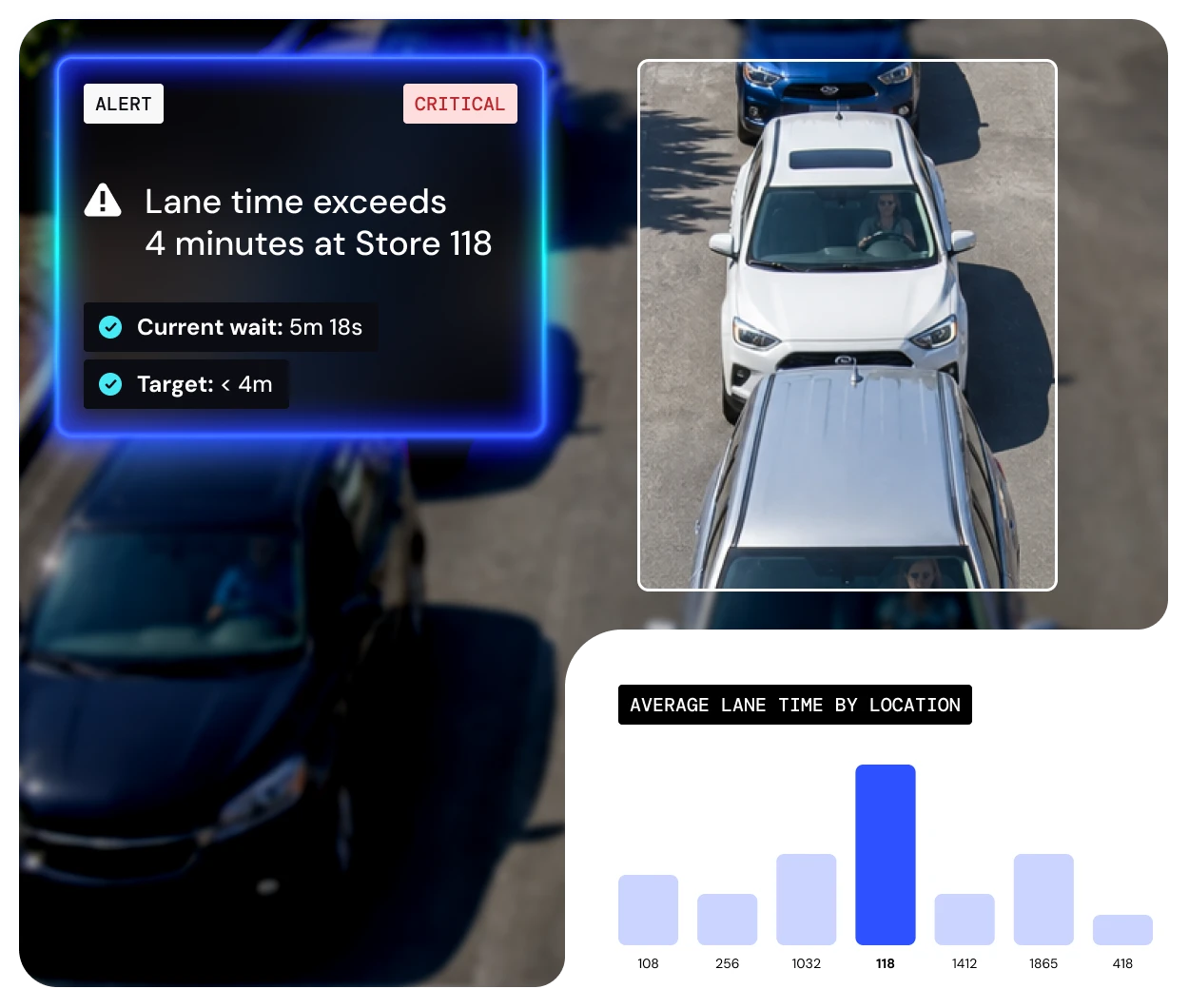
The company’s Drive-Thru AI product, introduced in May, uses existing cameras and configurable detection zones to monitor vehicles through different parts of the lane. Coverage can include the entrance, queue, menu board, service windows and pull-forward areas.
Solink says the system can help operators identify vehicles abandoning the queue and see where congestion develops. A web-based kitchen display combines live video with service information, and the product supports both single-lane and merging-lane configurations.
In that launch announcement, Joshua Gravely, senior manager of IT at Sonny’s BBQ, identified better visibility into bottlenecks and the ability to adopt the technology without additional hardware as reasons for the restaurant company’s interest. He described anticipated benefits; the announcement did not report measured results from Sonny’s BBQ.
Solink followed the drive-thru launch with the June release of its AI Agents. The company describes these as tools that examine video and operating data and flag events requiring attention. Initial applications include loss prevention, after-hours security and checks on whether locations are clean, organized and ready for business. Customers can also configure agents around their own workflows.
A Solink-published case study illustrates how restaurant managers are already using the platform. PARS Group LLC / Northwest Food Management, a Jack in the Box franchise organization overseeing 88 restaurants, connected video with transaction data to investigate unusual POS activity and improve oversight across markets.
According to the case study, district managers use the system to review voids, refunds and cash-drawer activity, and compare sales patterns with conditions inside individual restaurants. That can help them investigate whether a performance change coincides with staffing gaps, operating practices or external factors.
Franchise operator Paul Urbina reported sales growth of about 3% and a reduction in voids of roughly 80% to 85% following implementation. The figures were reported in Solink’s customer case study and relate to the franchisee’s use of its broader platform, rather than the newer AI products specifically.
Other restaurant technology providers are expanding their video analytics offerings. DTiQ announced ACTIONiQ in September, with availability beginning October 1. The product analyzes conditions such as queues, service timing, staffing coverage and dining-room readiness, then sends configurable notifications. DTiQ says managers retain responsibility for deciding how to respond.
Earlier this year, DTiQ also introduced an enhanced drive-thru platform based on Summit Innovations technology, offering camera-based vehicle detection alongside traditional induction loops. Its features include identifying vehicles that abandon queues and connecting drive-thru events with video and transaction information.
The competing offerings reflect a broader effort to connect restaurant performance data with what happens during a shift. A transaction report may show a sales decline or an increase in voids; associated footage can help managers investigate the circumstances. For operators overseeing multiple locations, the potential benefit is faster access to that context without traveling to each restaurant or manually reviewing hours of video.
