
By Lea Mira, RTN staff writer - 3.21.2026
Travis Kalanick is back, and this time his ambitions extend well beyond ride-hailing. With the public unveiling of Atoms, the former Uber CEO is consolidating a portfolio of restaurant, logistics and automation ventures under a single umbrella, signaling a renewed push to reshape how food is produced, fulfilled and delivered.
Atoms is not a new company so much as a rebranding of a business that has been quietly evolving for years. Following his departure from Uber in 2017, Kalanick founded City Storage Systems, a relatively low-profile holding company that began acquiring distressed real estate assets and repurposing them into delivery-focused kitchen facilities. That effort quickly took shape as CloudKitchens, one of the earliest and most well-funded entrants in the ghost kitchen space, backed in part by significant investment from Saudi Arabia’s Public Investment Fund.
In its early years, CloudKitchens expanded aggressively, building and leasing kitchen infrastructure designed specifically for off-premise dining and delivery-first restaurant brands. The premise was straightforward but ambitious: if demand was shifting toward delivery, then the physical footprint of restaurants could be reimagined to optimize for that channel. By the early 2020s, the company had established a presence across multiple U.S. markets and expanded internationally, operating in dozens of countries.
At the same time, City Storage Systems began layering in additional capabilities. Otter emerged as a key piece of the strategy, offering restaurants a way to aggregate and manage orders across multiple delivery platforms from a single interface. That addressed one of the most persistent pain points in the industry: the operational burden of juggling multiple tablets, menus and order flows across marketplaces like Uber Eats, DoorDash and others.
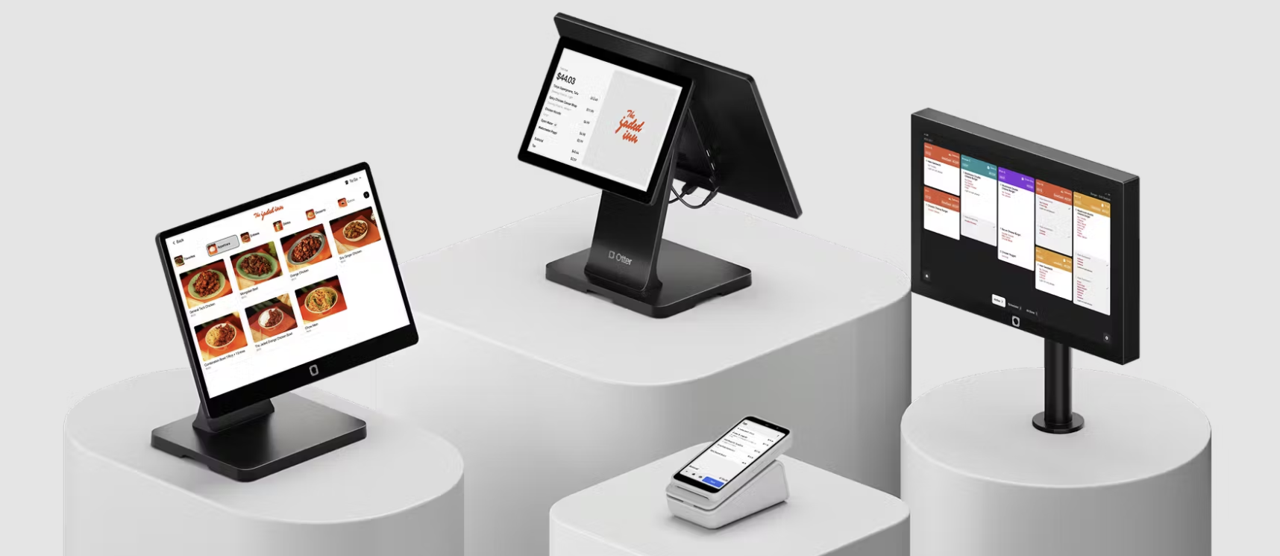
Over time, Otter has evolved beyond aggregation into a broader operating system for off-premise dining. The platform now includes menu synchronization across channels, performance analytics, order throttling, POS integrations and workflow management tools designed to streamline kitchen operations. In effect, it functions as a control layer that helps restaurants manage the growing complexity of digital ordering while capturing more consistent data across channels. That positioning puts it in more direct competition with companies like Olo, Deliverect, Square, Toast, Global Payments and others that are expanding their own ecosystems to better unify front- and back-of-house operations.
Other ventures followed. Picnic focused on office meal delivery, targeting corporate clients with group ordering solutions. Lab37 was established to explore automation, including robotic food preparation and kitchen efficiency tools. More recently, ProFood Properties signaled a deeper investment in food production real estate and supply chain infrastructure, extending the company’s reach beyond the kitchen itself.
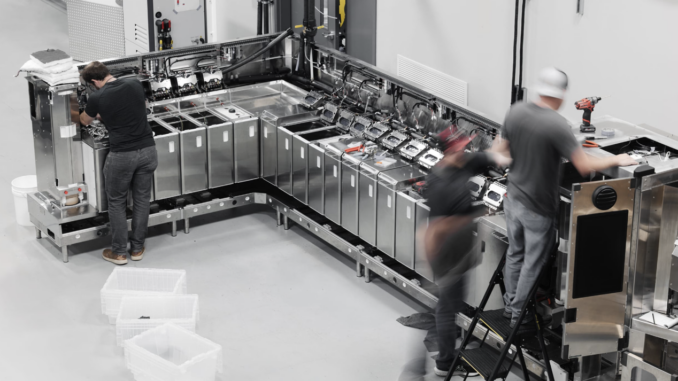
Lab37, in particular, offers a glimpse into how far Kalanick intends to push the model. While still relatively early, the initiative is focused on developing highly specialized, modular automation systems designed to handle specific, repeatable kitchen tasks at scale. Rather than attempting to build fully autonomous kitchens in one leap, the approach centers on incremental automation, deploying purpose-built machines that can execute high-volume functions with speed and consistency.
The concept aligns with Kalanick’s broader vision of “gainfully employed robots,” where automation is not a novelty but a core layer of the operating model. In practical terms, that could mean systems capable of assembling standardized menu items, managing portioning, or producing certain dishes at a throughput level that would be difficult to achieve with traditional labor alone. The often-cited example of producing thousands of identical items per hour illustrates the focus on efficiency, repeatability and cost control.
This direction places Lab37 in a growing but still fragmented segment of the restaurant technology market. Companies such as Miso Robotics have focused on back-of-house automation like frying and grilling, while others like Hyphen are targeting automated assembly lines for formats such as bowls and salads. Picnic Works has gained traction with its automated pizza assembly systems. What distinguishes Lab37, at least in concept, is its integration within a broader ecosystem that includes real estate, delivery logistics and digital ordering infrastructure.
If successfully deployed, automation at this level could materially change unit economics, particularly for delivery-first concepts operating out of centralized kitchen facilities. Labor remains one of the largest and most volatile cost centers for restaurants, and even partial automation can have an outsized impact on margins. At the same time, consistency and speed are critical in delivery environments, where variability can directly affect customer satisfaction.
Despite this expansion, much of the organization operated under the radar. Kalanick himself described City Storage Systems as a “stealth” conglomerate, even as it scaled globally. The rebrand to Atoms brings that collection of businesses into sharper focus and frames them as part of a unified strategy centered on what Kalanick calls “infrastructure for better food.”
That vision is expansive. In addition to its restaurant-facing businesses, Atoms is exploring adjacent sectors including transportation and even mining, with the idea that advances in those areas could support long-term developments in autonomous delivery and large-scale food production. While those ambitions may seem far removed from day-to-day restaurant operations, they reflect a belief that the future of food will be shaped by deeply interconnected systems spanning physical and digital infrastructure.
The move comes at a time when restaurant operators are increasingly focused on consolidating their technology stacks and making better use of guest data. Atoms positions itself as more than a software provider or real estate developer. Instead, it aims to function as an integrated ecosystem that combines production, fulfillment and digital orchestration.
That approach mirrors a broader shift in the industry. Over the past several years, platforms such as Toast, DoorDash and Square have expanded their capabilities in an effort to bring together different parts of the guest journey. More recently, a new wave of solutions has emerged focused on data unification and orchestration, aiming to eliminate the operational gaps that often exist between systems. Atoms’ entry into this space adds a new competitive dynamic, particularly given its control over both infrastructure and software.
At the same time, the economics of delivery remain a central challenge. While demand for off-premise dining continues to grow, profitability has been elusive for many operators, particularly when factoring in third-party fees and operational inefficiencies. Kalanick’s thesis is that tighter integration across the stack, combined with automation and optimized real estate, can materially lower costs. If successful, that could shift the competitive balance not only among restaurants, but also among the technology providers that support them.
Still, Atoms enters a crowded and evolving market. Ghost kitchens, once seen as a transformative model, have faced mixed results, with some operators pulling back amid concerns about quality, brand control and unit economics. CloudKitchens itself has reportedly undergone layoffs and consolidation in recent years as the sector recalibrates. Legal challenges have also followed parts of the portfolio, including labor-related claims and disputes tied to its delivery and meal services.
Even so, the scope of the vision is hard to ignore. By bringing together infrastructure, software and automation under a single brand, Atoms is effectively betting that the future of restaurant technology will be defined less by individual tools and more by tightly integrated systems that control the entire lifecycle of a meal.
Whether that vision can be executed at scale remains an open question. But as the industry continues to grapple with rising costs, labor constraints and shifting consumer expectations, the idea of rebuilding the restaurant stack from the ground up is likely to resonate.
