By Gavriel Shohet and Lea Mira, RTN staff writers - 6.21.2026
Food safety has become a data-management challenge as much as an operational one. Restaurants are being asked to track more information, maintain more records and demonstrate greater compliance than ever before, often while operating with leaner staffing levels. Those realities were evident throughout this year’s National Restaurant Association Show, where food safety, traceability and operational visibility remained recurring themes across the industry.
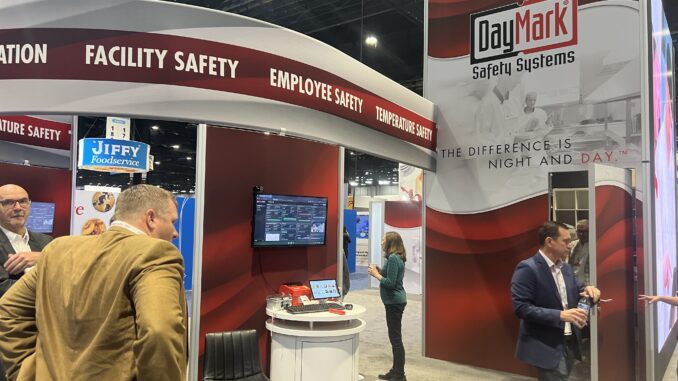
For decades, DayMark Safety Systems has been closely associated with food labeling, date coding and food safety identification products. Today, however, the company is focused on a much broader mission: helping operators manage the workflows, documentation and compliance processes that sit behind modern food safety programs.
Many restaurant organizations continue to rely on paper logs, manual food-safety checks and disconnected processes to manage critical compliance requirements. While those systems may work in individual locations, they become increasingly difficult to manage across larger organizations, particularly as regulatory expectations continue to evolve and labor resources remain constrained.
DayMark’s response is a growing ecosystem of digital tools designed to help operators standardize food safety, compliance and kitchen workflows across multiple locations. At the center of that strategy is MenuCommand, the company’s cloud-based platform for managing food-safety workflows, menu information, labeling and operational compliance.
DayMark’s transition toward software-enabled food safety management began in 2018 with the introduction of MenuCommand. Since then, the company has continued expanding the platform into a broader ecosystem designed to centralize food-safety documentation, menu data, labeling workflows and compliance management across restaurant organizations.
In many ways, MenuCommand reflects a broader trend throughout the restaurant industry. Operators have spent years digitizing ordering, payments, loyalty programs and labor management. Food safety and compliance workflows have often lagged behind, remaining dependent on paper records and manual processes. DayMark is helping bring those functions into the same digital ecosystem.
A recurring challenge for operators is visibility. Restaurant organizations are expected to demonstrate compliance with food-safety procedures, monitor product quality and maintain accurate records. Yet gathering that information consistently across locations can be difficult. MenuCommand is designed to provide a centralized platform for managing those requirements while creating greater operational transparency.
The platform supports several applications that address different aspects of restaurant operations. MenuPilot serves as the primary application for managing shelf life, nutritional information, allergen data, prep instructions and food-label content. For multi-unit organizations, that capability helps ensure that critical information remains consistent across locations while simplifying updates and reducing administrative effort.
Another component, MenuChex, focuses on food-safety execution and compliance workflows. The application enables operators to replace paper-based logs with digital food checks, task management, HACCP documentation and recordkeeping tools. Instead of manually documenting food-safety procedures, employees can complete required checks electronically, creating a more consistent and auditable process.
The transition away from paper-based processes represents one of the most significant opportunities for operators seeking greater consistency and operational visibility. Paper records can be difficult to maintain, easy to lose and challenging to review across multiple locations. Digital workflows create greater transparency while helping organizations standardize procedures and documentation.
Temperature management is another area where DayMark has expanded its capabilities. Through integration with the company’s REV716™ Bluetooth thermometer, operators can automate portions of the temperature-monitoring process and capture data digitally rather than relying entirely on manual entry. This not only improves efficiency but also reduces opportunities for documentation errors.
That functionality is particularly relevant as operators face increasing pressure to demonstrate compliance with food-safety standards. Regulatory expectations continue to evolve, and many organizations are seeking ways to simplify documentation while maintaining confidence in their processes. Systems that automate data collection and recordkeeping can help reduce administrative burdens while improving consistency.
One of the industry’s ongoing challenges is balancing food-safety compliance with labor efficiency. Restaurant teams are expected to complete an increasing number of food-safety checks while maintaining service levels and managing staffing constraints. Automating routine compliance tasks can help reduce administrative overhead while allowing employees to focus on food preparation and guest service.
For multi-unit restaurant groups, the benefits extend beyond compliance. Standardized workflows help create consistency across locations, making it easier to train employees, implement new procedures and monitor execution. When information is centralized, operators gain a clearer understanding of how food-safety processes are being followed throughout the organization.
The timing is notable. Foodservice operators continue facing labor shortages, turnover and training challenges. At the same time, food-safety expectations remain high. Those competing pressures create demand for tools that simplify execution without compromising compliance. DayMark’s digital platform strategy is designed to address both sides of that equation.
Hospitality operators may find particular value in this approach. Hotels often manage multiple food-and-beverage outlets, banquet operations, room-service programs and grab-and-go concepts simultaneously. Maintaining consistent food-safety documentation across those environments can be difficult without standardized systems. Digital workflows provide a more structured and scalable approach.
Healthcare and education operators face similar challenges. Large institutions frequently oversee multiple kitchens, service locations and employee teams while maintaining strict food-safety standards. Platforms that centralize compliance management and recordkeeping can help improve consistency while reducing administrative complexity.
One theme that emerges from DayMark’s current strategy is the company’s increasing focus on workflow management rather than individual products. Labels remain an important part of the portfolio, but they now exist within a broader ecosystem that includes software, automation, monitoring and compliance tools.
The company continues to invest in the platform, with recent enhancements focused on MenuCommand and MenuChex performance optimization. Those ongoing updates reinforce DayMark’s commitment to evolving the platform as operators seek more efficient ways to manage compliance, food safety and kitchen workflows.
That evolution reflects changing operator priorities. Food safety is no longer simply about identifying products correctly. It increasingly involves managing information, maintaining traceability, documenting compliance and creating consistent processes across organizations. Operators need systems that help them manage those responsibilities efficiently.
The competitive landscape includes a growing number of food-safety and compliance technology providers. DayMark’s differentiation stems from its combination of labeling expertise, food-safety knowledge and integrated software tools. Because the company has long operated within the food-safety space, it brings a practical understanding of the workflows operators are trying to manage.
What makes the company’s current strategy noteworthy is that it addresses a challenge every operator faces. Regardless of concept type, cuisine or service model, restaurants must manage food safety, compliance and documentation. Solutions that simplify those responsibilities while improving consistency can have broad relevance across the industry.
DayMark’s strategy reflects a broader industry shift toward connected, data-driven food-safety management. As restaurants continue digitizing core business processes, food safety and compliance are becoming part of the same transformation.
For restaurant owners, operators and technology decision-makers, that shift is increasingly important. The future of food safety management will involve more than labels and logs. It will depend on connected workflows, digital documentation and greater operational visibility. DayMark is positioning itself at the intersection of those trends, helping operators modernize one of the most critical—and historically overlooked—areas of restaurant operations.
