
By Dustin Stone, Gavriel Shohet and Lea Mira, RTN staff writers - 6.29.2026
Restaurant commerce has become more complicated than the traditional point-of-sale transaction. Guests order at counters, tables, kiosks, websites, mobile devices and third-party marketplaces. They pay with cards, wallets, QR codes and contactless devices. Operators manage in-store sales, online orders, loyalty, delivery, reservations, reporting, labor tools, hardware, back-office workflows and integrations that need to work together without slowing service.
That complexity gives Shift4 a significant role in the restaurant technology market. The company’s roots are in integrated payments and commerce technology, but its restaurant offering has expanded well beyond payment processing. Through Shift4 Dine, the restaurant platform formerly known as SkyTab POS, Shift4 brings POS software, payments, hardware, mobile ordering, online ordering, loyalty, reporting and third-party integrations into a connected operating environment.
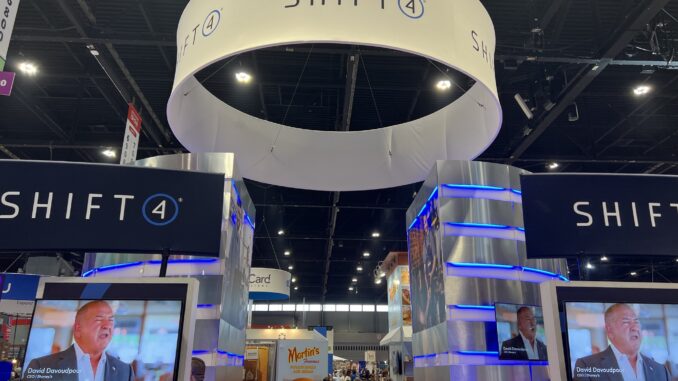
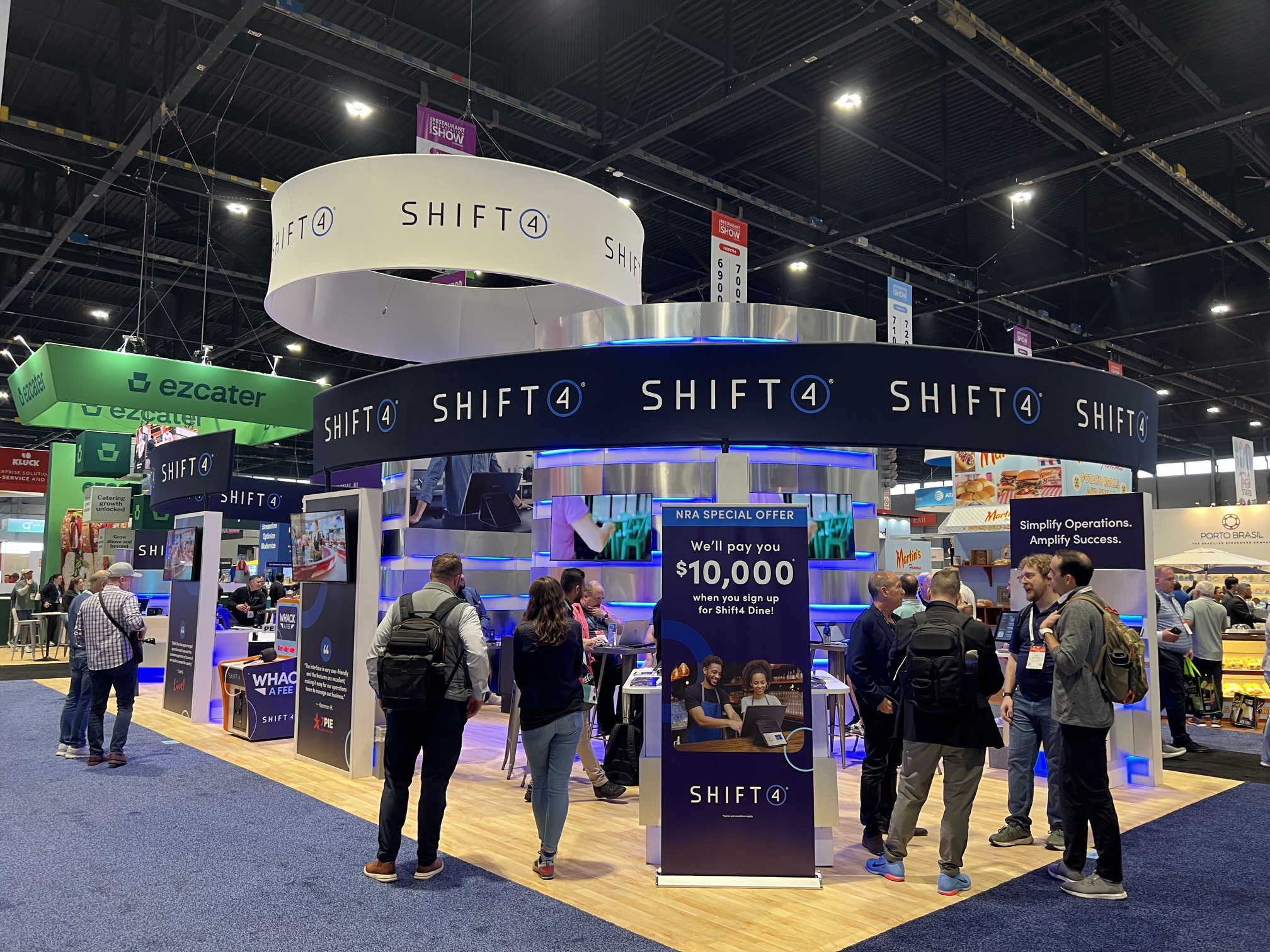
The company brought that restaurant commerce story to this year’s National Restaurant Association Show in Chicago. The official show listing categorized Shift4 under payment systems and point-of-sale systems and identified SkyTab as the brand. That positioning reflected the company’s current restaurant story: payments and POS are no longer separate pieces of infrastructure, but part of a broader platform for restaurant transactions, ordering, guest engagement and operations.
Shift4’s restaurant technology sits at the intersection of two industry shifts. First, payments have become more embedded in the service model. A transaction may happen at the counter, at the table, from a guest’s phone, through a restaurant website, on a handheld device or at a kiosk. Second, restaurants need more control over the data and workflows attached to those transactions. The order, payment, guest profile, loyalty interaction, menu update and performance report all carry operational value.
 That is why Shift4 should not be viewed only as a payment processor or only as a POS vendor. Its broader proposition is connected commerce. The platform is designed to help restaurants capture transactions wherever they happen while keeping those transactions tied to restaurant operations, reporting and guest engagement. For operators, the value comes from reducing fragmentation across the systems that sit between guests, staff, kitchens and management teams.
The center of the restaurant offering is Shift4 Dine, an all-in-one restaurant POS platform built for full-service restaurants, quick-service restaurants, bars and nightclubs, pizzerias, coffee shops, enterprise operators and venues. The platform includes point-of-sale software, payments and hardware, along with tools for online ordering, reservations and waitlist, website building, mobile ordering and payment, QR code ordering and payment, marketing and loyalty, reporting, labor management and multi-location management.
That breadth matters because many restaurants have spent years layering specialized tools around a core POS system. One vendor may handle payments, another online ordering, another loyalty, another reservations, another reporting and another delivery integration. That can work, but it also creates operational friction. Menu changes may need to be updated in multiple systems. Order data may not flow cleanly. Guest information may stay separated from transaction history. Managers may have to move between dashboards to understand performance.
Shift4’s platform strategy is designed to reduce that fragmentation by making POS and payments the foundation for a broader restaurant commerce stack. The POS captures orders and transactions. Payments process revenue across channels. Hardware supports front-of-house and back-of-house workflows. Digital ordering connects guests outside the restaurant. Loyalty and marketing turn transaction data into repeat-visit opportunities. Reporting gives operators visibility into sales, labor, product mix and customer behavior.
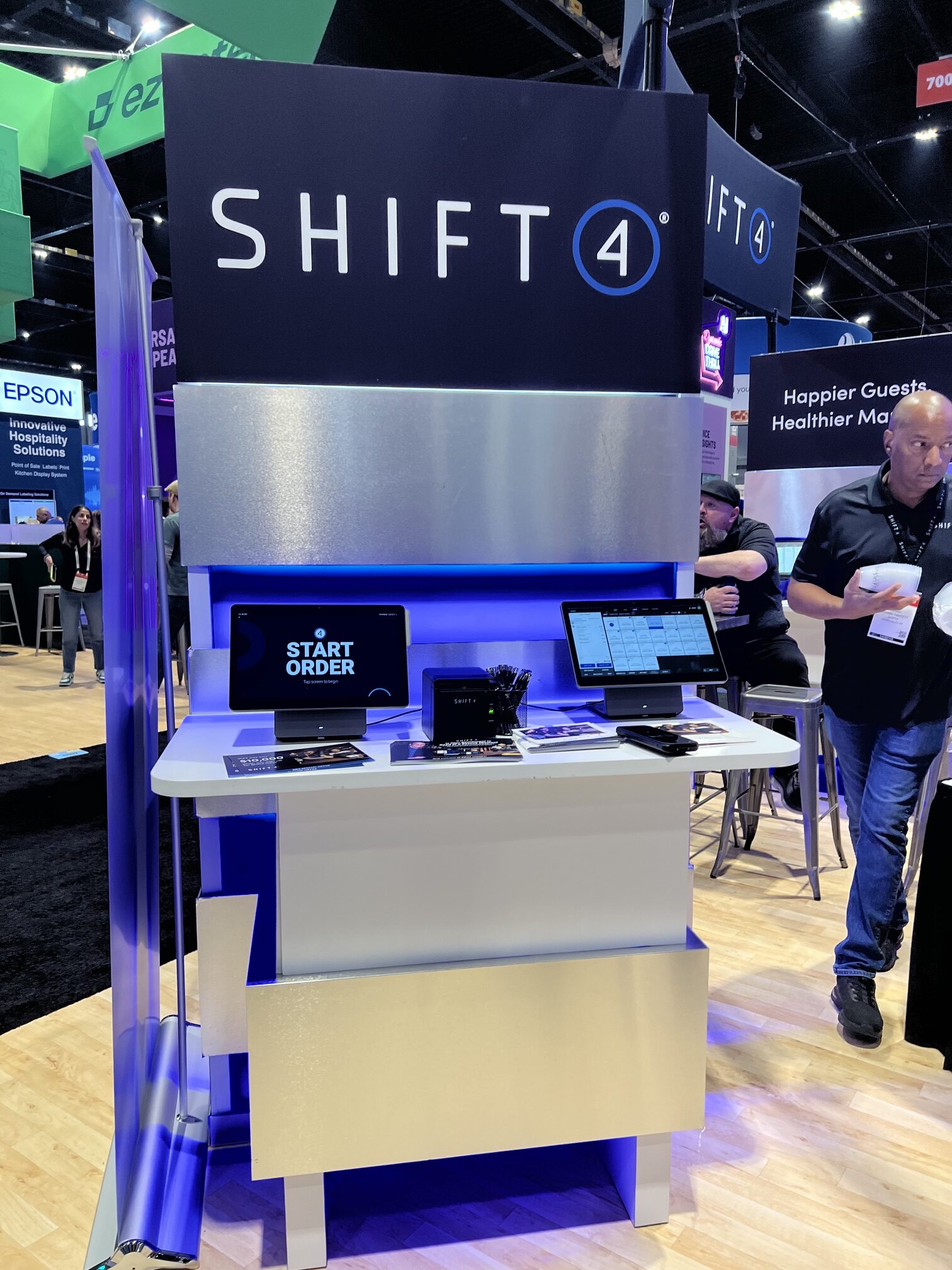
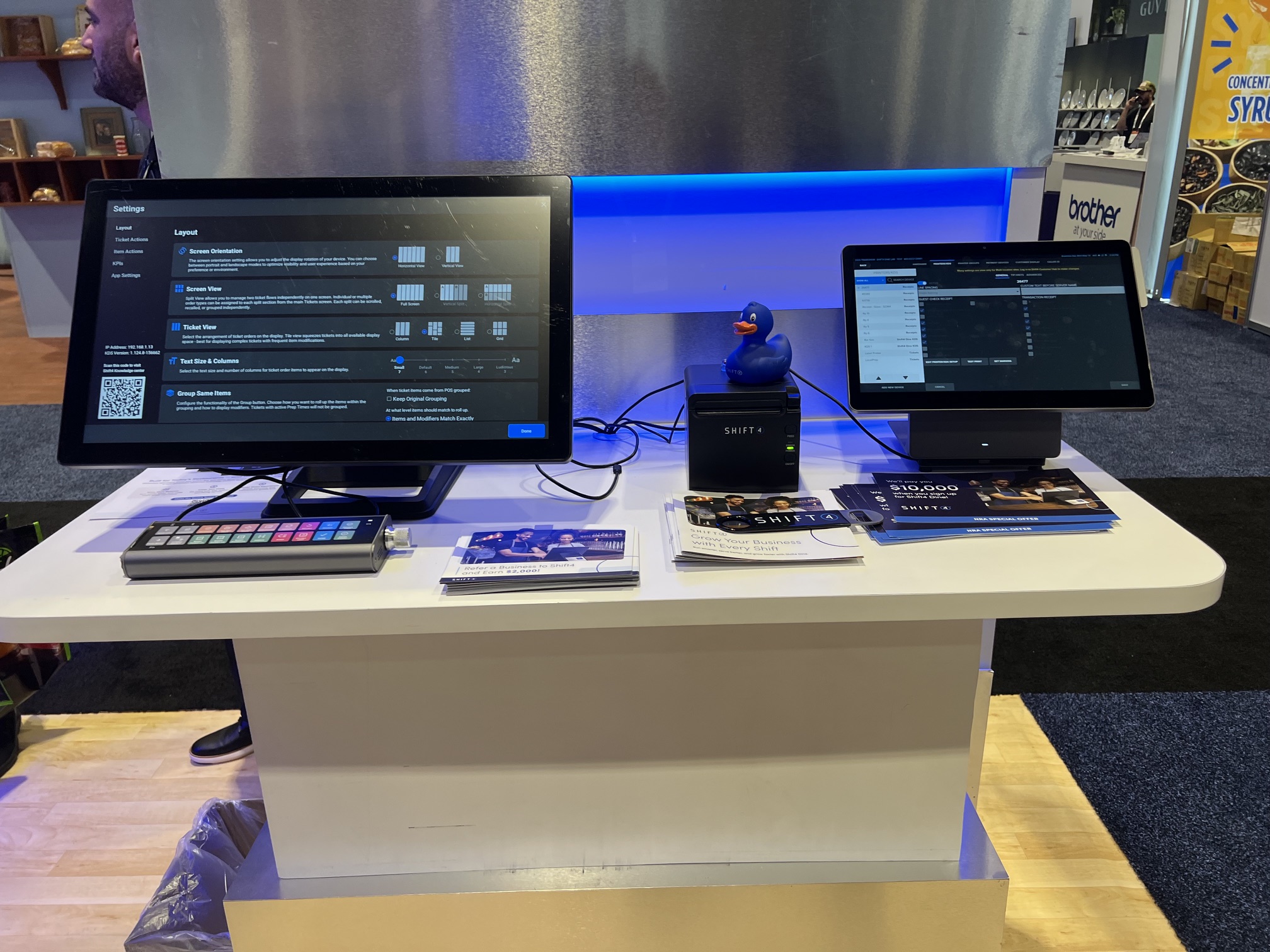
Hardware is an important part of that story because restaurant commerce still happens in physical environments. Shift4 Dine supports POS workstations, handhelds, tablets, kitchen displays, customer displays and kiosks. The mobile ordering and payment layer allows staff to take orders and payments tableside, split checks, add items during the meal and settle bills without unnecessary trips back to a terminal. For full-service restaurants, that can improve speed and table turns. For high-volume concepts, it can reduce bottlenecks at the counter or bar.
The handheld and tablet story also reflects a broader change in service design. Restaurants are no longer limited to a fixed terminal as the center of the transaction. Staff can carry ordering and payment capabilities into the dining room, patio, curbside area, event space or food truck environment. That flexibility gives operators more ways to adapt staffing and service flow without disconnecting the transaction from the core POS.
Shift4’s QR code ordering and payment capabilities extend that model to guests. QR workflows can allow guests to browse, order or pay from their own devices, reducing pressure on staff during peak periods and giving restaurants another option for table service, counter service, bars and venue environments. The point is not to replace hospitality with self-service, but to give operators more control over when and where digital workflows improve throughput.
Online ordering is another major piece of the platform. Shift4 Dine’s online ordering system integrates directly with the POS, allowing restaurants to send online orders into the point-of-sale and kitchen without separate devices. Operators can sync the online menu with the POS, choose which items appear online, support takeout, curbside pickup or delivery and use order throttling to help manage peak demand.
That first-party ordering layer addresses a familiar restaurant challenge. Third-party marketplaces can expand reach, but they often separate restaurants from guest data, increase dependency on outside platforms and compress margins. A restaurant-controlled ordering channel gives operators more direct control over menu presentation, customer relationships and promotional strategy. Shift4’s online ordering capabilities fit into that broader effort to bring digital demand back into the restaurant’s own commerce environment.
The platform also supports a more connected guest engagement strategy. Through loyalty and marketing tools, restaurants can offer point-based rewards, segment customer lists, create personalized promotions, manage gift cards, run email campaigns, manage social media and monitor online reviews. Those capabilities extend Shift4 Dine beyond transaction capture into the repeat-visit and reputation-management work that increasingly shapes restaurant revenue.
 For operators, the connection between payments, ordering and loyalty is important. A loyalty program is more useful when it is tied to actual guest behavior. Marketing is more relevant when restaurants can target messages based on order history, frequency and spending patterns. Gift cards become more valuable when they are integrated into the POS and redemption workflow. By keeping guest-engagement tools closer to the transaction layer, Shift4 gives restaurants a more direct way to turn commerce activity into ongoing relationships.
Reporting and analytics provide the management layer behind those workflows. Shift4 Dine’s Business Intelligence tools include customizable dashboards, drill-down reporting, multi-location visibility and side-by-side reporting in real time. The platform’s Customer Hub gives operators access to sales, transaction, tender type, product mix, inventory, labor and customer reports. For restaurants managing multiple locations, that visibility can make performance easier to compare and operating issues easier to identify.
That reporting layer also reinforces Shift4’s commerce-platform positioning. Payment and POS data are not only records of completed transactions. They are operating signals. Sales mix shows what guests are buying. Tender reports show how they are paying. Product reports can identify winners, laggards and margin opportunities. Customer reports can inform loyalty strategy. Labor reports can help managers understand performance and staffing. When those signals sit in one environment, operators can act with more context.
Shift4’s marketplace and integration strategy adds another dimension. The third-party integrations page shows connections across accounting, analytics, digital signage, inventory management, kiosks, labor management, marketing and CRM, online ordering and delivery, payroll and HR, property management, reservations and security. That approach gives restaurants a way to keep POS and payments central while connecting specialized tools around them.
That is a practical strategy because restaurant technology stacks are rarely one-size-fits-all. A pizzeria, bar, coffee shop, fine-dining group, stadium venue and hotel restaurant may share core commerce needs while requiring different operational tools. By supporting third-party integrations, Shift4 can serve as the transaction and data backbone without requiring operators to abandon every specialized application they already use.
Reservations and waitlist capabilities also fit into the broader guest journey. For full-service restaurants, guest experience begins before the check is opened. A restaurant website, booking flow, table-management process, payment experience, loyalty offer and review response can all influence whether a guest returns. Shift4’s platform links many of those touchpoints to the POS environment, giving operators more continuity across discovery, visit, payment and follow-up.
The website and online presence layer adds another current capability. Shift4 Dine’s Website Builder uses AI to help restaurants create a website and connect online ordering, reservations, menus and gift card sales. That capability is relevant for independent operators that want a stronger first-party digital presence but may not have the budget or technical resources for custom web development.
Shift4’s restaurant platform also benefits from the company’s broader commerce scale. In March, Shift4 completed the acquisition of Worldline’s North American subsidiaries, adding more than 140,000 merchants across the U.S. and Canada to its platform. The acquired gateway platform also connects with more than 500 independent software vendors. For restaurants, the acquisition is less about a single feature and more about Shift4’s continuing expansion as an integrated payments and commerce infrastructure provider.
 That scale is part of Shift4’s differentiation. The company operates across restaurants, hotels, sports and entertainment, gaming, retail, eCommerce, travel and other verticals. Restaurants can benefit from that broader payments and commerce expertise, especially as foodservice increasingly overlaps with venues, lodging, retail, concessions, catering and event environments. Commerce expectations are being shaped across industries, and restaurants are part of that larger shift.
The competitive landscape includes restaurant POS providers, payment processors, online ordering platforms, loyalty systems, reservation tools, kiosks, back-office applications and enterprise commerce platforms. Shift4’s advantage is the way it brings payments, POS, hardware, digital ordering, guest engagement, reporting and integrations into a commerce-centered platform. Its story is not that every restaurant function must be native to Shift4. Its stronger story is that the transaction layer can become the center of a more connected restaurant operating model.
For independent restaurants, that can mean fewer disconnected systems and a more practical path to modern tools such as online ordering, QR payments, loyalty and real-time reporting. For multi-location groups, it can mean more consistent visibility across sites, stronger data capture and more centralized control over commerce workflows. For venues and hospitality environments, it can mean a platform designed to handle high-volume transactions across varied service points.
Shift4’s restaurant strategy reflects where the industry is heading. Operators are not only asking whether a POS can ring up orders. They are asking whether the platform can support the many ways guests now interact with a restaurant. That includes ordering ahead, scanning a QR code, paying at the table, redeeming loyalty rewards, buying gift cards, ordering delivery, joining a waitlist, responding to promotions and interacting with the brand online.
By connecting restaurant POS, integrated payments, online ordering, mobile ordering, QR workflows, loyalty, marketing, reporting, hardware and marketplace integrations, Shift4 is positioning itself as a commerce platform for restaurants that need both flexibility and control. In a market where every guest interaction can become a transaction, a data point or a loyalty opportunity, Shift4 gives operators a more connected foundation for managing the business around those moments.
