
By Dustin Stone, Gavriel Shohet and Lea Mira, RTN staff writers - 6.29.2026
Voice ordering has become one of the clearest examples of artificial intelligence moving from restaurant experimentation into daily operations. Phones still ring during peak periods. Drive-thru lanes still back up. Guests still ask menu questions, modify orders, request specials and expect accurate service without long waits. Staff members are often expected to manage those interactions while preparing food, greeting guests, handling payments and keeping service moving.
SoundHound AI is building its restaurant technology story around that pressure point. The company’s voice and conversational AI platform is designed to help restaurants automate ordering, answer guest questions, support staff and extend transactions across drive-thru, phone, SMS, app, kiosk, in-car and other channels. Its restaurant offering is not a POS system or a broad back-office platform. It is a voice-first automation layer for the moments when restaurants need speed, consistency and capacity.
 That positioning gives SoundHound AI a distinct role in the current restaurant technology market. Many AI tools promise better analytics or more personalized marketing. SoundHound is focused on the operating interactions that happen in real time: a guest calling to order pizza, a driver placing a drive-thru order, a customer asking about menu items, an employee needing quick guidance or a restaurant trying to recover demand that might otherwise be lost to a missed call or stalled line.
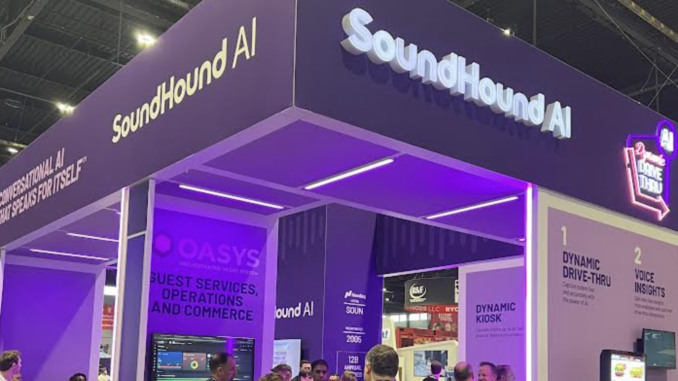
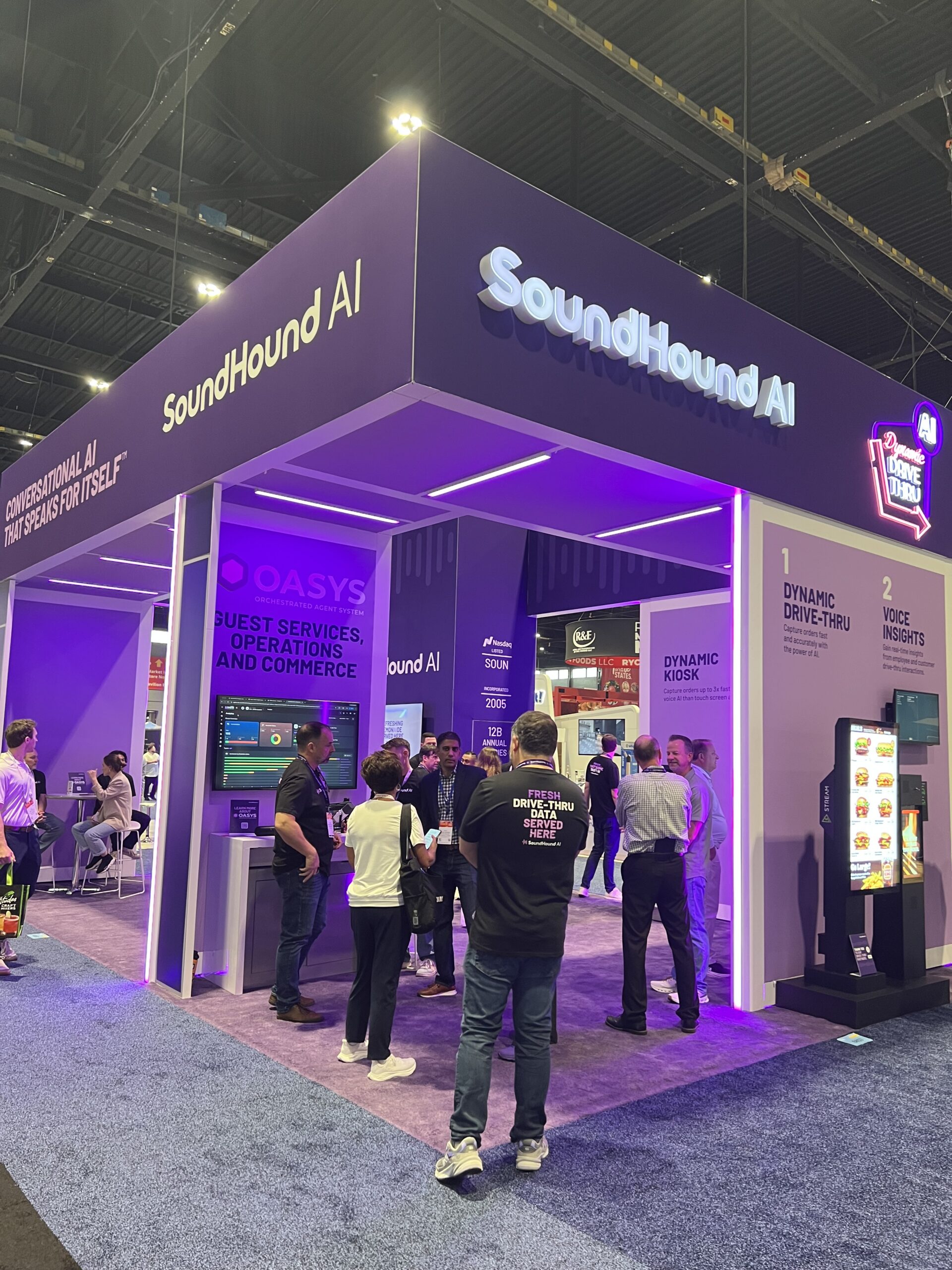
SoundHound AI used this year’s National Restaurant Association Show in Chicago to sharpen that message. At booth 6857, the company demonstrated its OASYS agentic AI platform and real-time restaurant automation, including AI drive-thru, kiosk and TV food ordering, along with AI agents for guest and IT services.
Restaurant operators are not adopting voice AI because it is novel. They are exploring it because order capture, labor pressure and service consistency all have financial consequences. A phone that rings unanswered during the dinner rush can mean lost revenue. A drive-thru order that takes too long can slow the line. A missed upsell can reduce check size. A misheard customization can create waste, refunds or guest dissatisfaction.
SoundHound’s restaurant solutions are organized around those recurring pain points. The company’s products include Dynamic Drive-Thru, Smart Ordering, Smart Answering, Employee Assist and Voice Commerce. Together, they show how the company is extending voice AI beyond a single channel into a more connected restaurant ordering and support ecosystem.
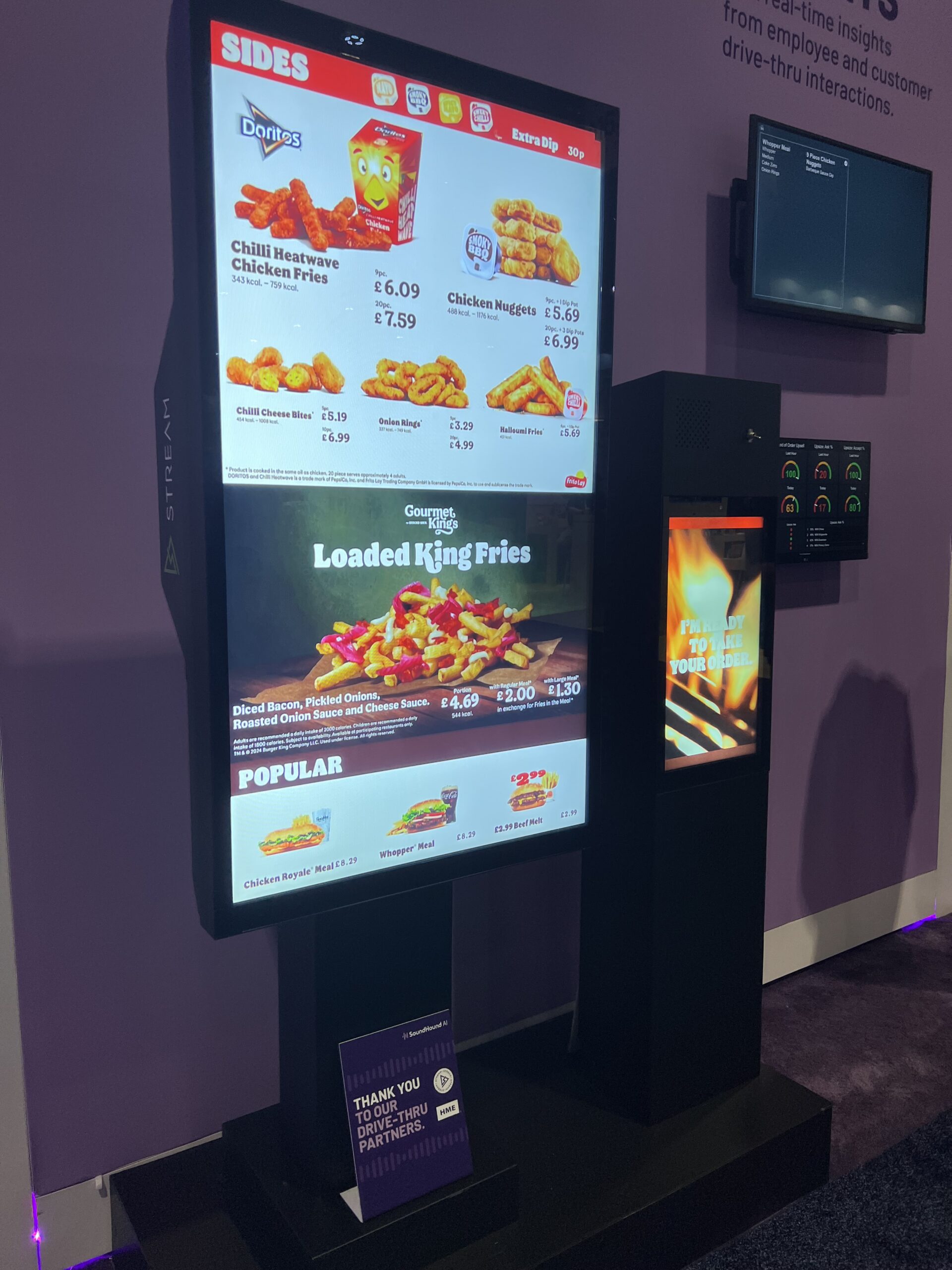
The drive-thru remains one of the most important applications. For quick-service and fast-casual operators, the drive-thru is often a high-volume, high-pressure service channel where speed, accuracy and consistency matter. SoundHound’s Dynamic Drive-Thru is built to automate drive-thru and kiosk interactions through conversational AI, using voice, visual and touch elements together so guests can place and confirm orders in a more natural flow.
That multimodal approach is important because drive-thru AI must perform in a difficult environment. Background noise, menu complexity, substitutions, accents, overlapping speech and impatient guests can all make automation harder than it looks in a controlled demo. SoundHound’s Dynamic Drive-Thru product is designed for real-time dialogue, with voice, visual confirmation and touch interaction working together to support order accuracy and throughput.
 The company’s restaurant platform has also expanded beyond the traditional headset interaction. A next-generation restaurant platform update added omnichannel ordering capabilities, including call-to-order, text-to-order, scan-to-order, in-car voice ordering and kiosks. That expansion reflects a broader shift in restaurant commerce. Guests no longer interact with restaurants through a single ordering path, and automation needs to follow the guest across channels rather than sit in one lane.
Smart Ordering is central to that off-premise story. The product is designed to automate phone, SMS, in-app voice and other ordering channels through a single integration. For restaurants, phone ordering remains especially valuable because it often captures demand from loyal guests who want a direct interaction but may call during the exact moments when staff are least available. SoundHound’s voice assistant can answer on the first ring, handle transactions, answer questions and apply consistent suggestive selling.
The Smart Ordering product also speaks to a familiar labor issue. Many restaurants do not have extra staff available to answer phones during peak service. When employees are pulled away from prep, service or handoff to answer calls, the tradeoff can affect both in-store guests and off-premise customers. Voice AI gives operators a way to capture orders while letting staff focus on food preparation and hospitality.
SoundHound’s expanded relationship with Casey’s is the strongest current proof point. The convenience retailer and pizza chain renewed and expanded its partnership with SoundHound across more than 2,600 stores. SoundHound’s AI-powered ordering agents have handled more than 21 million guest interactions for Casey’s and processed millions of food orders. The deployment is focused on answering pizza-ordering calls during peak periods, reducing missed orders and long hold times, and sending orders straight to the kitchen.
Casey’s is particularly relevant because it sits at the intersection of convenience retail, prepared food and restaurant-style ordering. The company is one of the largest pizza chains in the United States, and its foodservice business depends on fast, reliable order capture across a large distributed store base. SoundHound’s role in that environment shows how voice AI can support high-volume, multi-location foodservice operations that need consistency without adding phone-answering burden to store teams.
SoundHound’s partnership with Red Lobster extends the phone-ordering story into casual dining. The restaurant chain announced a rollout of SoundHound’s AI-powered phone ordering agent across all locations, with the system designed to handle multiple calls simultaneously, place orders, answer common guest questions and send orders directly into the POS. Red Lobster framed the rollout as part of a wider race among restaurant chains to automate order capture across phone and drive-thru channels.
The Red Lobster example also illustrates that voice AI is not only a quick-service story. Casual dining operators also rely on takeout, catering and phone-based guest interactions, especially during busy periods when in-restaurant teams may struggle to answer every call. A system that can handle routine ordering and questions while still allowing guests to reach a live employee gives operators another way to balance efficiency with hospitality.
 Smart Answering broadens that capability beyond restaurant ordering. Smart Answering is built to cover calls, answer customer questions, collect lead or interaction details, support selective call forwarding and provide business information such as hours, locations, products, pricing and policies. For restaurants, that can help with common guest inquiries that consume staff time but do not always require a human response.
The guest-service side of SoundHound’s technology is becoming more important as voice AI moves from narrow order-taking into broader conversational support. A guest may ask about allergens, hours, specials, pickup timing, store location, promotions or whether an item is available. When those questions can be answered accurately and consistently, restaurants can reduce staff interruptions while improving the guest experience.
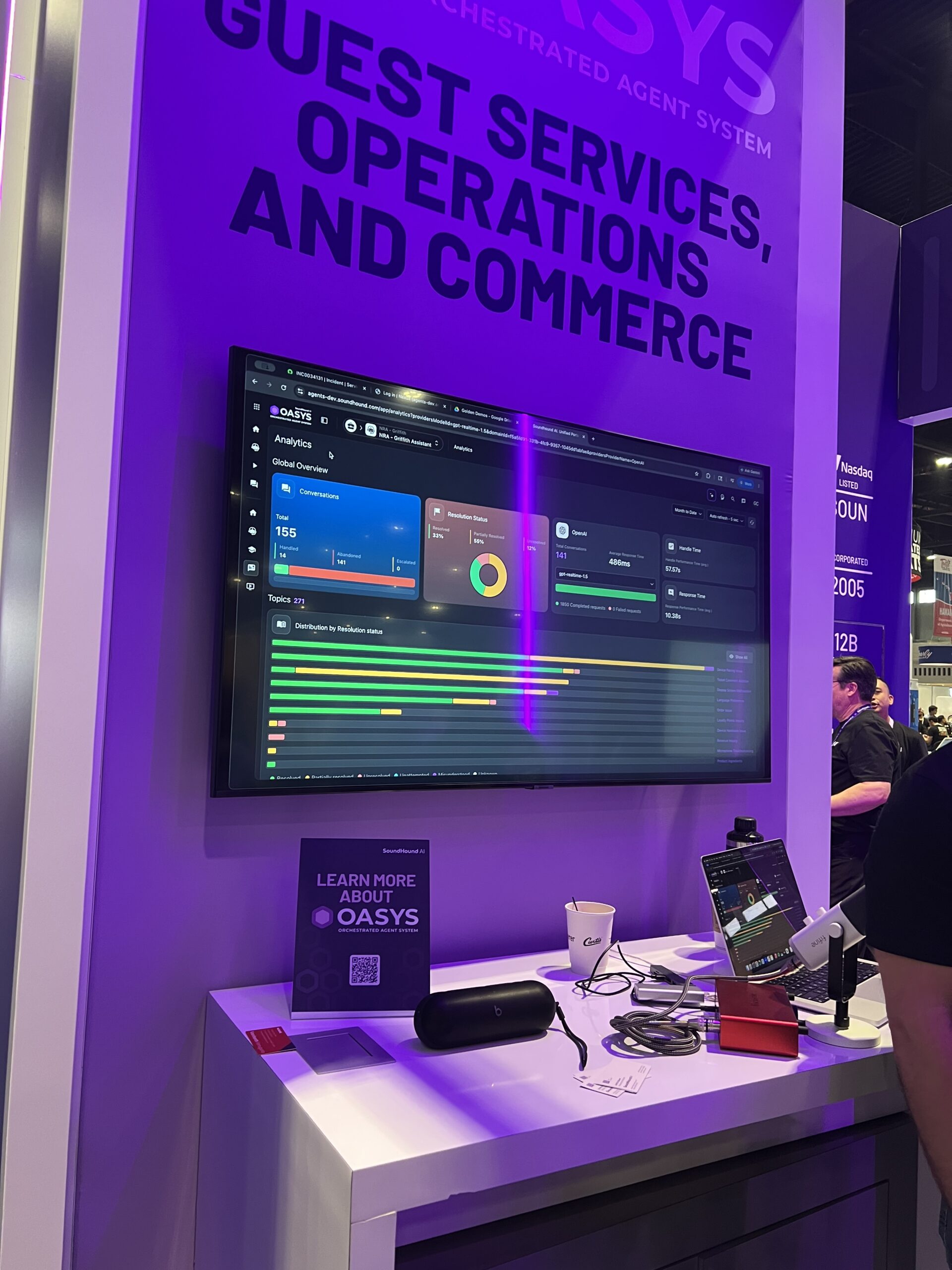
SoundHound’s agentic AI strategy adds another layer to the company’s current positioning. In May 2026, the company launched OASYS, the Orchestrated Agent System. The platform is designed to build, orchestrate, evaluate and improve conversational AI agents over time, allowing businesses to deploy agents across phones, web chats, text, kiosks, social media, TVs and in-vehicle systems.
For restaurants, OASYS expands the SoundHound story beyond an ordering assistant. The platform supports AI agents that can handle transactions, tasks and workflows on behalf of customers and employees. At the National Restaurant Association Show, SoundHound demonstrated OASYS-powered agents for guest and IT services, including ticket creation and resolution. That moves the company closer to a broader restaurant operations role, where AI can help resolve issues before they disrupt service.
That agentic layer is relevant because restaurants need more than a voice interface. They need AI that can connect to systems, understand context, complete tasks and improve through real-world use. A phone-ordering assistant that cannot send an order to the POS, a drive-thru system that cannot connect to kitchen workflows or a guest-service agent that cannot escalate issues has limited operational value. SoundHound’s platform direction is about connecting conversation to action.
Voice Insights is another important part of the story. SoundHound demonstrated Voice Insights at the Show as a way to turn live drive-thru conversations into operational intelligence. Those interactions can reveal recurring guest questions, service friction, upsell opportunities, staff coaching needs and satisfaction signals. The voice interaction itself becomes a data source, not just a transaction.
That intelligence can be valuable because restaurants often lack structured visibility into the conversations that happen at the drive-thru speaker, on the phone or at the counter. Managers may know that a lane feels slow or that guests frequently ask the same question, but they may not have reliable data to diagnose the pattern. Voice analytics can turn those interactions into signals that support training, menu clarity, upsell strategy and service improvement.
Employee Assist brings the technology into staff support. The Employee Assist product gives restaurant staff access to real-time information and guidance through a headset or tablet. The tool can support questions about ingredients, allergens, procedures, training materials and operational tasks. In a restaurant environment where employee turnover remains high and menu knowledge can vary by shift, that type of assistance can help reduce errors and shorten learning curves.
SoundHound is also pushing voice ordering beyond the restaurant property. Its Voice Commerce product is designed to allow drivers to discover restaurants, place food orders and pay through in-car voice assistants. The use case is still emerging, but it points to a larger restaurant commerce trend: ordering moments are expanding into the car, living room, app, kiosk, call center and other connected environments.
The company’s National Restaurant Association Show showcase even included voice commerce through a smart TV environment, where consumers could browse and place food orders using only voice. That demonstration may be early relative to mainstream adoption, but it reinforces SoundHound’s larger thesis. Voice can become a commerce interface wherever consumers are already making decisions about what to eat.
The competitive landscape is crowded. Drive-thru and phone-ordering AI now includes companies such as Presto, ConverseNow, Kea, Hi Auto, PolyAI, Vox AI and other voice automation providers, along with large technology companies and restaurant brands developing their own AI approaches. Recent coverage of AI drive-thru testing shows how active and unsettled the category remains, with operators still evaluating accuracy, guest acceptance, human fallback models, menu complexity and real-world performance.
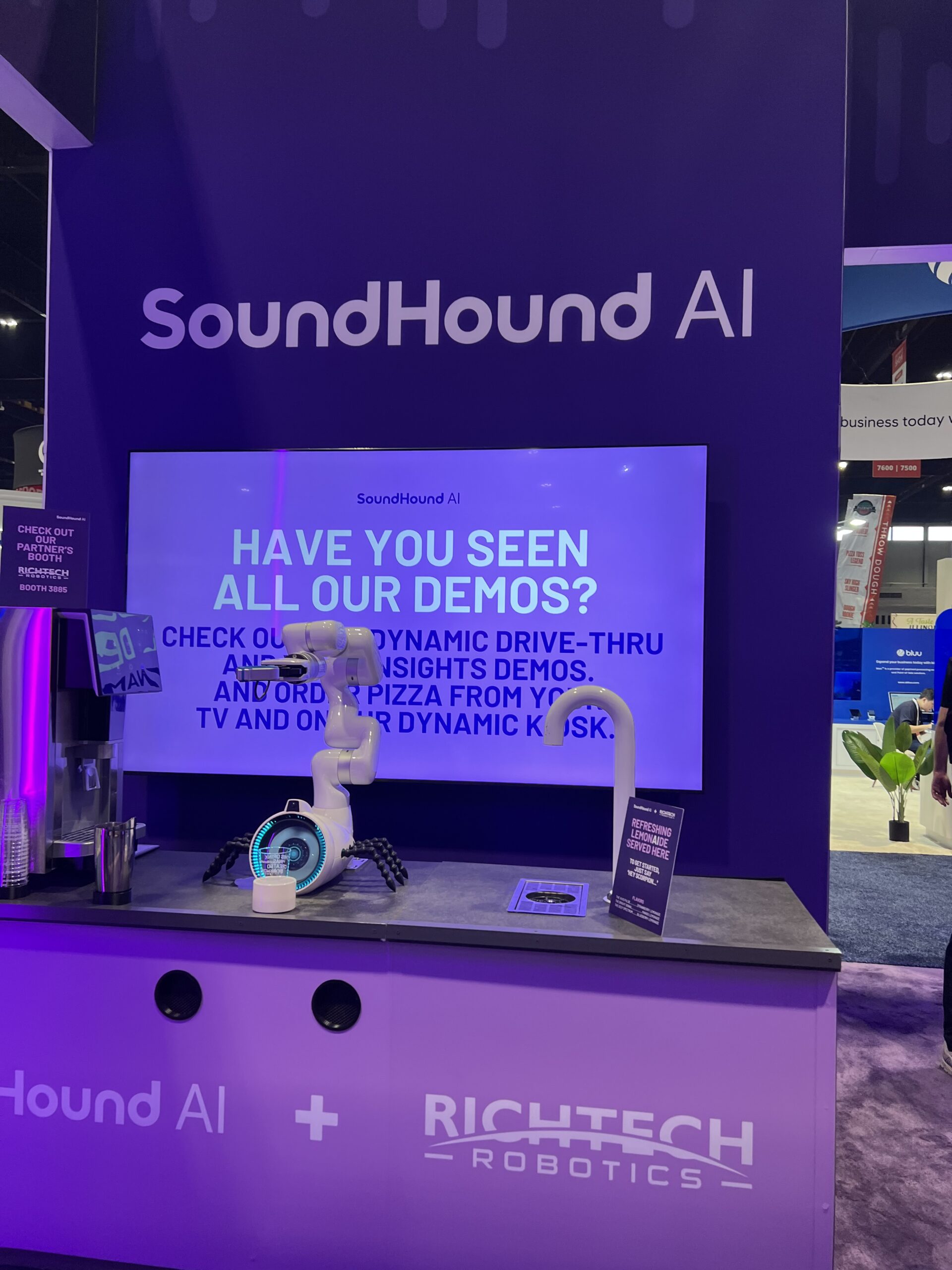 SoundHound’s differentiation comes from the breadth of its voice AI footprint and the way it connects restaurant ordering to a larger conversational AI platform. The company has built restaurant-specific products for drive-thru, phone, SMS, app, kiosk, employee support and in-car commerce, while also investing in OASYS as a broader agentic AI system. Its acquisition history, restaurant customer base and multi-channel deployments give it a stronger platform story than a single-use-case voice bot.
The company also has a scale story. SoundHound has said it powers more than 15,000 locations with voice and conversational AI technology, with restaurant deployments that include Casey’s, Red Lobster, White Castle and other major brands. That scale matters because restaurant voice AI has moved beyond laboratory demos. Operators want technology that can perform across large estates, varied menus, different store environments and changing guest behavior.
Still, the category requires careful execution. Voice AI sits directly in the guest experience, and restaurants cannot afford systems that frustrate guests, mishear orders or slow service. That makes accuracy, escalation, integrations and operational fit especially important. The strongest deployments will likely be the ones that treat AI not as a replacement for hospitality but as a way to absorb repetitive work that prevents staff from delivering it.
SoundHound’s restaurant story fits that direction. The company is using voice and agentic AI to automate routine ordering, recover missed calls, support drive-thru throughput, answer guest questions, assist employees and surface insights from conversations that were previously hard to measure. Its platform is designed to give restaurants more capacity without asking staff to do more with less.
As restaurant operators continue looking for technologies that improve efficiency while protecting the guest experience, voice AI is becoming one of the most practical areas of AI adoption. SoundHound AI is positioning itself at the center of that shift, connecting restaurant ordering, drive-thru automation, guest service, employee support and operational intelligence through a voice-first, agentic AI platform built for real-world service environments.
