
By Dustin Stone, Gavriel Shohet and Lea Mira, RTN staff writers - 6.22.2026
Restaurant operators spend enormous amounts of time managing food costs, labor expenses and inventory levels, yet one of the kitchen’s most frequently used ingredients often receives surprisingly little strategic attention: frying oil. For restaurants that depend on fried foods, cooking oil influences everything from food quality and consistency to sustainability and profitability. As operators continue searching for ways to protect margins in an increasingly challenging operating environment, fryer oil management is emerging as an important opportunity to reduce waste, improve product quality and strengthen financial performance.
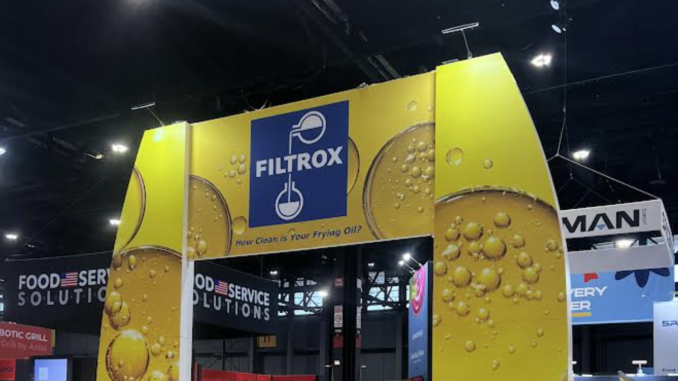
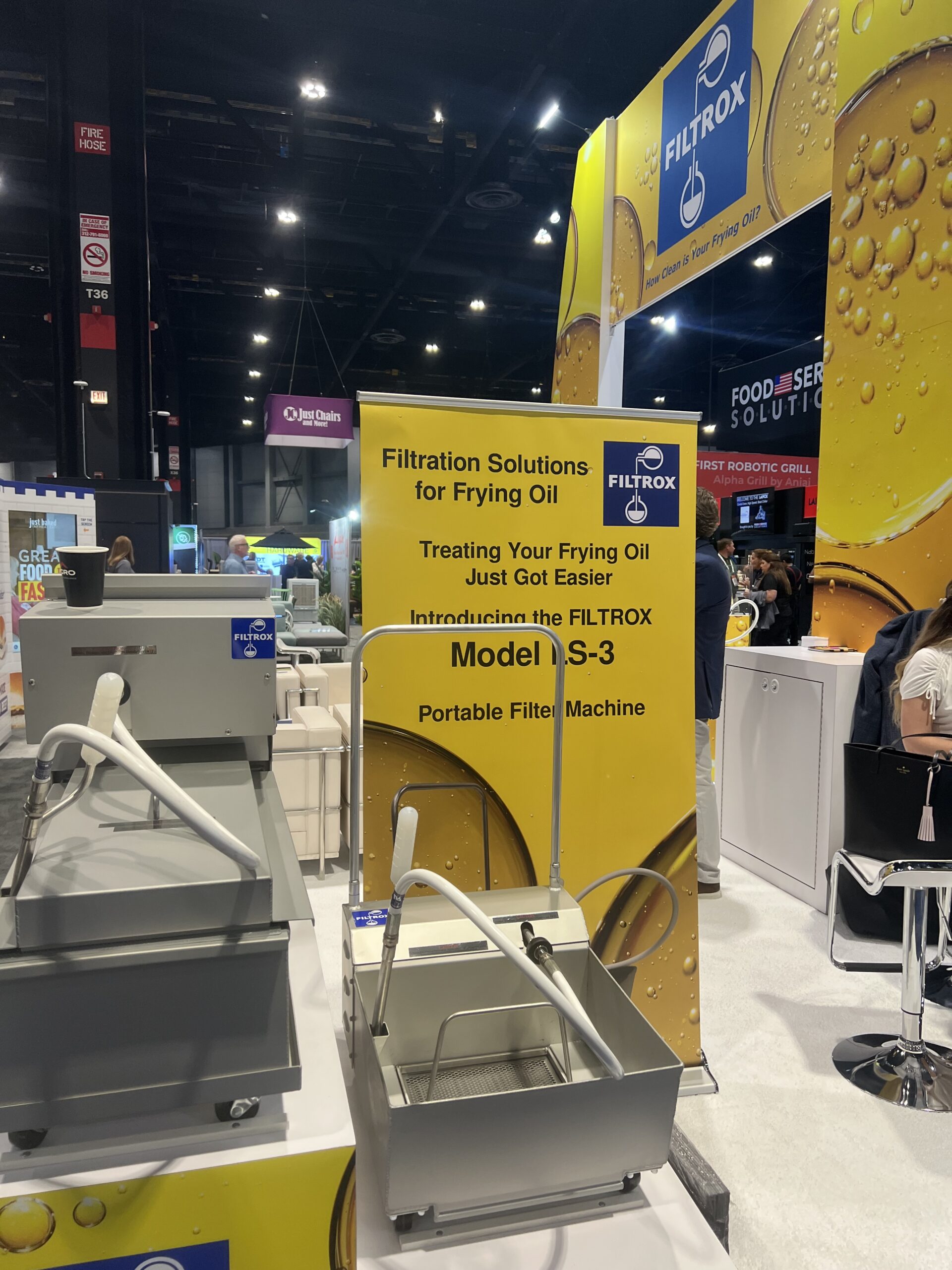
That theme was visible throughout this year’s National Restaurant Association Show, where exhibitors showcased technologies designed to help operators improve efficiency and optimize back-of-house operations. Among them was Filtrox, which highlighted filtration solutions specifically developed to help foodservice operators extend oil life, maintain food quality and reduce operating costs. At the show, the company showcased its Carbon Pads and Carbon Envelopes, filtration products designed to remove contaminants that accelerate oil degradation while supporting longer oil life and more consistent cooking performance. While filtration may not generate the same attention as artificial intelligence, robotics or digital ordering, it addresses a challenge that affects thousands of restaurants every day: how to maximize the value of a critical and increasingly expensive resource.
For many operators, fryer oil is still managed through visual inspection, employee judgment or predetermined replacement schedules. Those approaches may be familiar, but they can also result in premature oil disposal, inconsistent food quality and unnecessary costs. Filtrox approaches the problem differently. The company believes oil should be treated as a valuable operational asset that can be monitored, maintained and optimized rather than simply consumed and replaced.
That philosophy reflects broader changes occurring throughout the restaurant industry. Operators today are scrutinizing every aspect of kitchen operations in search of efficiency gains. Rising food costs, labor challenges and continued margin pressure have created an environment where even relatively small operational improvements can have meaningful financial impact. Frying oil, despite being one of the most heavily used ingredients in many kitchens, often represents an overlooked opportunity for improvement.
Filtrox’s frying oil filtration solutions were developed specifically to address that opportunity. The company’s Carbon Pads and Carbon Envelopes are designed to remove particles, degradation compounds and other contaminants that accumulate during the cooking process. By helping maintain oil quality, the products can support longer oil life, more consistent food preparation and reduced waste. Filtrox emphasizes that the filtration and treatment process can be completed in a single pass, simplifying operations while helping restaurants preserve oil performance.
 The operational implications extend well beyond the cost of oil itself. Oil condition directly influences food appearance, flavor, texture and consistency. As oil degrades, products can become darker, less appealing and less consistent. Guests may never think about fryer oil, but they immediately notice changes in food quality. Maintaining cleaner oil therefore becomes not only a cost-management strategy but also a way to protect brand standards and guest satisfaction.
This connection between back-of-house processes and guest experience is one reason oil management is receiving greater attention. Restaurant operators increasingly recognize that food quality and operational performance are deeply connected. Technologies that improve consistency behind the scenes often create benefits that are visible at the table. In that sense, filtration becomes part of a larger quality-control strategy rather than simply a maintenance procedure.
The sustainability dimension is equally compelling. Restaurants continue looking for practical ways to reduce waste and improve environmental performance without compromising profitability. Extending fryer oil life can reduce the volume of fresh oil purchased and the amount of used oil requiring disposal. Unlike some sustainability initiatives that may be difficult to quantify financially, improved oil utilization often generates measurable economic and environmental benefits simultaneously.
For multi-unit restaurant chains and high-volume foodservice operations, those benefits can become particularly significant. Quick-service restaurants, convenience retailers, grocery prepared-food departments, stadiums and institutional foodservice providers may process large volumes of fried products every day. Even modest improvements in oil life can create meaningful cumulative savings across dozens or hundreds of locations.
Labor efficiency also plays a role. Restaurant operators continue facing staffing shortages, turnover challenges and training demands. Simplified filtration processes can help create more consistent execution across shifts and locations while reducing dependence on employee experience levels. Standardized oil-management procedures make it easier to maintain quality regardless of who is operating the fryer.
While frying oil filtration represents the most direct connection to restaurant operations, it is only one part of Filtrox’s broader expertise. The company maintains a substantial presence across the food and beverage industry, providing filtration technologies for beer, wine, spirits, juice, tea, cider and soft drinks. These solutions support clarification, stabilization and quality-control processes that help producers maintain product consistency and quality.
The common thread across these applications is process control. Whether filtering frying oil, craft beverages or food ingredients, the objective is largely the same: improving consistency, maximizing yield and reducing waste. As restaurants and foodservice organizations continue emphasizing quality and efficiency, these capabilities are becoming increasingly valuable.
Filtrox also offers a portfolio of filter presses, housings and integrated filtration systems designed to support a wide range of operational environments. The company works closely with customers to identify filtration strategies that align with specific products, production requirements and business objectives. That consultative approach reflects a broader trend throughout foodservice technology, where expertise and process optimization are often as important as the equipment itself.
The competitive landscape includes a variety of filtration providers serving foodservice and beverage markets. Filtrox differentiates itself through its long history in filtration science, broad application expertise and focus on helping customers improve both product quality and operational performance. Rather than viewing filtration as a narrow technical function, the company positions it as an important contributor to efficiency, sustainability and consistency.
Perhaps the most interesting aspect of the Filtrox story is that it highlights how some of the industry’s most meaningful innovations occur far from the dining room. Restaurant technology conversations frequently focus on customer-facing experiences, from mobile ordering and loyalty platforms to artificial intelligence and automation. Yet many of the improvements that have the greatest impact on profitability happen behind the scenes, often in areas that guests never see.
Fryer oil management is one of those areas. It may not attract headlines, but it directly affects food quality, operating costs, sustainability performance and day-to-day kitchen execution. As restaurants continue searching for practical ways to improve performance, technologies that help operators maximize existing resources are becoming increasingly important.
In an industry where every percentage point matters, Filtrox is demonstrating that filtration is about far more than removing particles from oil. It is about protecting product quality, reducing waste, supporting sustainability goals and helping operators get more value from one of the kitchen’s most important ingredients. Guests may never notice the filtration process itself, but they experience the results with every order.
