
By Dustin Stone, Gavriel Shohet and Lea Mira, RTN staff writers - 6.23.2026
Much of the restaurant industry’s recent innovation has centered on software, artificial intelligence, automation and digital guest experiences. Yet for many operators, some of the most meaningful operational improvements still originate in the kitchen itself. As labor shortages, rising costs and growing menu complexity continue reshaping foodservice operations, restaurants are increasingly seeking equipment that can simplify production, improve consistency and support growth without requiring larger teams or more complex workflows.
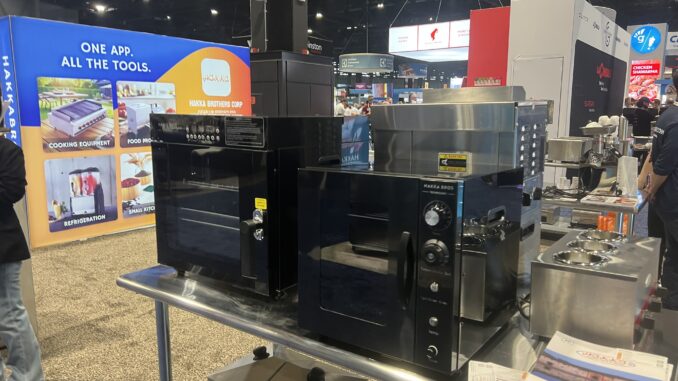
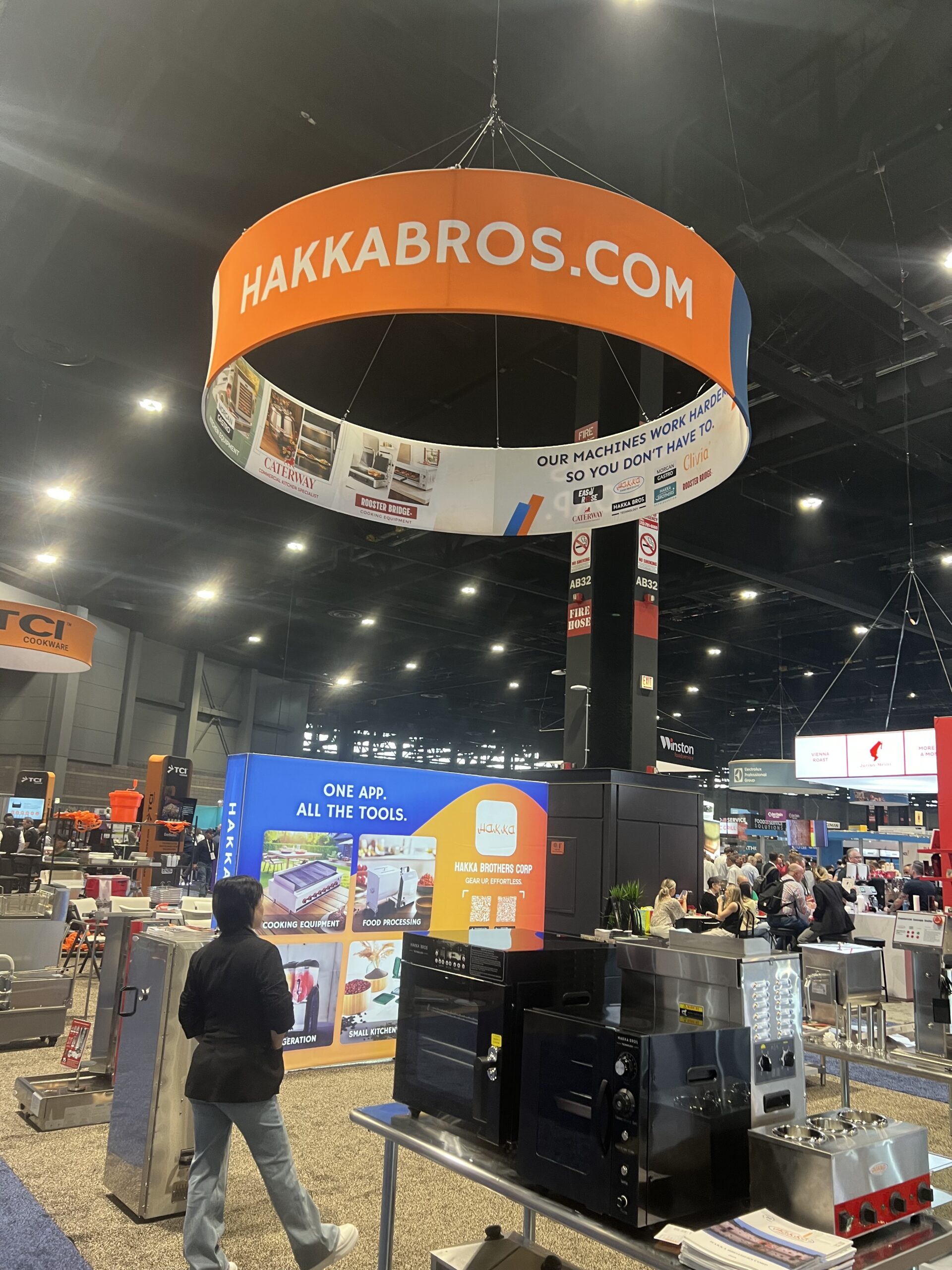
That reality was evident at this year’s National Restaurant Association Show, where exhibitors showcased a wide range of solutions designed to help operators improve efficiency and profitability. Among them was Hakka Bros, which displayed a broad portfolio of food-preparation, cooking and food-processing equipment designed to support commercial kitchens of all sizes. The company’s presence reflected an important industry trend: restaurant operators are increasingly investing in practical tools that improve productivity, simplify workflows and help existing teams accomplish more.
While Hakka Bros may not attract the same attention as AI-powered platforms or robotics companies, it addresses challenges that affect nearly every foodservice operation. Restaurants continue facing labor shortages, training difficulties, rising wage costs and pressure to maintain quality standards despite increasingly complex menus. In that environment, production efficiency becomes a competitive advantage. Equipment that helps operators prepare food more consistently and efficiently can have a direct impact on profitability, employee productivity and guest satisfaction.
The Hakka Bros story is ultimately about operational capability. Restaurant operators are under constant pressure to do more with less. They are expected to maintain quality standards, expand into new dayparts, pursue catering opportunities, launch retail products and manage growing customer expectations, often without increasing kitchen headcount. Equipment that simplifies production and improves workflow efficiency has become an increasingly important part of that equation.
This shift is changing how operators evaluate equipment investments. Historically, many purchases were viewed primarily as replacements for aging assets or as basic kitchen infrastructure. Today, operators increasingly assess equipment based on its ability to improve throughput, reduce labor demands, support menu innovation and contribute to broader business objectives. The conversation has shifted from what a piece of equipment does to what it enables a business to accomplish.
Hakka Bros serves a particularly diverse segment of the foodservice market. According to the company, its equipment is used by restaurants, butcher shops, bakeries, cafés, bars, catering companies, food trucks, convenience stores and other foodservice operators. That breadth provides a useful perspective on the operational challenges facing modern food businesses, where efficiency, flexibility and consistency are often critical to growth.
The company’s portfolio spans numerous categories, including commercial mixers, meat grinders, sausage stuffers, steamers, deep fryers, food warmers, refrigeration equipment, pizza ovens, charbroilers, griddles and food-preparation tools. While these categories serve different operational needs, they address a common objective: helping operators standardize production processes while reducing manual effort and operational variability.
 That objective has become increasingly important as labor challenges persist across the industry. Recruiting, training and retaining skilled kitchen employees remains difficult for many operators. Equipment that simplifies preparation processes and reduces dependence on specialized skills can help restaurants maintain quality standards despite staffing fluctuations and employee turnover. Consistency becomes easier to achieve when workflows are supported by reliable production tools.
One of the more interesting aspects of the Hakka Bros story is how it reflects broader changes in food production. Smaller operators today have access to equipment that allows them to perform tasks that once required larger facilities or specialized production environments. Whether preparing large catering orders, producing specialty products or supporting multiple revenue streams, restaurants increasingly have the ability to expand operational capabilities without dramatically expanding their footprint.
This flexibility is particularly relevant as operators pursue new growth opportunities. Many restaurants are expanding into catering, meal programs, ghost kitchens, retail products and commissary production. These initiatives can create valuable revenue streams, but they also place additional demands on kitchen operations. Equipment that increases production capacity and supports consistency often determines whether those opportunities can be pursued profitably.
Catering provides a particularly useful example. Large-volume food production requires speed, consistency and reliability. Restaurants that want to grow catering businesses must be able to prepare larger quantities without compromising quality or disrupting core operations. The right equipment can help bridge that gap, allowing operators to pursue incremental revenue without dramatically increasing labor costs.
The same principle applies to multi-unit restaurant groups and commissary operations. As organizations scale, production consistency becomes increasingly important. Standardized equipment and repeatable workflows help ensure that products meet quality expectations regardless of location or production volume. Equipment therefore becomes an important component of brand consistency as well as operational efficiency.
Another trend influencing the market is the growing emphasis on operational resilience. Restaurant operators have become increasingly focused on building kitchens that can perform effectively despite labor shortages, fluctuating demand and changing business conditions. Equipment that simplifies workflows and supports efficient production helps create more resilient operations capable of adapting to uncertainty.
Hakka Bros aligns closely with that objective. Rather than concentrating on a narrow niche, the company provides equipment solutions across multiple stages of food preparation and production. This allows operators to improve efficiency throughout the kitchen rather than within a single isolated process.
Foodservice innovation is often associated with emerging technologies, but practical improvements remain equally important. The ability to prepare food safely, consistently and efficiently continues to be one of the industry’s most fundamental challenges. Equipment that improves those capabilities can have a direct impact on labor utilization, food quality, profitability and long-term business performance.
For growing restaurant brands, these considerations become even more significant. Expansion introduces new complexities related to training, production standards and workflow management. Equipment that supports standardization can help organizations scale more effectively while preserving product quality and operational consistency.
The competitive landscape includes numerous commercial-equipment manufacturers serving foodservice markets. Hakka Bros differentiates itself through the breadth of its portfolio and its focus on practical production solutions that address everyday operational challenges. Rather than concentrating on a single category, the company supports a wide range of preparation, processing and cooking functions that are central to restaurant operations.
Perhaps the most compelling takeaway is that restaurant innovation does not always come from software platforms, artificial intelligence or robotics. Sometimes it comes from improving the fundamental processes that occur inside the kitchen every day. Equipment that makes food production more efficient, more consistent and more scalable can be just as transformative as digital innovations, particularly for operators navigating labor constraints and margin pressures.
As restaurants continue adapting to changing consumer expectations and economic realities, operational flexibility will remain a critical competitive advantage. Equipment that enables leaner teams to accomplish more, maintain quality standards and pursue new growth opportunities is likely to play an increasingly important role.
Hakka Bros is positioned squarely within that trend. By helping operators simplify production, improve efficiency and expand operational capabilities, the company is demonstrating that some of the most valuable innovations in foodservice are the ones that quietly make kitchens work better every day.
