

7.7.2026
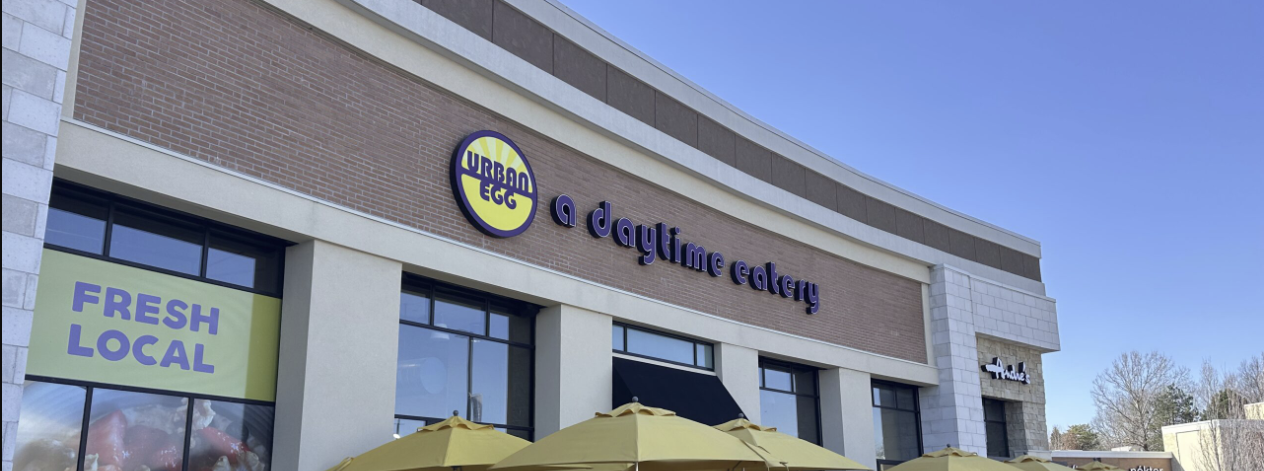
For restaurant marketers, the challenge today isn’t simply attracting guests. It’s building lasting relationships that keep them coming back. As loyalty programs evolve beyond points and discounts, restaurant brands are increasingly using data, personalization, automation, and AI to strengthen guest engagement while preserving the hospitality that defines the dining experience. Few marketing leaders have been more vocal about that shift than Cassie Pinckney, Vice President of Marketing for Urban Egg. Pinckney oversees brand strategy, loyalty marketing, customer engagement, and guest experience initiatives across the growing breakfast and brunch concept, which operates 13 locations across Colorado, Kansas, Missouri, and Texas.
Under Pinckney’s leadership, Urban Egg launched Urban EGGsperience, a technology-enabled loyalty platform designed to deepen guest relationships through personalized engagement and data-driven insights. Prior to joining Urban Egg, she held senior marketing leadership positions with Gastamo Group and other restaurant brands and has become a respected voice in the restaurant marketing community. In this Spotlight Interview, Pinckney discusses how Urban Egg is using guest data, AI-powered segmentation, lifecycle marketing, automation, and loyalty technology to create a more connected customer experience. She also shares her perspectives on the future of restaurant marketing, the growing role of agentic AI, and why the most effective technology should ultimately feel invisible to both guests and restaurant teams.
You’ve spent your career at the intersection of brand, guest experience, and technology. How has your perspective on the role of tech in restaurants evolved over time?
My perspective on restaurant technology continues to evolve alongside the innovation happening in the industry. What stands out most to me today is how much more connected everything has become—tech is no longer a series of tools, it’s an ecosystem that shapes the entire guest journey.
I’ve come to see it through a hospitality and business lens: the best technology should feel invisible to the guest, intuitive for the team, and measurable for the business. When it does all three, it elevates the experience without getting in the way.
At Urban Egg, that thinking guided our approach. We focused on using technology to create a more seamless, connected experience across dine-in and digital, while also driving real outcomes for the business.
Before joining Urban Egg, you worked in more digitally driven restaurant environments. What assumptions about loyalty and guest engagement did you have to rethink in a full-service, dine-in model?
At my previous brand, over 50% of orders were digital, so the relationship often started before a guest ever walked in the door. You had their email, their order history, and a profile to build on. At Urban Egg, 90% of our guests are sitting in our dining room. There’s no digital handshake happening before they arrive. So the entire framework I was used to, where loyalty enrollment is a natural extension of the ordering flow, simply didn’t exist with the majority of the business. I had to work backward from the dining room and ask: how do you identify a guest, build a relationship with them, and retain them when the experience starts and ends in person?
Urban Egg is built around an in-person, hospitality-first experience. How did that shape your approach to marketing and technology from day one?
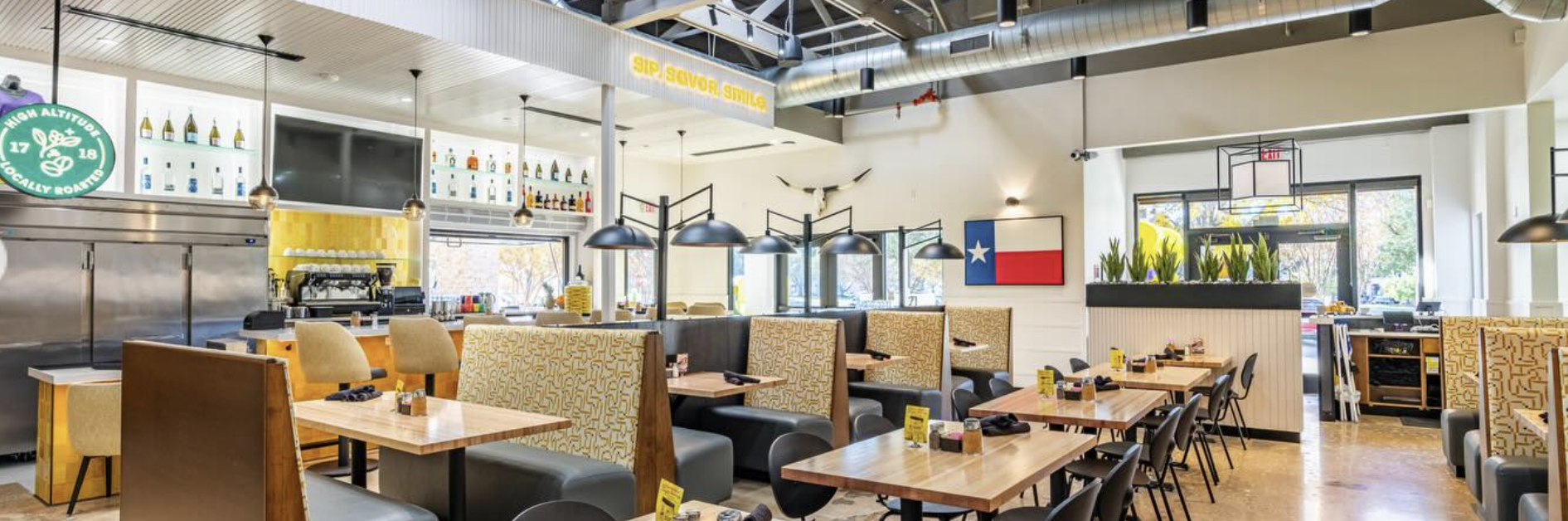
Urban Egg’s foundation as a hospitality-first, in-person brand shaped every decision we made. We didn’t want technology or marketing to interrupt that experience; we wanted it to support and enhance it.
From a marketing standpoint, that means focusing on tools that extend the relationship beyond the four walls, not replace what happens inside them. From a technology standpoint, it means removing friction—making things like earning rewards or engaging with the brand feel seamless and natural, not transactional.
Everything ladders up to one goal: empower our teams to deliver great hospitality while creating a more connected guest experience that drives the business forward.
With roughly 90% of transactions happening in-restaurant, what unique challenges did that create when thinking about guest data and retention?
The biggest challenge is anonymity. When most guests dine in, pay, and leave, you lose visibility into who they are and how often they come back. That makes it difficult to truly understand behavior, recognize your best guests, or re-engage someone who hasn’t visited in a while.
The real challenge wasn’t just data capture; it was doing it in a way that fits a full-service, hospitality-first environment. Our teams are focused on the guest experience, so anything that feels transactional or slows them down doesn’t work.
So for us, retention strategy actually starts upstream of any campaign or offer. The first question isn’t “what do we send this guest?” — it’s “can we identify this guest at all?” Without that foundation, every “personalized” program is just a louder version of broadcast marketing. That’s what forced us to think differently about technology: we needed something that integrates naturally into the dining experience, captures meaningful data without the friction, and gives us a real shot at recognizing our regulars and re-engaging guests who’ve drifted away.
Can you walk us through the process that led Urban Egg to partner with Thanx for guest engagement and loyalty?
Prior experience was a meaningful factor. Our CFO, Zach Bell, and I had both worked with Thanx at a previous brand, so we knew how the platform performs in practice and how the team operates as a partner. But before we got there, we had the systems many full-service brands typically have — they just weren’t communicating in a way that gave us a unified picture of the guest. The biggest gap was the absence of a connected guest profile. We couldn’t tie a visit to a person, and we certainly couldn’t track behavior over time in a way that informed our marketing. That fragmentation meant our guest communications were based on intuition rather than data.
When we evaluated Thanx again, it was clear the platform had grown considerably since we first worked together — the in-dining-room activation tools, the AI-powered segmentation, the level of configurability that let us build around Urban Egg rather than adapting a model built for someone else. That combination of proven partnership and meaningful product evolution made the decision straightforward.
Can you walk through the architecture at a high level — how do your systems connect to create a unified guest profile?
The foundation is card-linked loyalty, which is how Thanx captures the majority of transactions. A guest pays with their credit or debit card, and that purchase is automatically linked to their loyalty account — no action required on their part. Layered on top of that is QR-based enrollment at the table, which is the moment we first identify a guest. After enrollment, every in-restaurant visit that matches their payment card gets captured and connected to their profile. Data captured on visit frequency, recency, spend, and reward engagement is what our marketing can actually act on.
How are you capturing guest identity at the table in a way that feels seamless but still generates actionable data?
For guests dining inside an Urban Egg, a QR code on our menus and tables is the primary way we enroll guests. They can scan it, sign up in under a minute, and no app download is required. From that point forward, Thanx’s secure card-link technology does the work. Every time a guest returns and pays with the same card, the visit is automatically captured and attributed to their account. The design principle was that the guest experience couldn’t feel like an enrollment process. Servers don’t manage the mechanics; they simply make a natural mention of Urban EGGsperience. Of course, the guest can also enroll from anywhere as long as they have access to a phone or computer.
AI-powered segmentation is a key part of the solution — what specific use cases are you prioritizing, and how are those models evolving?
The most immediate priorities are around lifecycle stages. Who’s visiting for the first time? Who’s made a second visit but hasn’t come back? Who’s at risk of going dormant? Research consistently shows that the third purchase is the critical inflection point, so a meaningful portion of our automation is designed around moving guests through that early funnel. Beyond that, we’re focused on re-engagement, identifying guests who haven’t visited in 45 or 60 days and reaching them with the right message before we’ve fully lost them. As the data set matures, the segmentation will get sharper. We’re building the foundation now.
How do you distinguish between high-value and low-value guests from a data and technology standpoint?
Honestly, we don’t really think in terms of “high-value” and “low-value” guests, every guest matters when they walk through the door. But the math of a restaurant business is unambiguous: roughly 25% of our guests account for 60–70% of revenue, and losing one of them costs multiples more than acquiring a new guest. So from a data standpoint, we tier guests by predicted lifetime value, which is a function of frequency, recency, average check, and, just as importantly, trajectory. A regular who’s skipped the last two weeks calls for a different response than a one-time visitor who never came back, and Thanx’s platform lets us route that effort accordingly. At Urban Egg, our top annual earners unlock a Culinary Tasting Table Brunch Party, an exclusive in-restaurant experience reserved for the brand’s five highest earners and their friends each year. That’s a deliberate acknowledgment that we know who our most loyal guests are and we want them to feel it. But the goal is for the prioritization itself to be invisible — guests shouldn’t feel tiered, they should just feel like the experience fits them.
What kind of real-time or near-real-time insights are you now able to access that weren’t possible before?
Same-day visibility into who came in, how they behaved during their visit, and how that compares to their pattern. Before Urban EGGsperience, we had aggregated sales by location, which was useful for running the business, but tough to understand guest behaviors and patterns. Now I can see that a regular from our Colorado Springs location walked into a Denver store for the first time on a Tuesday morning, and we can act on that signal while it’s still warm. We can also see the things we used to guess at: what percentage of revenue is flowing through loyalty members, how often those members are coming back, what’s driving a second visit versus a drop-off after the first, and which campaigns are actually moving behavior versus just looking busy.
But the real shift isn’t the dashboards. It’s that the system acts on those signals on its own. When a guest’s behavior crosses a threshold, a lapsing regular, a high spender on their second visit, a new member who hasn’t been back, the right message goes out without anyone having to log in to trigger it. For a brand that was operating without reliable guest-level data a couple of years ago, that’s a fundamentally different way of running the business.
How are you using automation to trigger personalized outreach or lifecycle marketing?
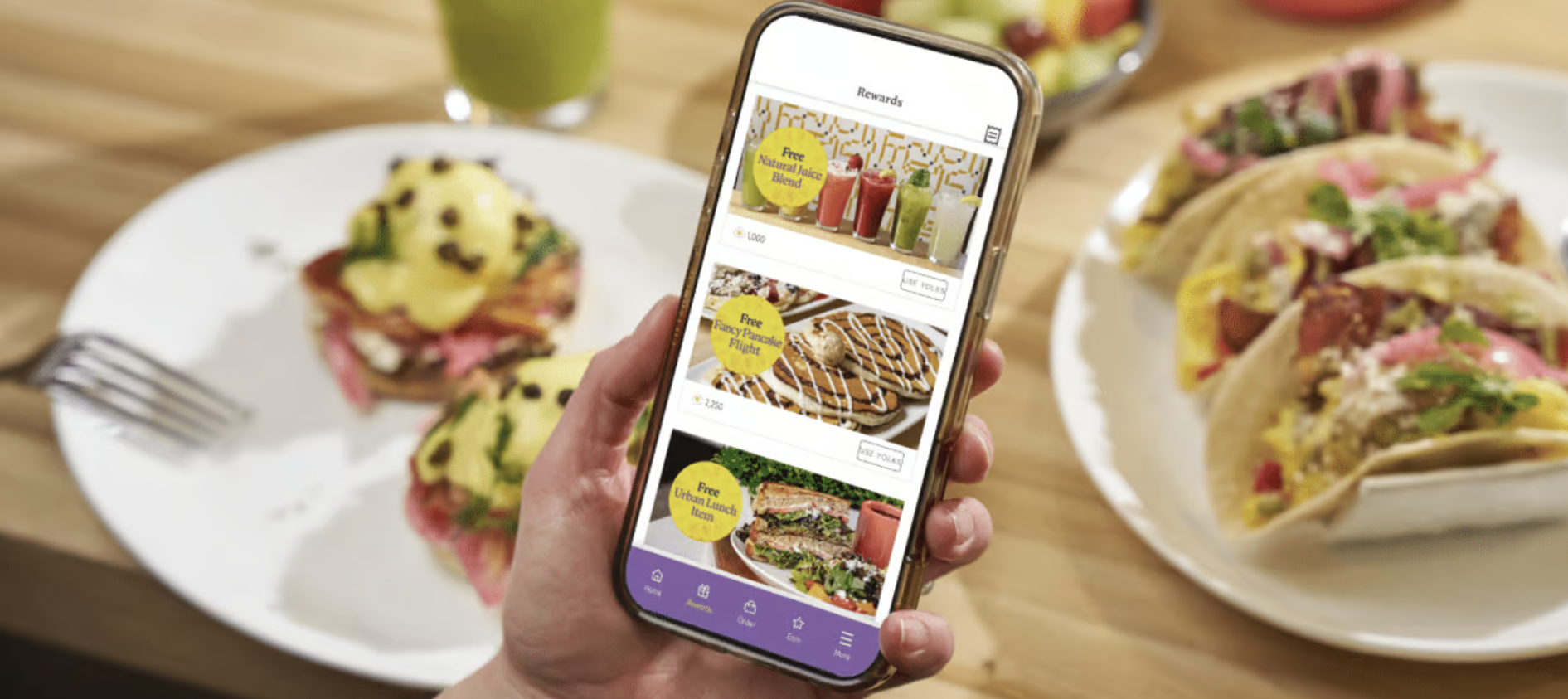
Most of our digital marketing volume is now triggered rather than scheduled. The early-visit incentive structure is a good example. New members who come back within 30 days earn Bonus Yolks, and we have a similar automation around the third-visit milestone, because we know that’s where loyalty either takes hold or doesn’t. Birthday recognition, lapsed-guest win-back sequences, post-visit follow-ups when  an experience drops below baseline, those are all firing off guest behavior, not off the calendar. In our category, triggered messages outperform broadcast sends by about 7–15x, and once built, the operational cost is close to zero.
What that has really done is change the job. Our team isn’t sitting down every week to plan the next campaign. They’re designing the next trigger, refining the ones that already exist, and making sure every automated touch still feels like it’s responding to something real about that guest’s relationship with Urban Egg. That’s the line we hold: no mass-email-to-everyone energy. Every message should reflect where that specific guest is in their journey with us.
What metrics or signals are most important in determining whether a guest is likely to return for a second or third visit?
The metric we anchor on is what we call activation rate, the percentage of new guests who reach a third visit. Below three visits, a guest is statistically still a stranger; after three, they’ve established a pattern with us. Moving that rate from 10% to 15% isn’t just a marketing win, it can be three to four points of same-restaurant traffic, which is the entire year’s growth target for most restaurant brands. So that’s the headline number we watch.
Underneath it, the leading signals are time-to-second-visit, whether that second visit was prompted by us or organic, and (this is the part I think most loyalty programs underweight) how clean the operations were on visits one and two. Was the order accurate? Did the team recover well when something went sideways? Operations metrics turn out to predict loyalty metrics more than the loyalty program itself does. The Bonus Yolk structure exists precisely because of this dynamic, we’re not just rewarding a visit, we’re rewarding the behavior that creates frequency, and we’re compressing the time-to-second-visit window while guests are still most receptive. Recency does most of the work after that: the longer the gap, the harder the re-engagement, which is why we prioritize catching guests before they’ve gone dormant rather than after.
How does the platform support testing and optimization?
The most important thing is that holdout groups are built into every campaign by default. That sounds technical, but it’s actually a discipline question, it means we’re measuring whether a campaign drove revenue *above what would have happened anyway*, not just whether sales went up after we hit send. That’s the line between a real lift number and a vanity attribution number, and it’s the foundation on which everything else is worth doing.
Beyond that, we can A/B test offer structure, creative, send time, segment definitions, without having to stand up new infrastructure for each test. That low friction matters more than people realize, because it changes which experiments you run. The default instinct in this industry is to reach for a percentage-off discount, and it’s often neither the most effective nor the most efficient offer. We can actually test whether a non-monetary reward drives the same behavior at a lower margin cost, and we can test messaging cadence, channel mix, all of it. Because the cost of running an experiment is low, we run them on most things, not just the big swings. That’s how you build a smarter program over time, and it’s a big part of why being selective about technology has always mattered to me. The platform has to make the right discipline easy, not just possible.
How do you ensure that technology enhances the server-led, hospitality-driven experience rather than distracting from it?
We got there by building the program with operators from the very beginning, not just informing them, but involving them. GMs, servers, baristas, and back-of-house team members tested the experience, voted on the name, and told us what would and wouldn’t work on the floor. That input shaped the final design in real ways. The result is a program where the server, bartender, or host role is a brief, natural mention, not a tutorial, not a transaction, and the technology handles everything that follows. Our servers don’t think about the loyalty program during a shift, and that’s the point.
What the guest experiences on the other end, a free entree on their birthday, a manager checking in if their last visit didn’t go well, a recognition that they’ve been here before, looks like hospitality, not like marketing automation. And that’s because it *is* hospitality. The data is what makes it possible to deliver at scale across every shift and every location, without relying on any single team member to remember.
Looking ahead, how do you see Urban Egg’s technology stack evolving as the brand grows, and what role will data and AI play?
As we scale, the data set gets richer, and the tools become more powerful because they have more to work with. Right now, we’re building the foundation, reliable guest profiles and well-running lifecycle automations. As that matures, the opportunity is increasingly precise personalization: communications that feel genuinely relevant to an individual guest’s relationship with Urban Egg, not segmented mass marketing.
The horizon I’m most excited about is agentic AI, and honestly, Thanx has the most exciting agentic-AI roadmap of anyone in the space, and that’s a big part of why we selected them again. Today, my team designs the triggers, defines the segments, and decides which experiments to run. The next wave of these tools should be doing more of that work on their own, surfacing a lapsing regular before we’ve thought to look, drafting the offer that fits a guest’s pattern, running the test, and reporting back. That frees us to spend less time on manual execution and more time on strategy and creativity, which is where humans actually add the most value.
The selective approach to technology I’ve always believed in still applies. The goal isn’t to adopt every available tool, it’s to adopt the right ones and use them well. Data and AI enable that, but the human experience in the dining room is still what we’re building toward.
