
10.15.2026
Kirk Grogan, COO and Co-Founder of TipHaus, brings more than two decades of experience in restaurants, fine dining and luxury resorts to the challenge of modernizing tip management. Having experienced the frustrations of manual calculations and cash payouts firsthand, he helped build a company focused on simplifying that work for operators and making earnings more transparent for employees. Founded in 2018, the Seattle-based company connects with existing point-of-sale and workforce systems to automate tip calculations, distribution and reconciliation, with configurable rules and payroll reporting. Its Earned Tip Access offering also provides daily digital access to earned tips, reducing reliance on cash handling and traditional payroll schedules.
In this Spotlight Interview, Grogan discusses how tip transparency can strengthen employee trust, what operators should consider when automating payouts and how technology can accommodate different policies across a restaurant group. He shares lessons from TipHaus’s work with Delaware North, where the platform supports more than 40 locations and hundreds of distinct tip-pooling and distribution use cases. He also explores the role of faster payouts in recruiting and retention and outlines the company’s plans to expand into earned wage access.
Could you begin by sharing a little about your professional background and your current role as COO of TipHaus?
The service industry has always been a big part of who I am. I started out working in restaurants, including at Chili’s, and over the course of more than two decades in hospitality, I’ve worked across everything from restaurants to fine dining and luxury resorts.
Working in the industry gave me a clear understanding of the day-to-day challenges operators and employees deal with. Tip management was one of those problems that I kept seeing over and over again. There had to be a better way to manage something that was so important to both the operator and the employee. That ultimately led to TipHaus.
Today, as COO and Co-Founder, I’m focused on both the day-to-day operations of the company and the bigger picture of where we’re going. I work closely with our teams across the business, help set and execute our operational priorities, stay closely connected to our customers, and make sure we’re delivering on what we say we’re going to deliver.
A big part of my role is also working across departments to keep everyone aligned, whether that’s product, customer success, sales, or our operations. As we continue to grow, my job is to make sure we have the right people, processes, and systems in place to support that growth while continuing to stay close to the hospitality industry that TipHaus was built for.
What originally attracted you to restaurant technology and the challenge of modernizing tip management?
 It really came from being a service industry worker myself. I saw firsthand how messy tip pooling and distribution could get. Employees didn’t always have visibility into how their tips were being calculated or distributed, and managers could spend hours at the end of a shift working through spreadsheets, calculations and cash.
I remember thinking there had to be a better way to do this. At the end of the day, you’re dealing with people’s money. Employees deserve to understand where their tips are coming from, and managers shouldn’t have to spend hours manually calculating and distributing them. That’s what really attracted me to the technology side of it.
What problems with traditional tip distribution processes was TipHaus created to solve?
TipHaus was born out of a very common and very time-consuming problem in hospitality: managing tips. For a lot of operators, tip management meant spreadsheets, manual data entry, calculating different pools, reconciling numbers and, in some cases, trips to the bank to get cash ready for employees. All of that takes time, and it creates opportunities for mistakes.
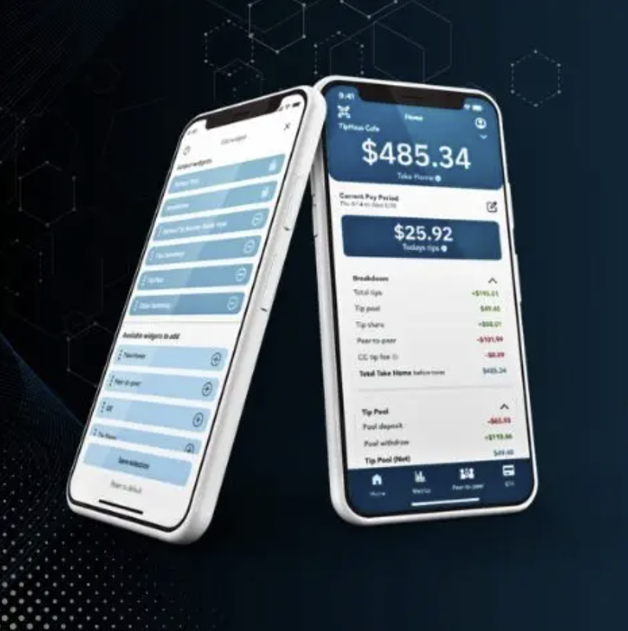
We built TipHaus to automate that process. We connect to the systems restaurants are already using, bring that information together, calculate the distributions based on the operator’s rules, and make that information accessible to employees. The goal is pretty simple: save managers time, make sure employees are paid accurately and give everyone more visibility into the process.
How has the conversation around tipping and tip transparency changed among restaurant operators in recent years?
I think the biggest change is that operators are realizing that tip transparency isn’t just an employee benefit. It’s an important part of how you build trust with your team and how you manage the business.
Employees want to know how their money is being calculated and where it came from. If you think about it from their perspective, they’re trusting their employer with a significant part of their compensation. They want to be able to look at their tips and understand exactly how they got there.
We’re seeing that become even more important as operations get larger and their tip structures become more complex. When you’re managing multiple locations, different roles, different tip pools and different rules, you need more than just a spreadsheet. You need a system that gives both the operator and the employee visibility into what’s happening.
We’re also hearing from larger hospitality groups that having that transparency and an audit trail is important from an operational and compliance standpoint. If there’s ever a question about how tips were distributed, they can go back and see what happened. So the conversation has really evolved from, “Can we calculate and distribute tips?” to, “Can we do it accurately, consistently, and transparently in a way that our employees can actually understand and trust?”
What operational challenges do restaurants most often encounter when managing tips manually?
 There are a few big ones. First is accuracy. You’re dealing with a lot of data, and when you’re manually moving information between systems or spreadsheets, there are opportunities for errors. Then there’s compliance. Tip rules and wage regulations can vary, and operators need to make sure their processes are keeping up with those requirements.
And then there’s simply the time involved. Managers have enough on their plates without spending hours calculating tips, reconciling numbers and preparing payouts. That’s really where technology can make a difference. TipHaus is designed to take that administrative work off the manager’s plate while giving employees more visibility into their money.
How does TipHaus integrate with the point-of-sale, payroll and workforce management systems restaurants already use?
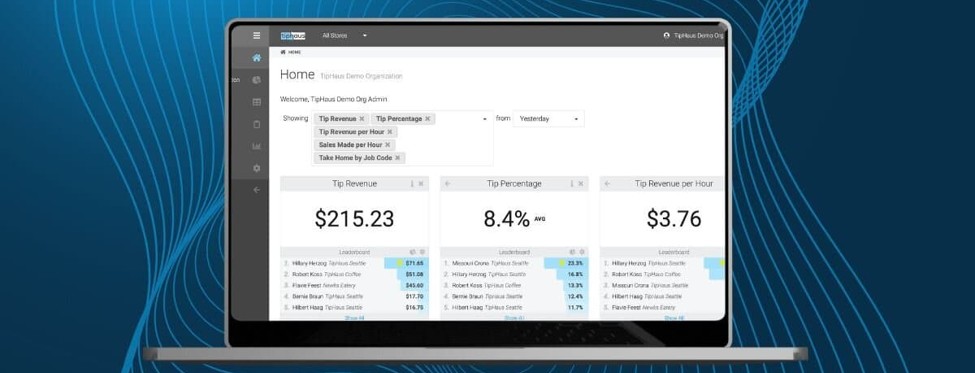
We have more than 45 integrations, so we’re designed to work with the technology restaurants already have in place. TipHaus connects directly with POS, scheduling and payroll systems through secure APIs. We automatically pull in the sales, employee and shift data needed to calculate tips.
Those sales, shift and breakdown updates happen automatically every 15 minutes, so managers aren’t sitting there manually importing spreadsheets or moving data between systems. Then, once the tips are calculated, we can generate payroll-ready reporting that works with the operator’s payroll process.
What role does automation play in reducing the administrative burden associated with calculating and distributing tips?
Automation is really at the core of what we do. Think about what a manager would have to do manually: pull sales data, pull employee and shift information, calculate the tip pools, account for different rules, reconcile everything, figure out what each employee is owed and then get that information into payroll.
We automate those steps and connect directly to the systems they’re already using. That doesn’t just save time. It also creates consistency. You’re taking a process that can be different from manager to manager and location to location and putting the rules into a system that can execute them consistently.
How can greater visibility into tip calculations help restaurants build trust with employees?
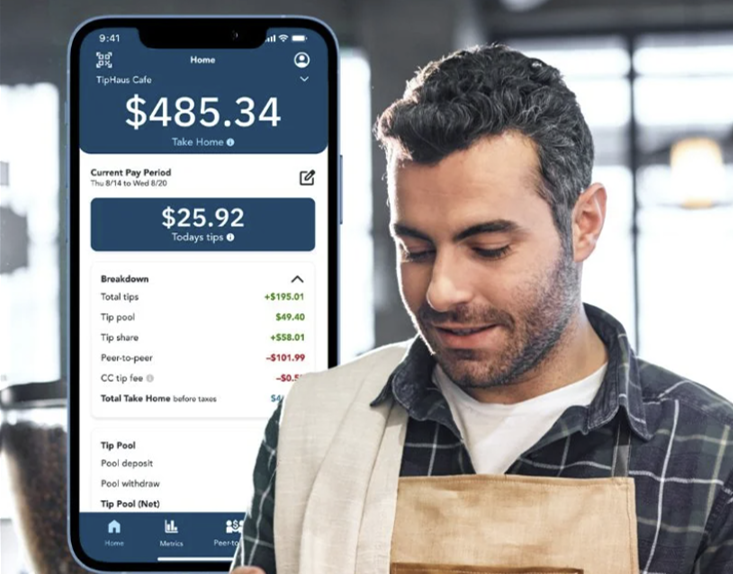
Employees want to know where their money is coming from. One of our customers, Hops n Drops, has a bartender, Shannan Lee Degraff, who told us, “I can see exactly where my tips are going and plan ahead for my paycheck. TipHaus keeps everything transparent.” That’s really what we’re trying to create.
I also recently hosted a webinar with Alex Clark, VP of Finance at The Big Biscuit. She talked about how employees now view this level of transparency as an industry standard. When employees can see the calculation and understand the process, there’s less room for confusion. There’s no “magic formula” that they’re trying to figure out. They have visibility and ownership over the process, and that can make a big difference in employee satisfaction and trust.
TipHaus recently announced its work with Delaware North. What made that organization’s operating environment particularly well suited to the platform?
Delaware North is a great example of the kind of complexity TipHaus was built to handle. You’re talking about a huge and diverse organization operating stadiums, arenas, resorts, destination restaurants and entertainment venues. Each of those environments can have different teams, different operating models and different tip rules. Traditionally, that can mean a patchwork of manual processes across locations. TipHaus was built for those complex environments. We can support hundreds of different rules and use cases across a large organization without forcing every location into the exact same model.
What were Delaware North’s primary objectives when it began evaluating a digital tip-management solution?
They were looking to solve a fragmented process. They had different approaches to managing tips across different parts of the organization, and they wanted to bring that into a more unified system. With TipHaus, they’ve been able to automate hundreds of different tip-pooling and distribution use cases while creating a process that’s auditable for the company and transparent for employees. The goal was to create a consistent, scalable way to manage tips across a very complex organization while giving their teams better visibility into the process.
What complexities arise when implementing tip-management technology across a large organization with numerous venues and operating models?
 The biggest challenge is taking a process that may look completely different from one venue to the next and bringing it into one system without disrupting how those locations operate. You can have different employee roles, different tip pools, different payout structures and different rules depending on the type of venue. Then you have to make sure the POS, scheduling and payroll data is all flowing correctly and that the right information is being used for each location.
There’s also a lot of work upfront to understand how the organization actually operates. You have to map out those different use cases, identify where the exceptions are, and make sure the technology can handle them. That’s also why we don’t believe in a one-size-fits-all solution. We can work around the tip models an operator already has in place and build those rules into the platform. You can create structure across the organization while still giving individual locations the flexibility they need, without having to change the way your business operates just to fit the software.
How does TipHaus accommodate different tip policies, employee roles and regulatory requirements across locations?
Flexibility is a big part of the platform. Every organization has different roles, different tip pools and sometimes different rules from one location to another. We can build those rules into the system and allow managers to maintain location-specific settings. That means operators don’t have to force every location into the same model when their businesses don’t actually operate the same way. And because the rules and calculations live in the platform, you have a record of how those distributions were calculated rather than relying on someone to remember how they did it in a spreadsheet six months ago.
What early operational or employee-experience benefits has Delaware North seen from the implementation?
One of the biggest benefits has been the amount of time they’ve been able to save on reporting and reconciliation. Michele Seaver, Director of Payroll and Workforce Management at Delaware North, told us that what used to take a full day of coordination now takes just a couple of hours to pull a single enterprise-wide export. They’ve also adopted Cheers by TipHaus for QR tipping, which gives guests a digital way to tip at participating properties.
For us, what’s especially valuable is that they’re using the flexibility of the platform across a very diverse portfolio. They don’t have to compromise their operating model to use TipHaus.
Beyond administrative efficiency, how can modern tip-management technology help restaurants recruit and retain employees?
We have operators using TipHaus as part of the hiring and onboarding conversation because it gives employees a much clearer picture of what they can expect to earn.
I recently hosted a webinar with Aimee Ketola, Director of Accounting & Information Systems at Anthony’s Restaurants, a 26-location group in Washington. She talked about how, when they’re onboarding someone, they can walk them through their tip policies and then that employee can log into TipHaus and see their information. They can see where their tips came from, even down to the shift and ticket level in the appropriate workflows, and understand how the different pools are being distributed.
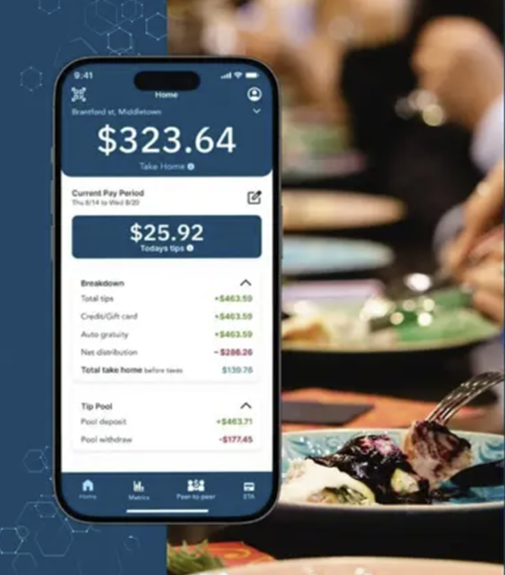 We also see a real opportunity with Earned Tip Access. Employees in hospitality have always valued the ability to get their tips quickly. For a long time, that meant getting cash at the end of a shift. That expectation hasn’t really changed. What has changed is how people want to access and use their money.
Today, employees are used to having digital options and want that same flexibility with their tips. Our survey of 6,787 employees across 559 TipHaus organizations found that 64% said they want Earned Tip Access, which gives employees digital access to tips they’ve already earned on a daily basis.
For employees, that means they can have the flexibility of accessing their earned tips when they need them without relying on cash at the end of a late shift. For operators, it provides that flexibility while also reducing the cash-handling process and friction around tip payouts. I think that’s important when you’re talking about recruiting and retention. You’re meeting employees where they are today while still preserving one of the things that has always mattered in hospitality: getting access to the tips you’ve earned.
What reporting and analytics are most valuable to restaurant finance and operations leaders?
For finance and operations teams, it’s really about having the information they need without having to build it themselves. We generate detailed payroll reports that are compatible with the operator’s payroll provider, so they can get that information where it needs to go.
But just as important is having visibility into what’s happening across locations. When you’re operating multiple properties, you need to be able to understand the calculations, identify discrepancies and have an audit trail of what happened. That becomes increasingly important as an organization grows.
16. What misconceptions do restaurant operators commonly have about implementing a digital tip-management platform?
One misconception is that going digital means the operator has to completely change how they manage tips. That’s not how we approach it. TipHaus is designed to work with the operator’s existing tip structure. We can support different pools, roles, locations and rules. Another misconception is around funding daily tip payouts. Operators sometimes assume they need to keep a large amount of money sitting in a separate account or maintain a float to support those payouts.
At TipHaus, we handle the pre-funding process automatically for customers. Operators don’t have to front large sums of money, monitor separate float balances or wait for transfers to clear before employees can receive their tips.
How are evolving labor regulations and compliance requirements influencing demand for this technology?
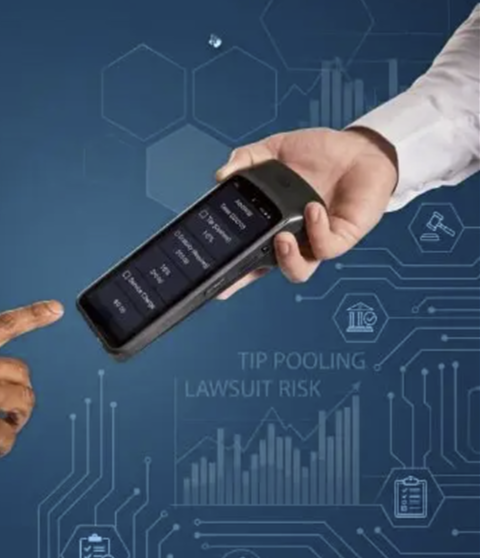
Compliance is a big part of the conversation we’re having with operators. Tip rules and wage regulations continue to evolve, and the larger the organization, the more difficult it can be to manage different requirements across locations manually. We’re seeing operators look for better audit trails, more consistent processes and better visibility into how tips are being calculated and distributed. A digital system doesn’t replace the need for operators to understand the laws that apply to them, but it gives them a much stronger operational record and a more consistent way to execute their policies.
Where do you see the greatest opportunities for innovation in employee payments and financial wellness?
I think there’s a big opportunity to give hourly employees more access and control over money they’ve already earned. That’s really what we’re focused on with Earned Tip Access, and now we’re taking that idea into wages as well.
Employees shouldn’t necessarily have to wait for a traditional pay cycle to access money they’ve already earned, especially in an industry where employees have historically valued the ability to earn and access tips quickly. The opportunity is to make that experience digital, transparent and easy for both the employee and the operator.
What are TipHaus’s principal growth priorities over the next 12 to 24 months?
We’re focused on expanding what we can offer employees across their total compensation. We’re launching Earned Wage Access, which allows hourly employees to access a portion of the wages they’ve already earned during the current pay period. TipHaus settles with the operator through one ACH when the pay period closes, with no cost to the business, no holding account and no change to the operator’s existing payroll process.
Earned Tip Access and Earned Wage Access solve the same basic problem on two different parts of an employee’s compensation: giving people access to money they’ve already earned. When you combine the two, we call that Total Compensation Access. Operators can use either product independently or use both together.
We’re also looking at opportunities to expand into new markets, including bringing Earned Tip Access to Canada. At the end of the day, our focus is still the same as when we started: solve real operational problems for hospitality businesses while creating a better, more transparent experience for the people working in them.
