
By Gavriel Shohet and Lea Mira, RTN staff writers - 6.22.2026
Consistency has always been one of the restaurant industry’s greatest challenges. Whether preparing fresh vegetables, proteins, fruits or specialty ingredients, maintaining uniform quality across shifts, locations and employees requires significant time, training and oversight. As labor shortages persist and restaurant organizations increasingly embrace commissary kitchens, prepared foods and centralized production models, consistency has become more important—and more difficult to achieve—than ever.
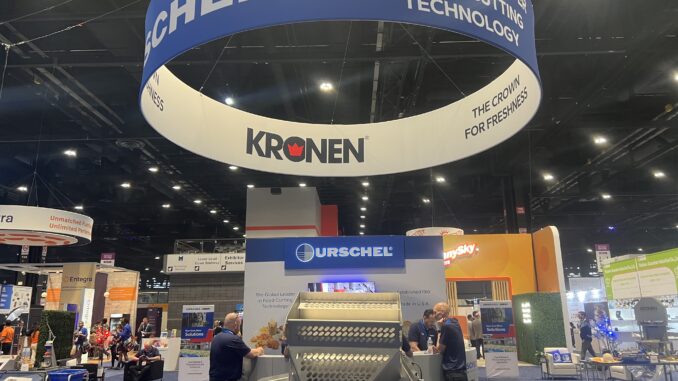
Those themes were evident throughout this year’s National Restaurant Association Show, where operators explored technologies designed to improve efficiency, reduce labor dependency and create more repeatable processes. Among the companies exhibiting at the event was Urschel, which showcased a range of precision food-preparation technologies designed to help foodservice organizations improve consistency, throughput and operational performance.
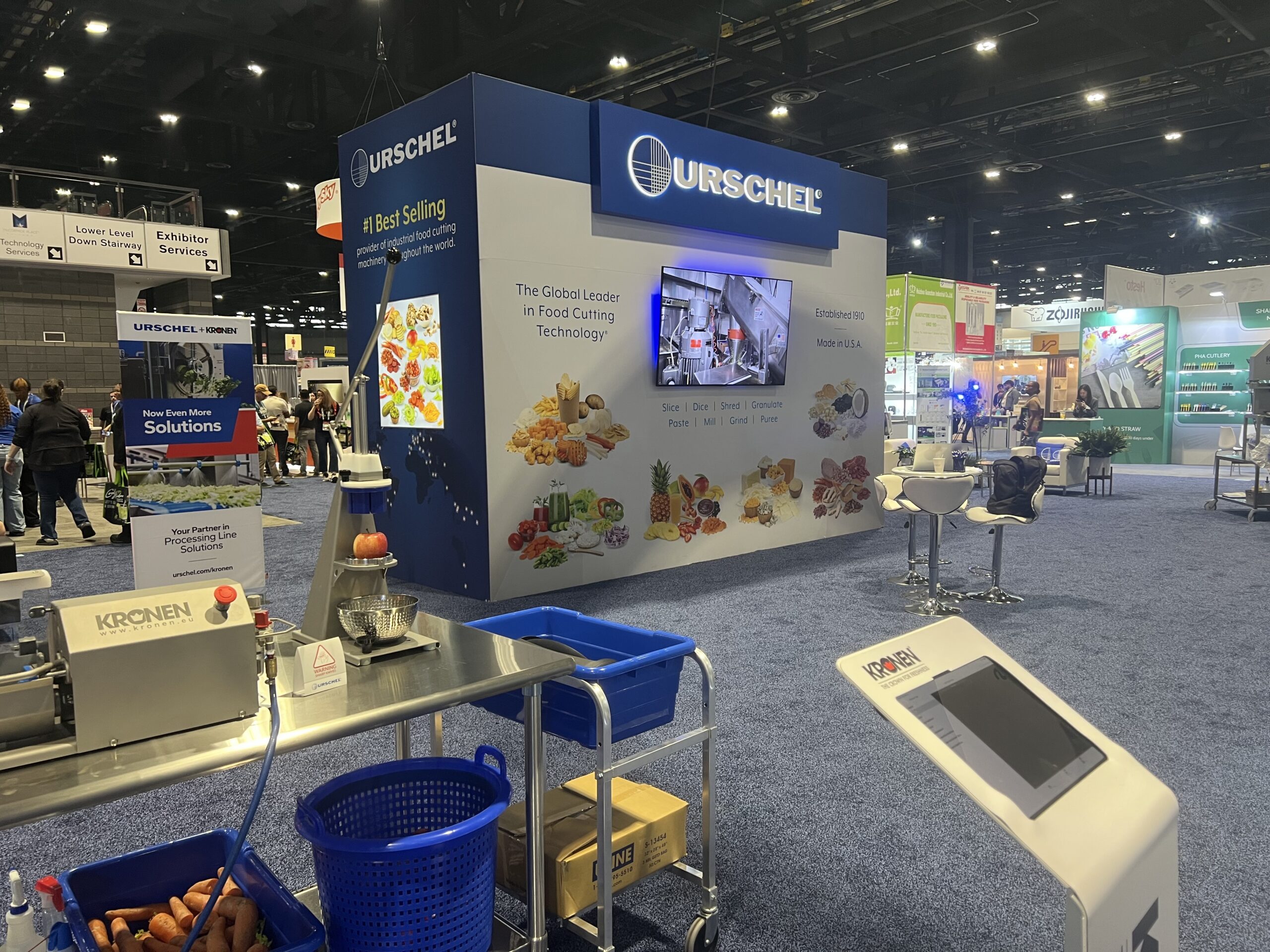
At the 2026 National Restaurant Association Show, Urschel highlighted several solutions aimed at fresh-cut and prepared-food applications, including the Little Gem Aspire Dicer, Sprint 2 Dicer and equipment from its KRONEN portfolio. The demonstrations reflected growing interest in technologies that can help restaurants, commissaries and foodservice operators standardize ingredient preparation while reducing the labor demands associated with repetitive cutting and processing tasks.
At first glance, food-cutting equipment may seem far removed from the technology conversations that often dominate industry events. Yet ingredient preparation sits at the foundation of food quality, consistency and operational efficiency. Every diced tomato, sliced onion, shredded lettuce and portioned protein influences the final guest experience. As restaurant operations become more complex, precision food preparation is emerging as an increasingly important part of the broader restaurant technology ecosystem.
Founded in 1910 and headquartered in Indiana, Urschel has spent more than a century developing equipment designed to cut, dice, slice, shred and process food products with high levels of precision. The company’s equipment is used by food manufacturers, processors, commissaries and foodservice organizations around the world. While its machinery is often associated with industrial food production, many of the trends driving demand for Urschel’s solutions are directly relevant to restaurant and hospitality operators.
One of the most significant trends is the continued growth of centralized production. Restaurant groups increasingly rely on commissary kitchens and shared production facilities to prepare ingredients that are distributed across multiple locations. This approach can improve consistency, simplify training and create operational efficiencies, but it also requires highly standardized preparation processes.
In these environments, precision matters. Slight variations in ingredient size can affect cooking times, portion control, presentation and food costs. A product prepared inconsistently in a central kitchen may create challenges across dozens or even hundreds of restaurant locations. Automated food-preparation technologies help reduce variability and create greater uniformity throughout the production process.
That need for consistency extends beyond large chains. Independent restaurants, hospitality operators and multi-concept foodservice organizations are all looking for ways to reduce reliance on manual preparation while maintaining product quality. Labor shortages, turnover and rising wage pressures have increased interest in technologies that improve productivity without sacrificing execution.
Several Urschel platforms are designed to address these challenges. The company’s DiversaCut 2110A supports slicing, dicing, shredding and strip-cutting applications across a broad range of products. The equipment is designed to provide flexibility while maintaining precise cut dimensions, helping organizations produce ingredients that meet exact specifications while supporting continuous operation and simplified maintenance.
Precision cutting is not simply a matter of appearance. Consistent ingredient sizing can influence cooking performance, product yield, texture and customer perception. In many cases, it also affects food costs. Reducing irregular cuts and improving yield can help organizations maximize utilization of raw ingredients while minimizing waste.
Another notable platform is the Comitrol Processor Model 3000, which is designed for particle-size reduction and high-moisture milling applications involving products such as vegetables, cooked meats and other ingredients. The system helps create consistent finished products while supporting higher-volume production environments.
Protein preparation represents another area where automation is becoming increasingly important. Urschel’s Affinity series is designed to process proteins efficiently while maintaining product integrity. As demand for prepared proteins continues growing across restaurants, convenience retail and foodservice, technologies that support higher throughput and consistent results become increasingly valuable.
 The broader significance of these solutions becomes clearer when viewed through the lens of labor. Food preparation remains one of the most labor-intensive activities within foodservice operations. Recruiting, training and retaining employees capable of performing repetitive preparation tasks consistently can be difficult, particularly in high-volume environments.
Automation does not eliminate the need for skilled employees, but it can reduce the amount of manual labor required for repetitive preparation activities. It can also help organizations maintain quality standards despite workforce fluctuations, turnover and staffing shortages.
Prepared foods represent another important growth area. Restaurants, grocery retailers, convenience stores and hospitality operators continue expanding grab-and-go offerings and ready-to-eat meal programs. These products often depend on highly standardized preparation methods to ensure consistency and scalability. Precision food-processing equipment helps support those objectives while improving production efficiency.
Food waste reduction is another increasingly important consideration. Sustainability initiatives and margin pressures have heightened awareness of product utilization throughout the foodservice industry. Equipment that improves yield and reduces unnecessary waste can contribute to both environmental goals and financial performance.
One aspect of Urschel’s current strategy that deserves attention is its collaboration with KRONEN. At the National Restaurant Association Show, Urschel also highlighted KRONEN slicing, washing and produce-processing solutions, including equipment designed to support fresh-food preparation workflows. Together, the technologies reflect a broader industry emphasis on automating labor-intensive preparation tasks while preserving product quality and freshness.
The company also maintains extensive testing and demonstration resources that allow customers to evaluate equipment and processing methods before implementation. For organizations considering changes to production workflows, that capability can help reduce risk while improving confidence in operational decisions.
While Urschel’s equipment is often deployed in large-scale production environments, the underlying business drivers are increasingly relevant across the restaurant industry. Labor efficiency, consistency, throughput, waste reduction and scalability remain priorities for organizations of all sizes. Technologies that address those challenges can create meaningful competitive advantages.
The competitive landscape includes a variety of food-processing and preparation equipment manufacturers. Urschel’s differentiation stems from its long history of specialization in precision cutting and size reduction, along with a broad portfolio capable of supporting diverse food products and production requirements.
Perhaps most importantly, the company’s solutions align with the industry’s ongoing shift toward process standardization and operational scalability. As restaurants continue expanding commissary operations, prepared-food programs and centralized production models, the ability to prepare ingredients consistently and efficiently becomes increasingly valuable.
The restaurant industry often focuses on customer-facing innovations such as digital ordering, loyalty platforms and artificial intelligence. Yet many of the most important operational improvements occur behind the scenes. Ingredient preparation may not attract the same attention as emerging digital technologies, but it directly influences food quality, labor efficiency and profitability.
Urschel’s role in that process highlights an important reality: operational excellence begins long before food reaches the plate. As restaurants and foodservice organizations seek ways to scale production, maintain consistency and navigate labor challenges, precision food preparation is becoming a strategic capability rather than a routine kitchen task.
By helping organizations standardize one of the most variable parts of food production, Urschel is supporting a broader transformation in how foodservice operations approach consistency, efficiency and growth. In an industry increasingly focused on doing more with fewer resources, that capability may prove more valuable than ever.
